Over time, increased rigidity in her right leg began affecting her balance and caused frequent falls. Doctors prescribed her ibuprofen and physical therapy, but the stiffness and pain continued.
During the patient's first hospital visit, blood tests had revealed that her white blood cell count was normal, suggesting that she was not fighting an infection. She was not producing antibodies that might have suggested she had rheumatoid arthritis, an autoimmune disease that causes joint stiffness. Nor did she have antibodies associated with other several conditions that can cause pain, numbness or stiffness in the extremities, such as HIV, Lyme disease or the autoimmune condition Sjögren's disease.
Nevertheless, over the next month, her symptoms steadily worsened until she couldn't get out of bed; she was also unable to sit up or turn to either side.
At her second hospital visit, the patient's arm had normal movement during an exam, but her leg stiffness prevented doctors from testing the range of motion in her lower extremities. When the doctors tried to flex the woman's knee, it caused contraction in her quadriceps — the large muscle in the front of the thigh — and "was painful for the patient," the doctors wrote in a report of the case.
The diagnosis: Based on her earlier test results and her past and current symptoms, the doctors suspected that the woman had developed an extremely rare autoimmune neurological disorder: stiff person syndrome (SPS).
Autoimmune disorders are characterized by the immune system attacking healthy tissues in the body. In the case of SPS, this rogue immune response targets nerve cells that control muscle contraction. Destruction of these cells disrupts signals to the muscles, causing painful muscle spasms and contractions that affect a person's balance and restrict their movement.
A clue from the woman's blood tests hinted at this condition. Doctors found high levels of antibodies that block the enzyme glutamic acid decarboxylase (GAD). Elevated levels of these antibodies are seen in up to 80% of people with SPS. The anti-GAD antibodies prevent the enzyme from producing a chemical messenger called GABA, which acts like a brake on nerve cell activity. Without enough GABA, the nerve cells that control how muscles move can go into overdrive, which can cause spasms and prevent muscles from relaxing as they normally would.
Tests revealed antibodies (pictured) in the woman's blood that block the production of a key chemical messenger in the body. (Image credit: KATERYNA KON/SCIENCE PHOTO LIBRARY via Getty Images)The treatment: There is no cure for SPS, but medication can help slow the disease's progression and manage symptoms. This patient received intravenous immune globulin, an antibody treatment that regulates the immune system and is often used to treat autoimmune disorders. She also received rituximab, another type of antibody that targets specific immune cells to pare down their activity.
In addition, her doctors prescribed the steroid prednisone, the anticonvulsant gabapentin and the sedative diazepam, along with a regimen of physical therapy to help relax the woman's spasming muscles.
Within a few days, the woman's condition had significantly improved. "Prior to discharge, the patient could turn in her bed unassisted, could flex her left hip and knee fully, could flex [her] right hip fully and right knee with assistance to 110 degrees, and could stand with assistance," the report authors noted.
At a three-month checkup after being discharged, the patient could stand unassisted and walk using a rolling walker. The doctors started reducing her steroid dose, but she continued taking diazepam and gabapentin as prescribed, along with a monthly dose of immune globulin and a maintenance dose of rituximab every six months.
What makes the case unique: Just 1 to 2 in 1 million people are thought to be affected by SPS each year, although by some recent estimates, that number is higher. Its rarity and the slow development of symptoms make the condition challenging for health professionals to recognize and treat. What's more, the mechanisms and progression of the disease are "incompletely understood," the case report authors noted.
Often, SPS is misidentified as other conditions, including psychiatric disorders, Parkinson's disease, multiple sclerosis, or a neurological disorder called dystonia, which causes muscle spasms.
On average, the diagnosis of SPS takes about seven years from the start of symptoms, according to the Stiff Person Syndrome Research Foundation. It is most commonly diagnosed in people ages 40 to 50, but SPS can also appear in older adults and in children. It affects about twice as many women as it does men, according to the National Institute of Neurological Disorders and Stroke.
One well-known person with SPS is singer Celine Dion. She publicly shared her diagnosis in 2022, after her illness led her to cancel multiple shows in 2021. Dion told People magazine that she was experiencing "severe and persistent muscle spasms" and that the pain caused by her condition eventually became so intense that she was sometimes unable to walk.
This article is for informational purposes only and is not meant to offer medical advice.
Can you guess the diagnosis in these strange medical cases? Find out with our diagnostic dilemma quiz!
'> Woman's 5-year struggle with balance and walking was caused by a 'one-in-a-million' disorder therefore rises in the east around sunset, 100% illuminated, before reaching its highest point around midnight and finally sinking toward the western horizon around sunrise.
This year's opposition occurs Sunday (Oct. 4), making the few weeks on each side an excellent time to start looking. At 784 million miles (1.26 billion kilometers) away, Saturn will be relatively close to Earth, causing its disk to appear about as large as it gets through a telescope and making its pale-yellow light shine more brightly than at other times of the year. You won't need any equipment to find it; under a clear sky, Saturn will be easily visible to the naked eye as a bright, steady point of light, between the constellations Pisces and Cetus.
The rings themselves are particularly interesting this year. Saturn's axial tilt means our viewing angle of the planet's rings changes throughout its roughly 29-year journey around the sun. After the rings appeared almost edge-on from Earth in 2025, they're gradually opening up again, giving observers an increasingly clear view.
You don't need to restrict your observing to the night of opposition; Saturn will remain a prominent evening target throughout October. However, the nights of Sept. 30 to Oct. 4 offer an ideal combination of brightness, visibility and all-night observing. There are also plenty of other great stargazing sights to look for this fall.
If you've been waiting for an excuse to point a telescope at Saturn, this is your moment. The next time Saturn will be at opposition will be Oct. 18, 2027.
will transform its electricity system. The question is how fast. And that speed is up to us.Since 2015, most of the new power built in America has been clean. This year, 93% of new electricity capacity is expected to come from solar, wind and batteries. That is not because of any president. It is because clean energy is the cheapest way to add electricity to the grid.
The problem is what was built before. Today, 57% of America's power is generated from burning fossil fuels, compared to just 43% from clean sources. Even with solar and wind dominating new builds, our legacy system still uses dirty energy, which takes time to replace.
The first step is getting rid of coal, which already can't compete with clean energy. Coal generates about one-sixth of our power, yet 99% of American coal plants are more expensive to keep open than it would cost to replace them with new solar, wind, and storage. In Michigan, the Trump administration ordered an aging coal plant to stay open past its planned retirement. That single decision costs consumers $600,000 a day. On Sept. 11, a federal court rejected the order.
The JH Campbell power plant in Michigan that Trump had ordered to be kept operating. (Image credit: UCG via Getty Images)Despite Trump's attempts to revive a dying industry, the coal industry remains in deep decline – down 43% since 2010. Coal cannot compete on cost or reliability. Without expensive government welfare, coal is on its way out.
Gas plants are responsible for much of the remaining electricity emissions. Solar, wind and batteries are increasingly cost-competitive with gas. Even without subsidies, solar paired with batteries is now cheaper to build and run than a new gas plant. And we know how to put up clean energy fast: the solar industry tripled its annual build rate in just six years.
Skeptics raise two objections. First, rising electricity demand from AI, data centers and electrification means that we can't generate enough power with clean energy alone, and therefore we need to keep gas on the grid. Second, Trump's hostility — namely expiring tax credits and tariffs on solar panels and batteries — will stall the build-out.
Energy demand growth is real. Proposals for new gas plants to power data centers have surged. But more than three-quarters of this gas plant pipeline is still early stage, and many projects have been delayed. Supply backlogs on gas turbines stretch toward the 2030s. Meanwhile, new solar plants and batteries can go up in under two years. This makes building such capacity the fastest, cheapest solution to rising electricity consumption.
As for Trump: his administration won't be around forever. And rising electricity prices have become a central issue in this year's midterms. Politicians promising affordability will turn to the cheapest way to power households: clean energy. And the market will keep the transition moving no matter who's in the White House.
Solar energy production, such as that produced by this solar panel array near Lancaster, California, now outpaces energy production from coal. (Image credit: Mario Tama via Getty Images)In the meantime, there is plenty we can do at the state and local level to speed things up. One strategy is removing barriers to plug-in solar. In Germany, more than a million households have installed "balcony solar," which are panels that plug into a wall outlet, bypassing permits or utility paperwork. Utah legalized plug-in solar last year, and California's legislature just approved it too. Pair that with simple plug-in batteries, and ordinary people can generate and store their own clean energy at home.
We can also use electric machines to soak up power when it's fossil-free. That happens in the middle of the day, when cheap solar floods the system. With the right controls, an electric water heater can also be a battery: heat the tank at noon, and tonight's shower is stored sunshine. Heat pumps can pre-cool or pre-heat a home before evening the same way. Charge electric cars at work and your commute is solar-powered.
Exclusive to Live Science Pro
And none of this requires the federal government. States can make midday power cheap, or even free, and pay households to shift their usage. Cities can write building codes that make flexible electric machines the default replacement. Do that at scale and we can serve growing demand with the grid we already have.
No single choice transforms the electricity system on its own. But the energy transition has always moved in waves: it dips, then surges back stronger. Millions of people pushing in the same direction is exactly how the next wave builds.
So is a clean grid realistic? Yes. The only real question is how fast we replace the old one. And that's largely up to us.
Opinion on Live Science gives you insight on the most important issues in science that affect you and the world around you today, written by experts and leading scientists in their field.
Help us improve Live Science Pro: We're always trying to make our content better. Leave us feedback about Pro here.
MIT Press
The Carbon Wave: a Story of Democracy, Parenthood, and the Race to Protect Our Planet
Interlacing personal narratives with stories from Congress, the White House, and outside activists, Stokes shows how dogged perseverance and collective action can still bend the course of history. The book concludes with an update from the second Trump administration, explaining the parts of the bill that were—and were not—rolled back, and why we should remain hopeful that progress is still being made.
Read an excerpt from "The Carbon Wave" here
'> Trump can't stop America's shift to clean energy. And we can accelerate it. The report, called "Planetary Health Check 2026," was written by more than 60 scientists and assessed the state of interconnected natural systems, or planetary boundaries, upon which Earth's stability and resilience depend. When these boundaries are crossed, researchers say there's an increasing risk of serious and irreversible harm.
According to the report, seven of the nine identified planetary boundaries have already been breached, including climate change, ocean acidification and biosphere integrity. Niklas Kitzmann, lead editor of the report, likened assessing these planetary boundaries to giving Earth a blood test — and getting alarming results.
"If you had a patient with a blood test that looks like this, you would send them to the ICU right away," Kitzmann, a researcher in the Planetary Boundaries Science Lab at the Potsdam Institute for Climate Impact Research in Germany, which publishes the report, told Live Science.
Specific ecosystems highlighted in the report include the Amazon rainforest, which is in danger of passing a devastating tipping point, and the seafloor, which is being damaged by bottom trawling and faces the developing threat of deep-sea mining. There's also plenty on extreme weather events fueled by climate change, as well as forever chemicals, species loss and more. However, the authors believe we can still heal our ailing planet if we act fast.
"We still have a window to turn this around, but we do have to start bending the curves on emissions and on nature degradation within the next few years," Kitzmann said. "We're rapidly running out of time."
Planetary health check
The Planetary Boundaries Science Lab publishes a Planetary Health Check around this time each year, coinciding with Climate Week. The 2026 edition isn't marked by significant boundary changes as it was last year, but it finds that the state of the breached boundaries continues to worsen.
In 2025, ocean acidity levels became so high that a research team concluded that ocean acidification had become the seventh — and most recent — planetary boundary to be breached. The other six breached boundaries are freshwater change, land system change, climate change, modification of biogeochemical flows, introduction of novel entities, and change in biosphere integrity. The remaining two boundaries — stratospheric ozone depletion and increase in atmospheric aerosol loading — remain at safe levels, at least globally, according to the report.
The El Niño in the room
This year's report comes as Earth is experiencing an unprecedented El Niño event, which is injecting extra heat into our already-warming world and threatening widespread disruption to both humans and nature. We will have to wait until next year's report to see how the forecast global temperature rise will impact the already-struggling planetary boundaries.
The researchers essentially have a traffic light system for assessing the risk to planetary boundaries, with green representing a safe operating space; yellow/orange representing a breach and an increasing risk, with the system no longer considered within safe limits; and red representing the danger zone, with a likely risk of severe, irreversible damage. These categories are designed to account for uncertainty, but there's inherent uncertainty baked into assessments of complex natural systems.
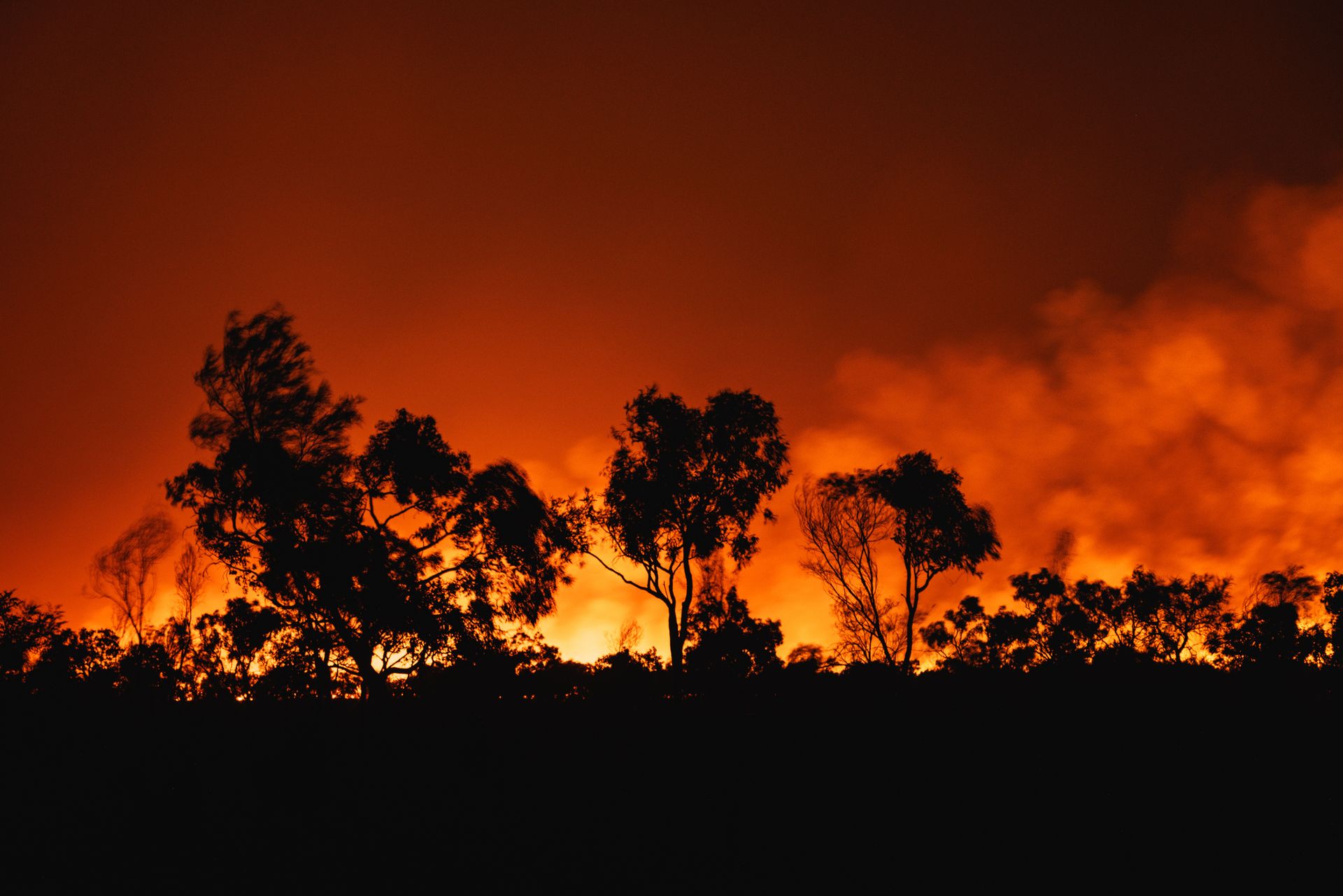
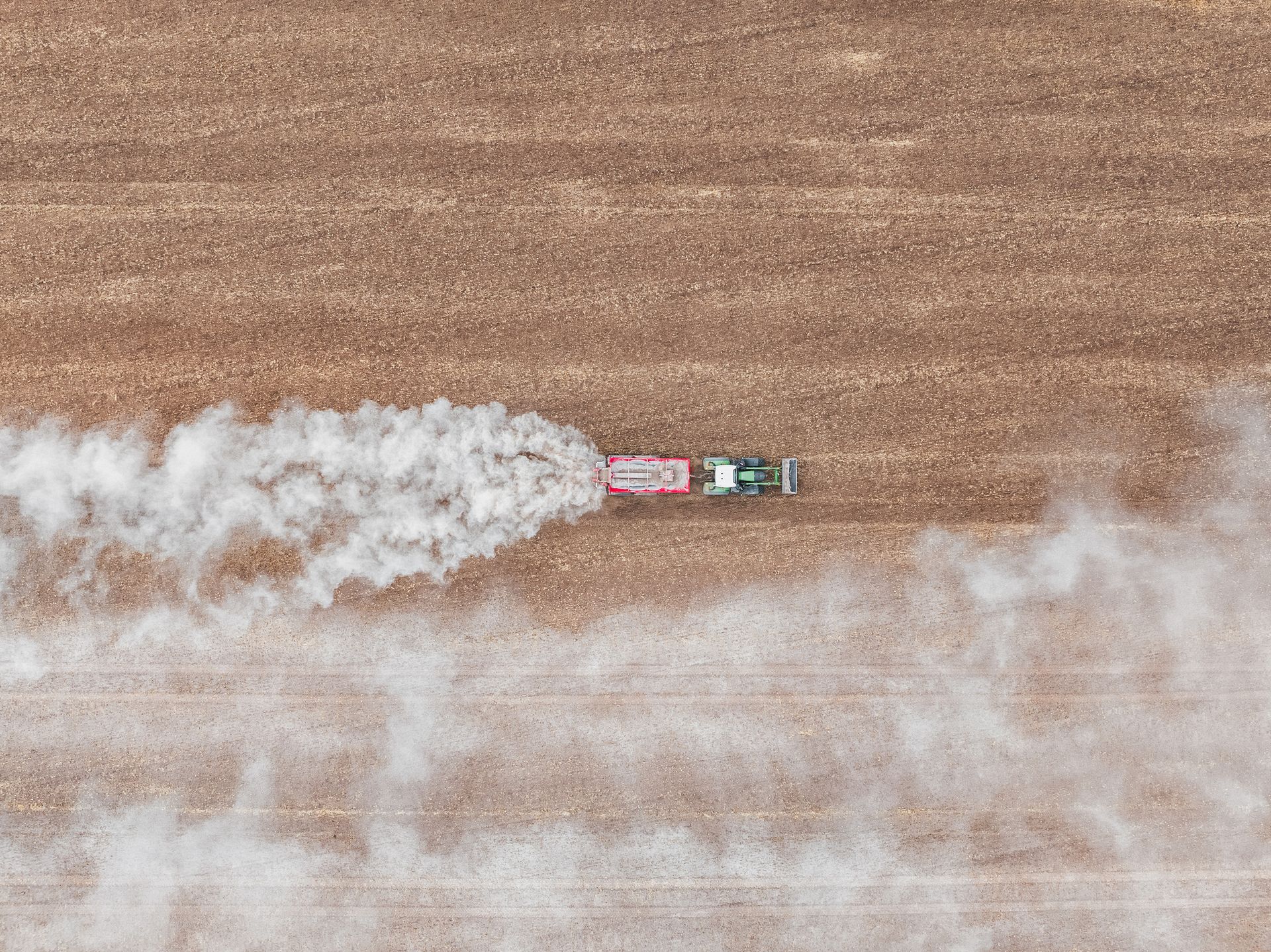
Of the breached boundaries, ocean acidification, freshwater change and land system change sit in the increasing risk category, while climate change, modification of biogeochemical flows, introduction of novel entities and change in biosphere integrity are in the danger zone, according to the report.
Boundaries in the danger zone
 Abstract Aerial Art via Getty Images
 Abstract Aerial Art via Getty Images
 Alistair Berg via Getty Images
 Education Images/Universal Images Group via Getty Images
One of the report's key takeaways is that all of the planetary breaches are now becoming increasingly apparent. Kitzmann said the researchers are seeing extreme events like heat waves increase in frequency and severity all over the world. He also noted that they've seen consequences such as glacial loss, marine heat waves and severe coral bleaching.
"The Earth is sending us her invoices for the breaching of these planetary boundaries," Kitzmann said.
Although much of the report was gloomy, Kitzmann stressed that there's still hope. He argued that positive momentum is building in the renewable energy transition, especially as the costs of solar power technology decrease, and that there's more social awareness and international treaties that protect oceans and land.
"It's not enough yet, it's not sufficient, but we shouldn't think that this is a completely unsolvable problem," Kitzmann said. "It is very much in the process of being solved, and we just need to step on the accelerator right now and make sure that these solutions that we have get implemented as quickly as we possibly can."
'> 'We're rapidly running out of time': 7 of Earth's 9 life support systems already breached, and the situation is getting worse, report warns