We've rounded up the best options for each usage case, based on our reviews and experience, to bring you the top models on the market.
Best for everything
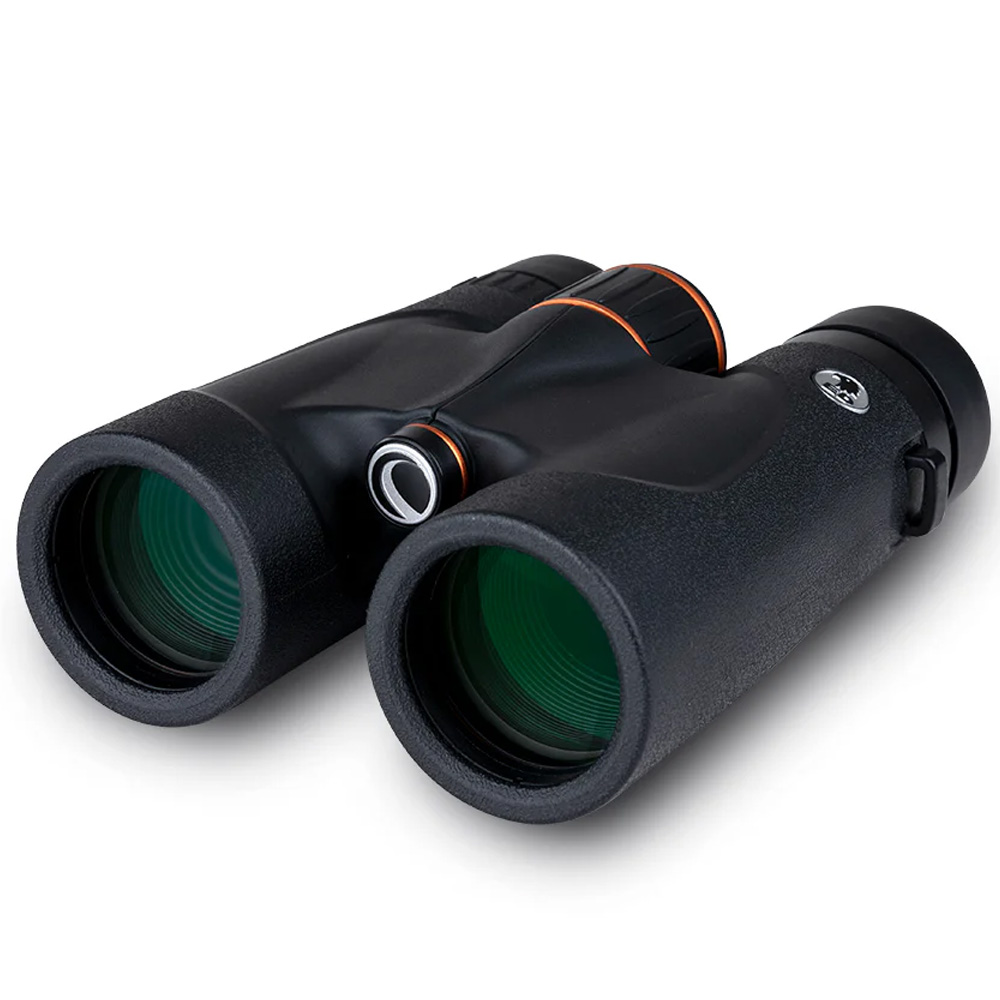 Excellent optics for the price
The Celestron Regal ED 10x42 are an ideal all-rounder for general purpose viewing, birdwatching and stargazing. They have excellent quality optics for the money with minimal optical defects, and perform better than some of the more expensive models we've tried.
Read our full Celestron Regal ED 10x42 review
Pros
- ED glass eliminates chromatic aberration — useful for everything from birdwatching to stargazing
- Comfortable to hold, with a good grip
- Waterproof and fogproof for use in any weather
- Field-flattening lenses eliminate curvature, giving sharp views all the way to the edges of the frame
- Views are bright, sharp and detailed
- Excellent image quality for the price
- 340 feet (113 m) FOV is good for a range of subjects
- Very generous 20mm eye relief
Cons
- Focus wheel is a little too free
- Carry bag doesn't fit the binocular and neckstrap
- 10x magnification could give slightly shaky views — if you're a birder, size down to the 8x42.
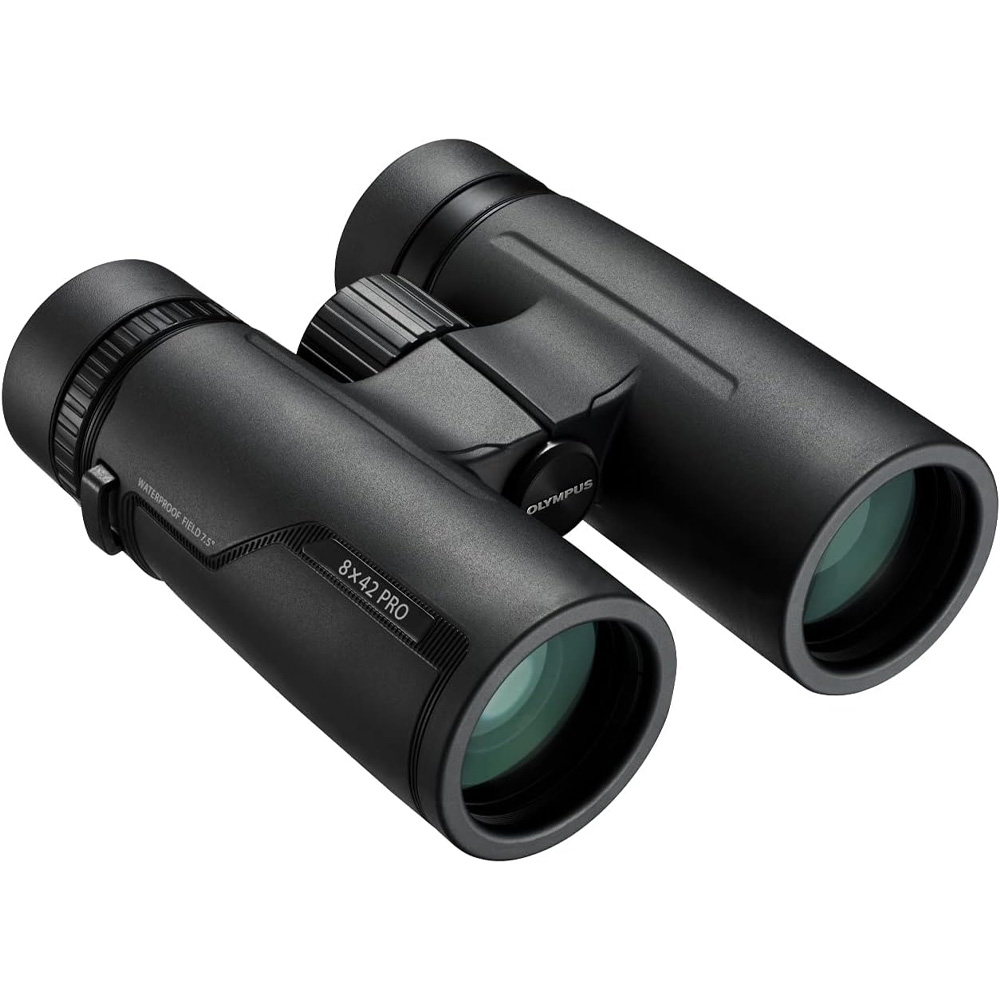 The low-light bins
If you're looking for a pair of general purpose binoculars that also work well in the dark, the Olympus 8x42 Pro are one of the best we've tried. They have a ton of lens and prism coatings to increase light transmission and increase sharpness and contrast, plus the large exit pupil and 42mm objectives keep things clear and bright. The only letdown is that the ED glass doesn't fully eliminate color fringing, but that's only really noticeable around highly contrasted subjects.
Read our full Olympus 8x42 Pro review
Pros
- ED glass does a good job at reducing chromatic aberration
- A whole lineup of lens and prism coatings, including dielectric multilayer prism coating to increase light transmission, full multi-coated lenses to reduce flare and glare, phase-coated prisms to increase sharpness and contrast, and Olympus ZERO Coating (Zuiko Extra-Low Reflection Optical) to minimize internal reflections
- Nitrogen-filled body to prevent fogging, with waterproof construction
- Oil-repellent coating for easy removal of water droplets and dirt
- Generous 18mm eye relief
- 430 feet (131 m) FOV is great for bird-watching
- Large 5.25mm exit pupil and 42mm objective lenses produces bright and clear image in low light
Cons
- No provided screw thread for tripod mounting
- Slight amount of color fringing around backlit subjects against a bright sky
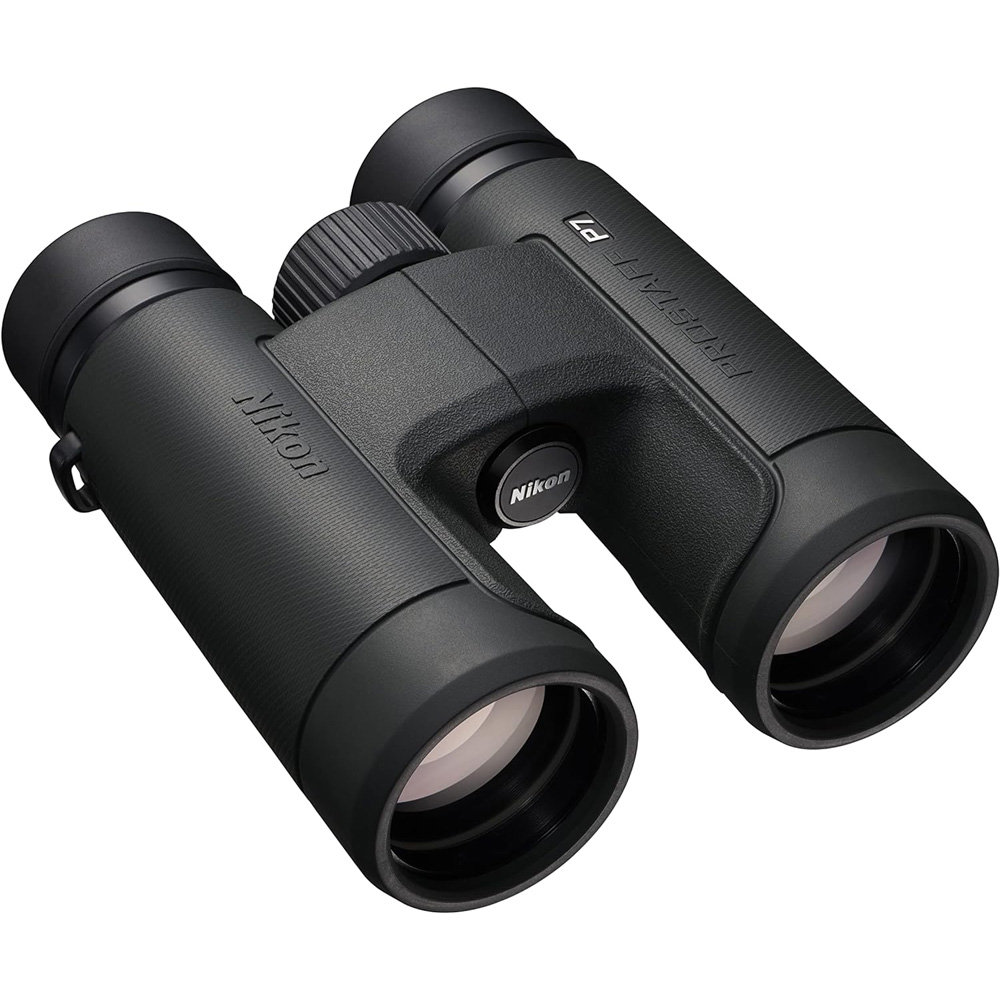 If you're on a budget
An excellent budget option that still boasts impressive optical performance, the Nikon Prostaff P7 10x42 are durable, portable and offer high-quality views despite lacking ED glass. They're ideal if you're on a budget but you don't want to buy cheap tat.
Read our Nikon Prostaff P7 10x42 review
Read our Nikon Prostaff P7 8x42 review
Pros
- Durable build and finish
- Excellent optical performance, especially for the price
- 367 feet (111 m) FOV gives a nice, wide view
- Locking diopter adjustment wheel prevents accidental defocusing during use
- Slim and lightweight build
- Dielectric and phase-coated prisms to increase light transmission and improve sharpness and contrast
- Waterproof down to 1m and nitrogen purged to prevent fogging
Cons
- 4.2mm exit pupil is a little small
- Carry case could be plusher
- 15.7mm eye relief is fine if you wear glasses, but not the most generous option we've seen
- No ED glass
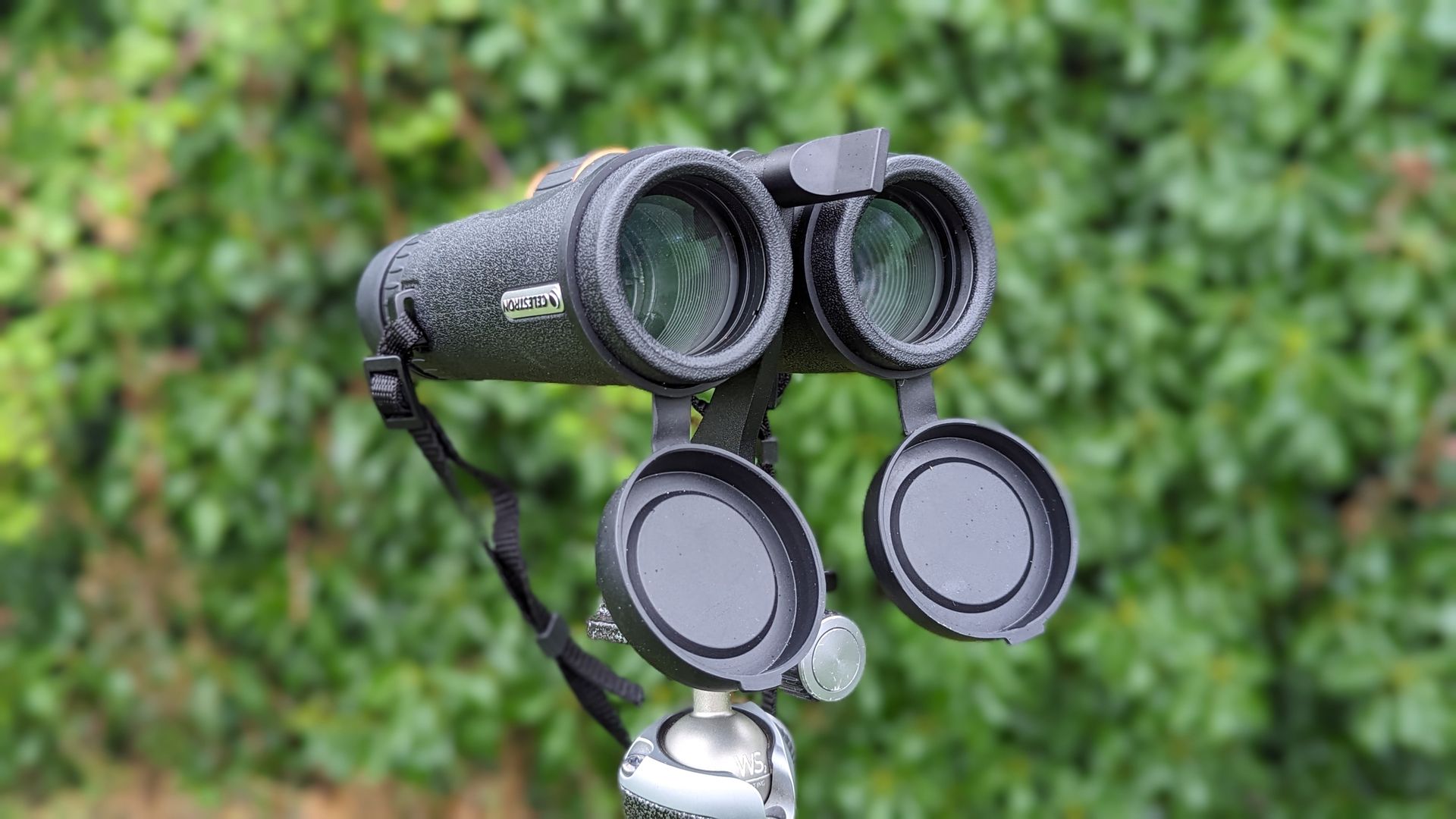 Celestron Regal ED 10x42Jase Parnell-Brookes
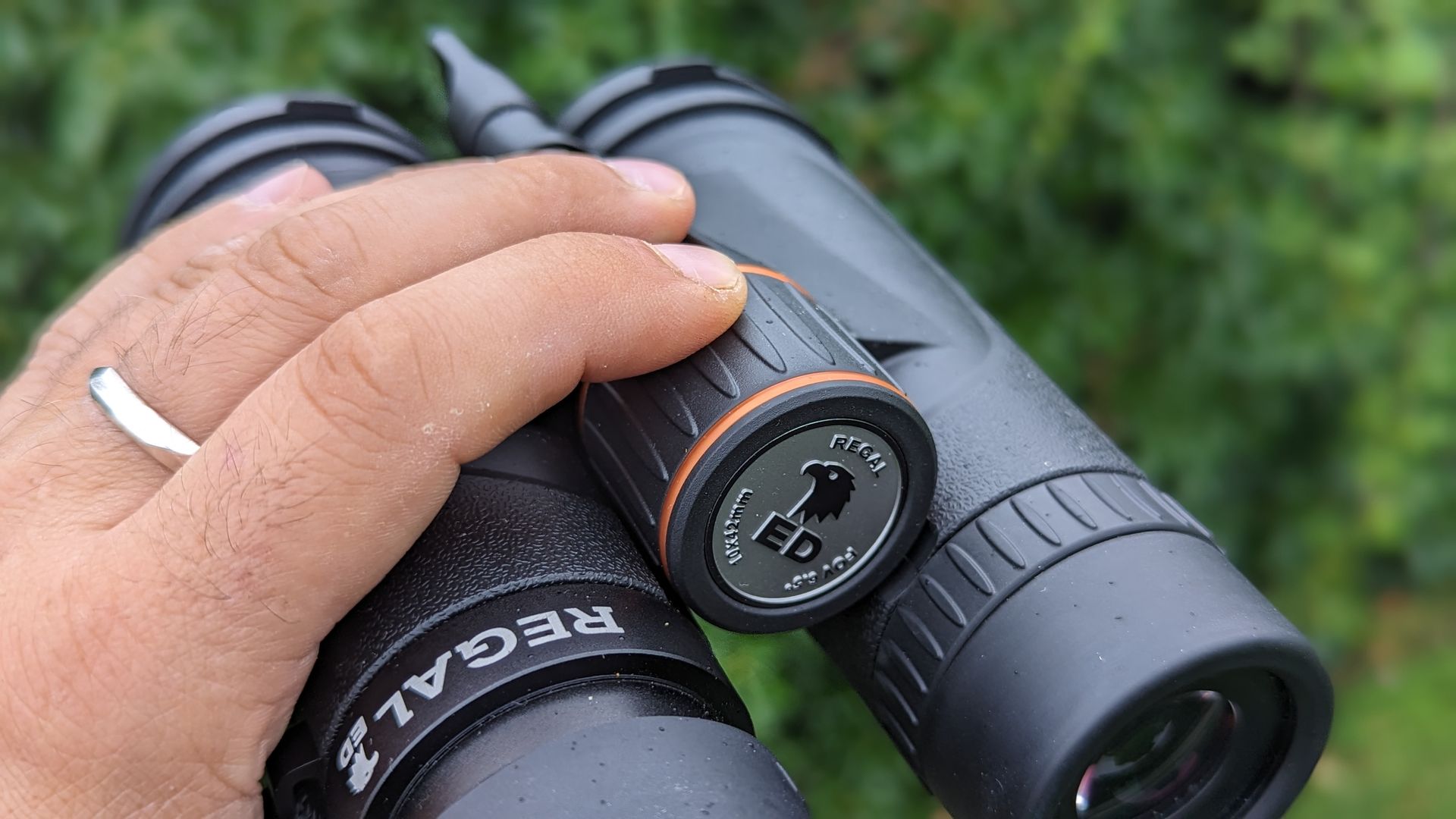 Celestron Regal ED 10x42Jase Parnell-Brookes
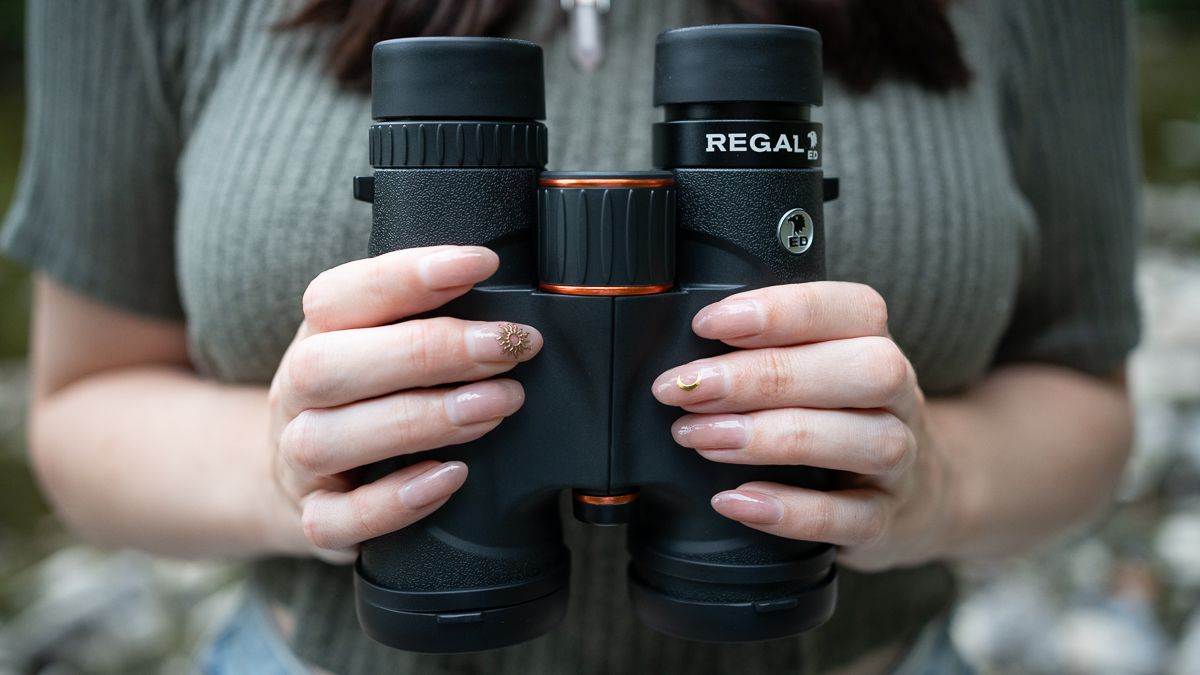 Celestron Regal ED 10x42Kimberley Lane
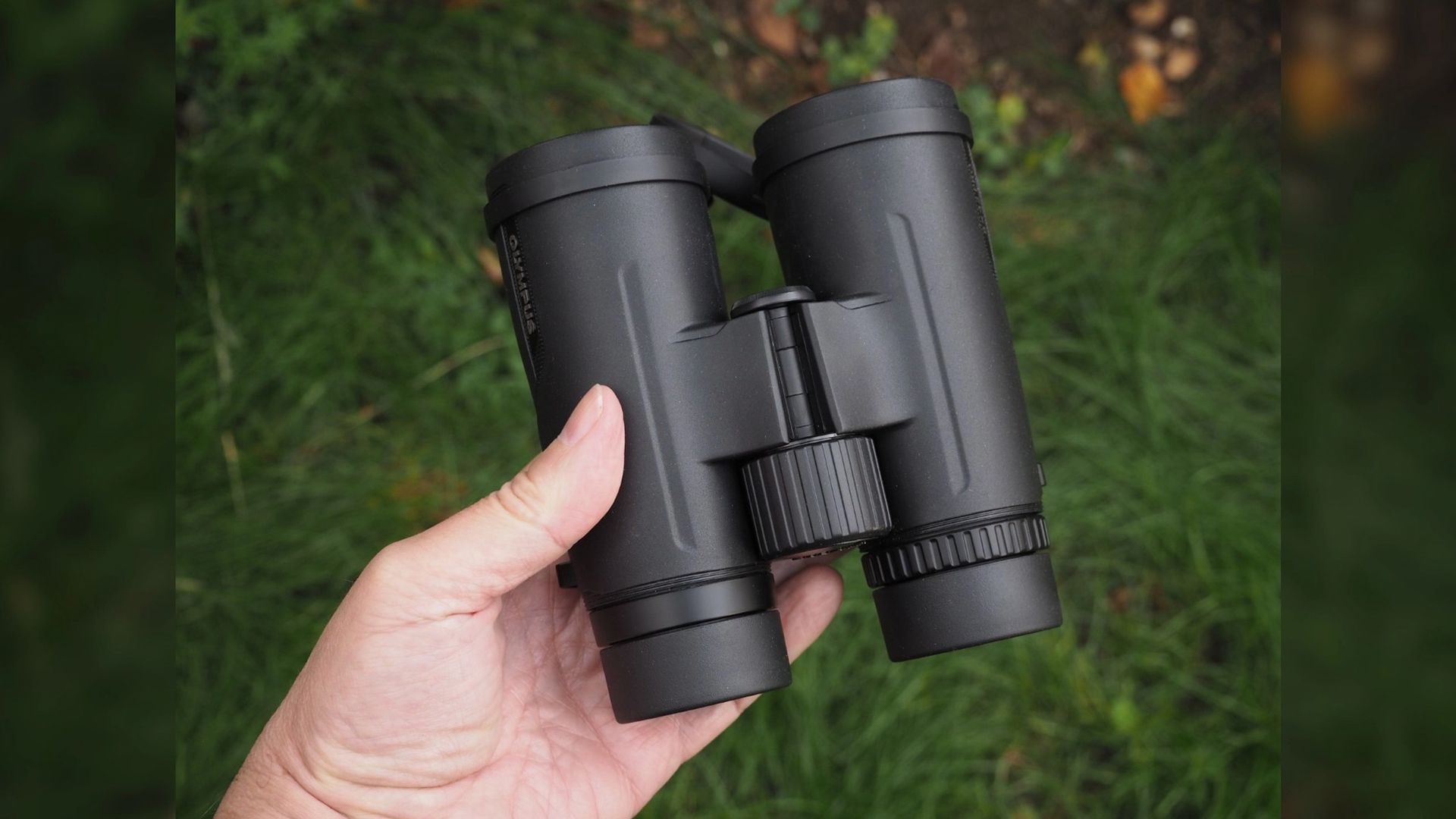 Olympus 8x42 ProGavin Stoker
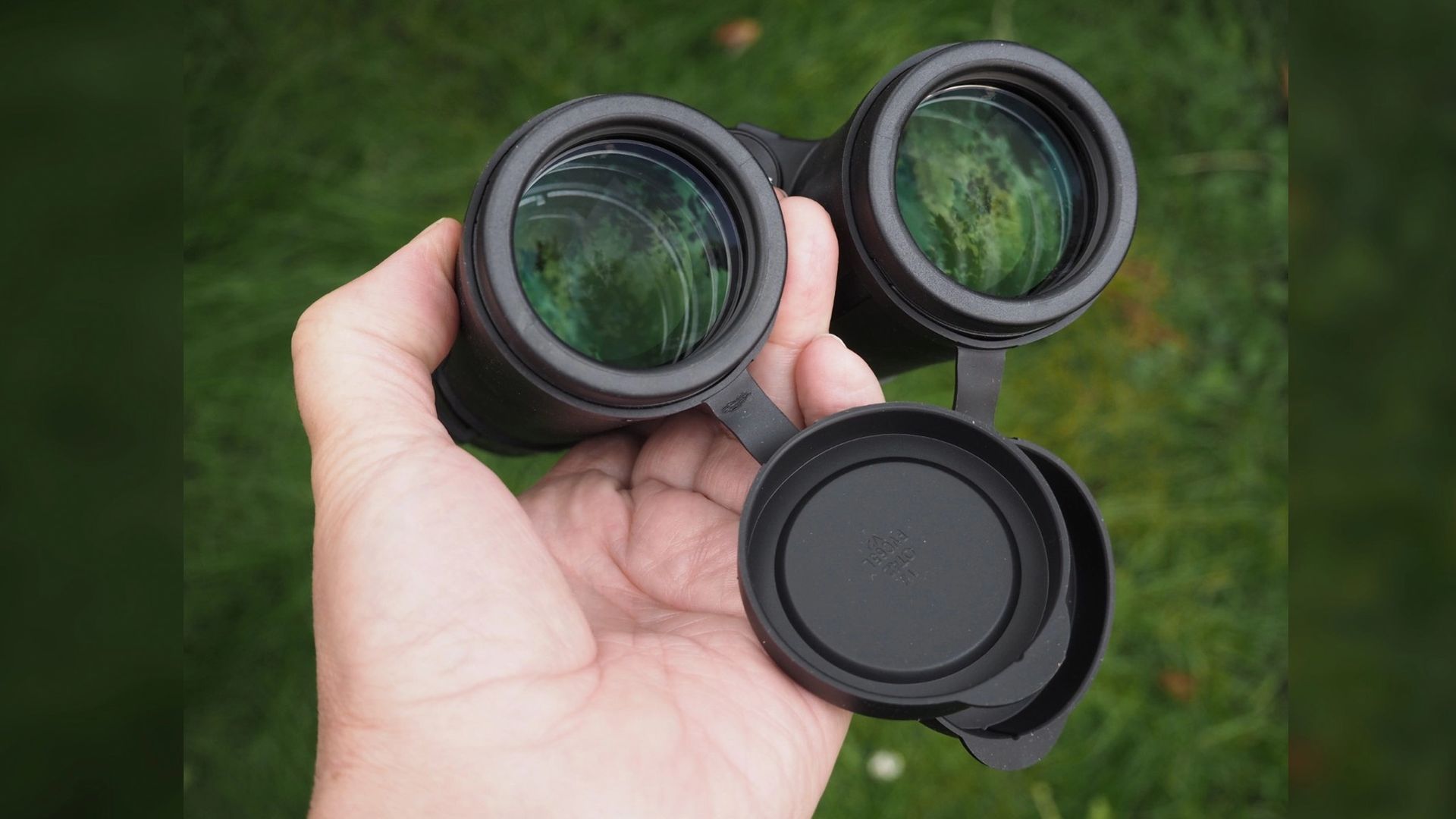 Olympus 8x42 ProGavin Stoker
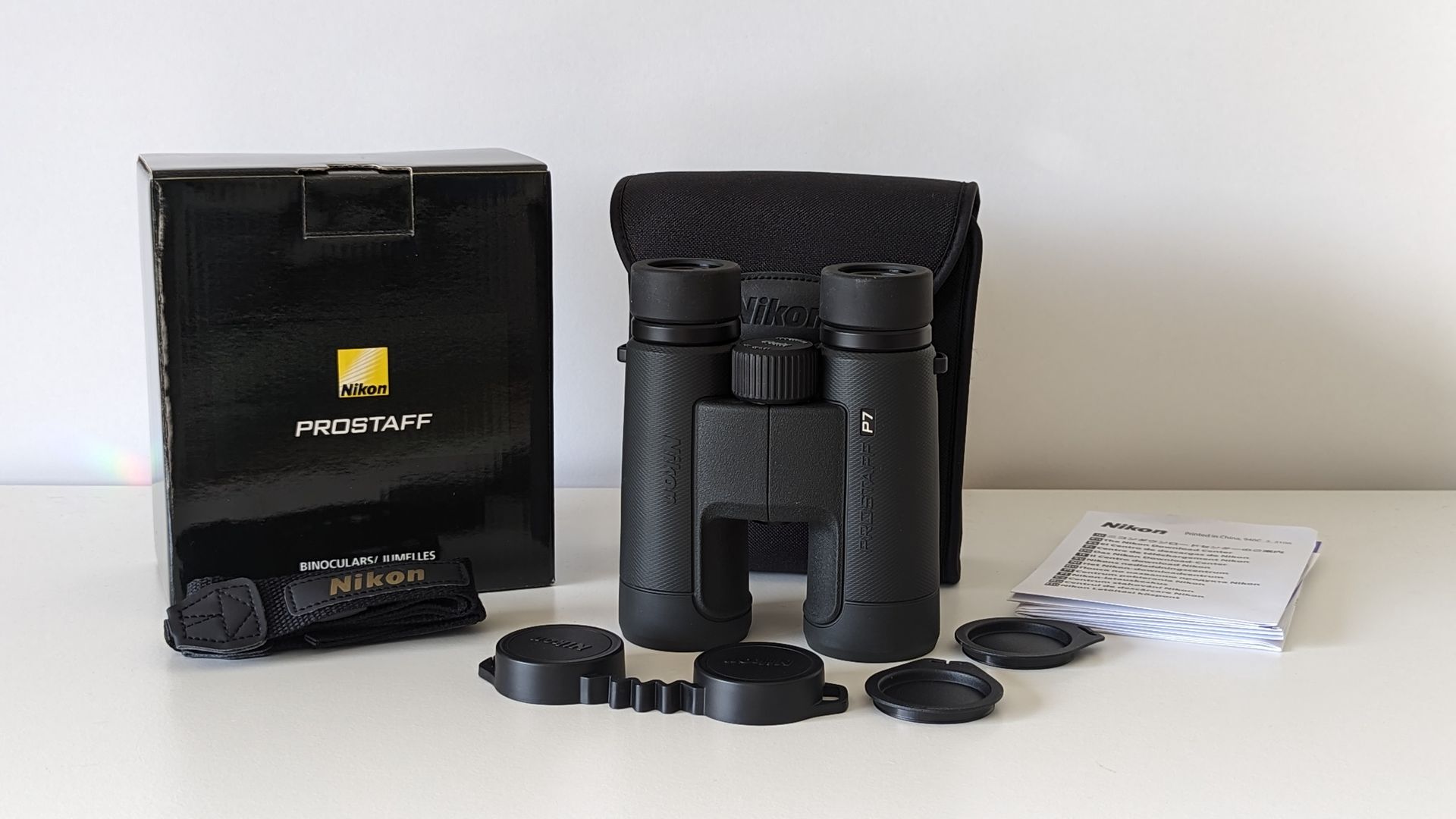 Nikon Prostaff P7 10x42Jase Parnell-Brookes
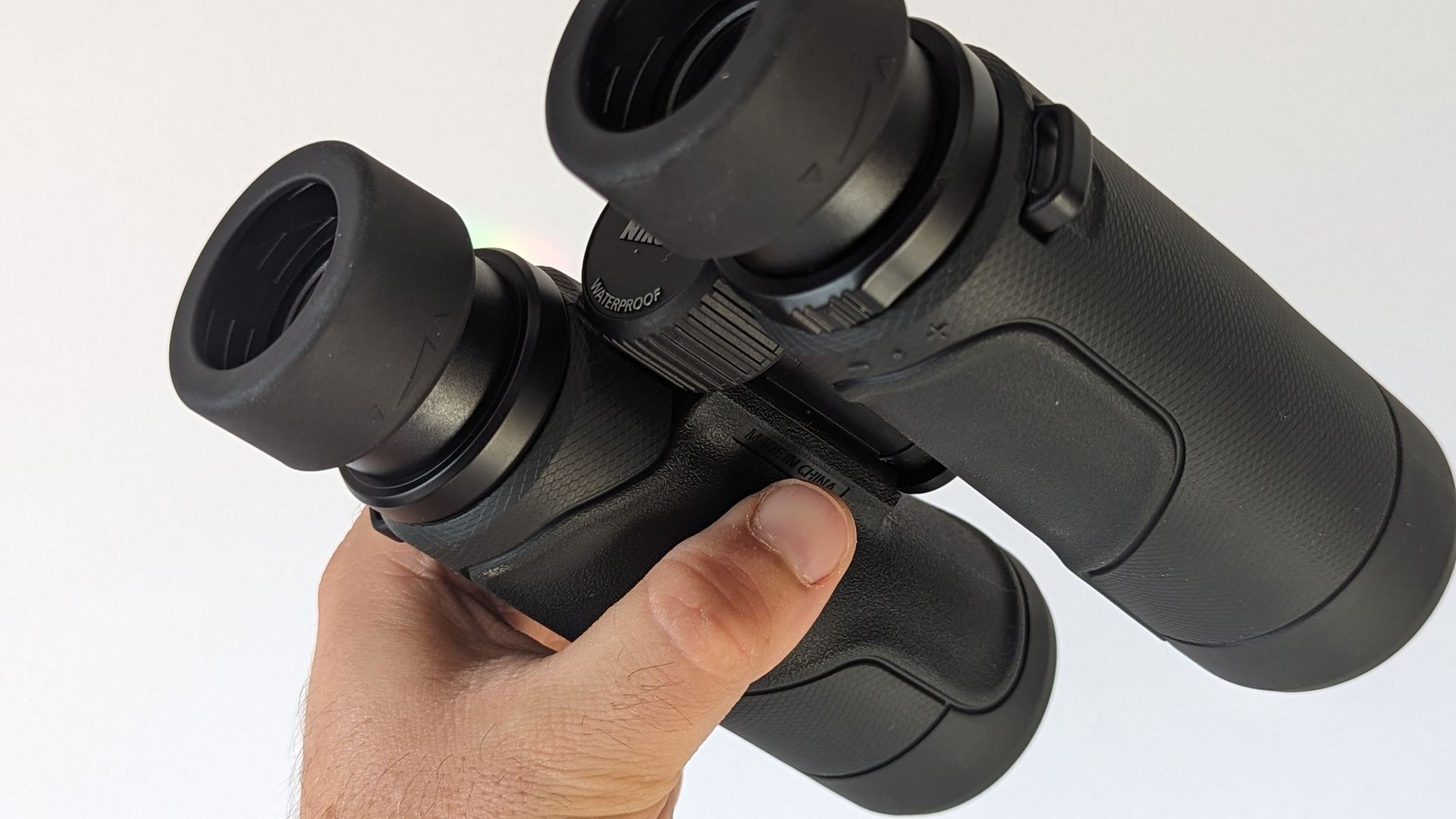 Nikon Prostaff P7 10x42Jase Parnell-Brookes
Best for birdwatching
 The premium option
This is quite possibly the best pair of birding binoculars we've ever used, but it comes at a steep cost. The Swarovski NL Pure 8x42 (the "NL" standing for "Nature Lovers") are sharp and bright with zero imperfections or defects — they're practically perfect. They're a big investment, admittedly — but you'll never need to buy another pair of binoculars again.
Read our review of the 8x32 variant
Pros
- Fantastic image quality
- Compact design with wasp waist that makes them comfortable to hold for long periods
- Generous 18mm eye relief
- Very wide 521 feet (159 m) FOV is ideal for tracking birds in flight and finding animals in woodland scenes
- Large 5.3mm exit pupil provides excellent low-light performance
- Waterproof and nitrogen purged to prevent fogging
- Features field-flattening technology (which they call "Swarovision") to offset curvature and provide sharpness towards the edges of the frame
Cons
- Expensive
- Diopter is a little stiff, and awkwardly placed
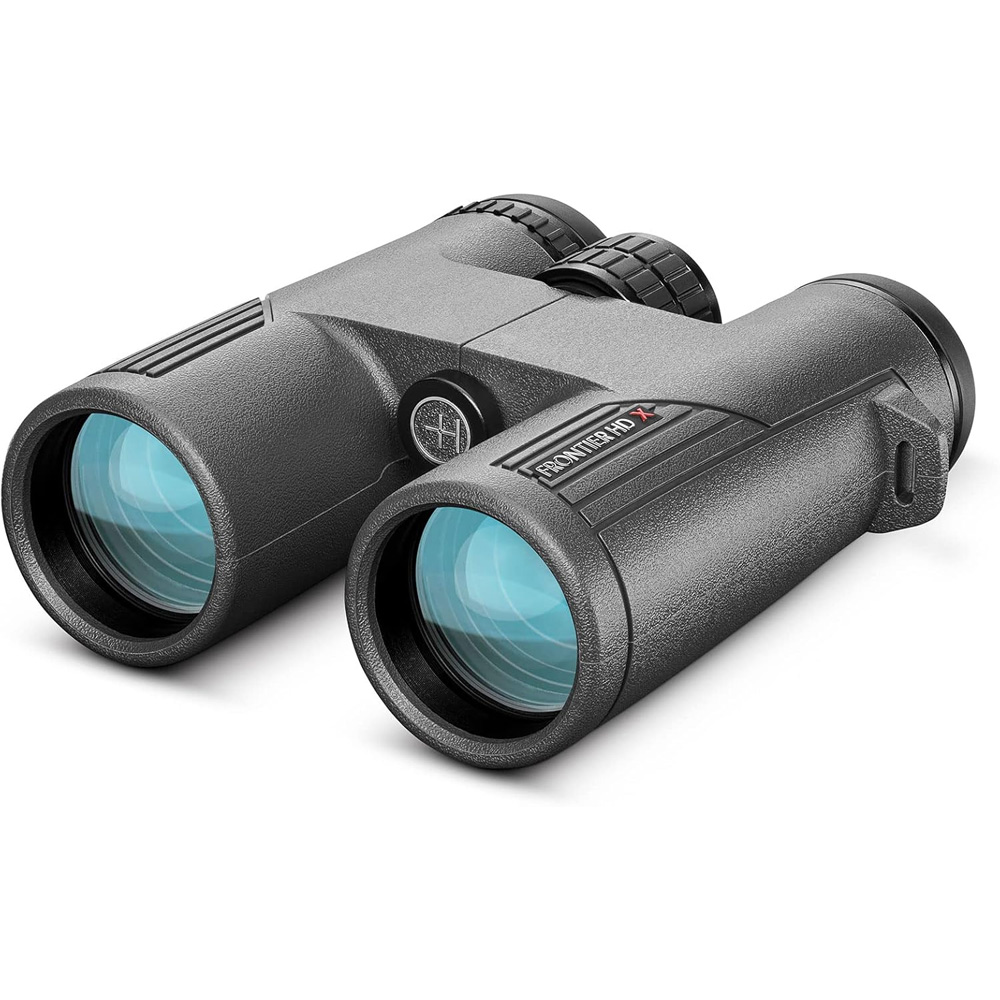 The pair "most people" should get
If you're looking for an excellent pair of birding binoculars and haven't quite reached the realms of "full-time professional twitcher often found hiding in the bushes with a $4,000 pair of binoculars," the Hawke Frontier ED X 8x42 are an exceptional choice.
Read our full Hawke Frontier ED X 8x42 review
Pros
- Excellent build quality
- Fantastic optics, especially for the price
- ED glass eliminates color fringing around contrasted subjects
- Dielectric prism coatings enhance light transmission — ideal for dawn/dusk and woodland areas
- Premium accessories that make them easy to carry and access swiftly and safely
- Generous 18mm eye relief
- Large 5.3mm exit pupil
- 426 feet (129.8 m) FOV is great for wide-field viewing
- Waterproof and fogproof
Cons
- Not the most lightweight 8x42
- Some softness around the edges
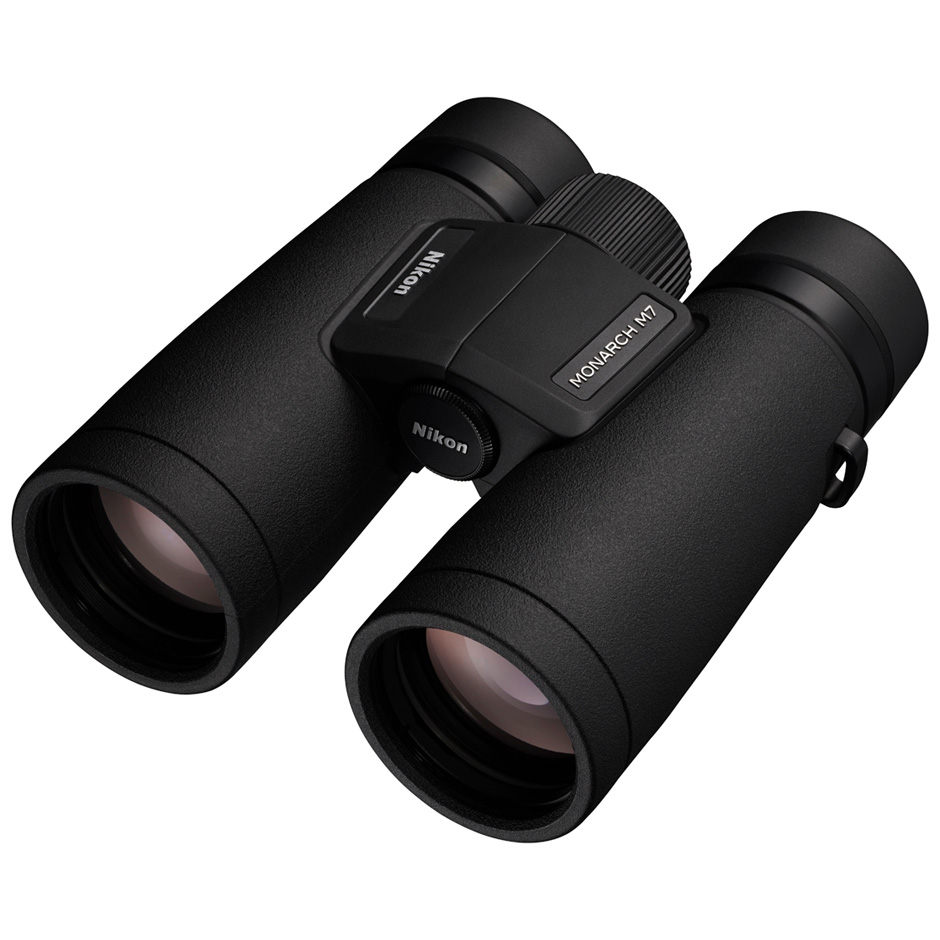 Mid-tier Nikon option
With Nikon producing such high-quality camera lenses, it makes sense that the company's binoculars follow suit. The Monarch M7 line is a premium mid-tier option with a wide field of view for birding, and is specifically constructed to handle the outdoors.
Read the full review at our sister site, Digital Camera World
Pros
- 435 feet (132 m) FOV is great for following birds
- Large 5.3mm exit pupil keeps things bright and comfortable to look through
- ED glass eliminates chromatic aberration
- Waterproof and nitrogen-filled to prevent fogging
- Dielectric and phase-coated prisms for bright colors and high-resolution views
- Locking diopter prevents accidental defocusing
- Compact and lightweight enough to carry in a coat pocket
Cons
- Focus wheel is on the stiff side
- The very edges of the frame are a little soft
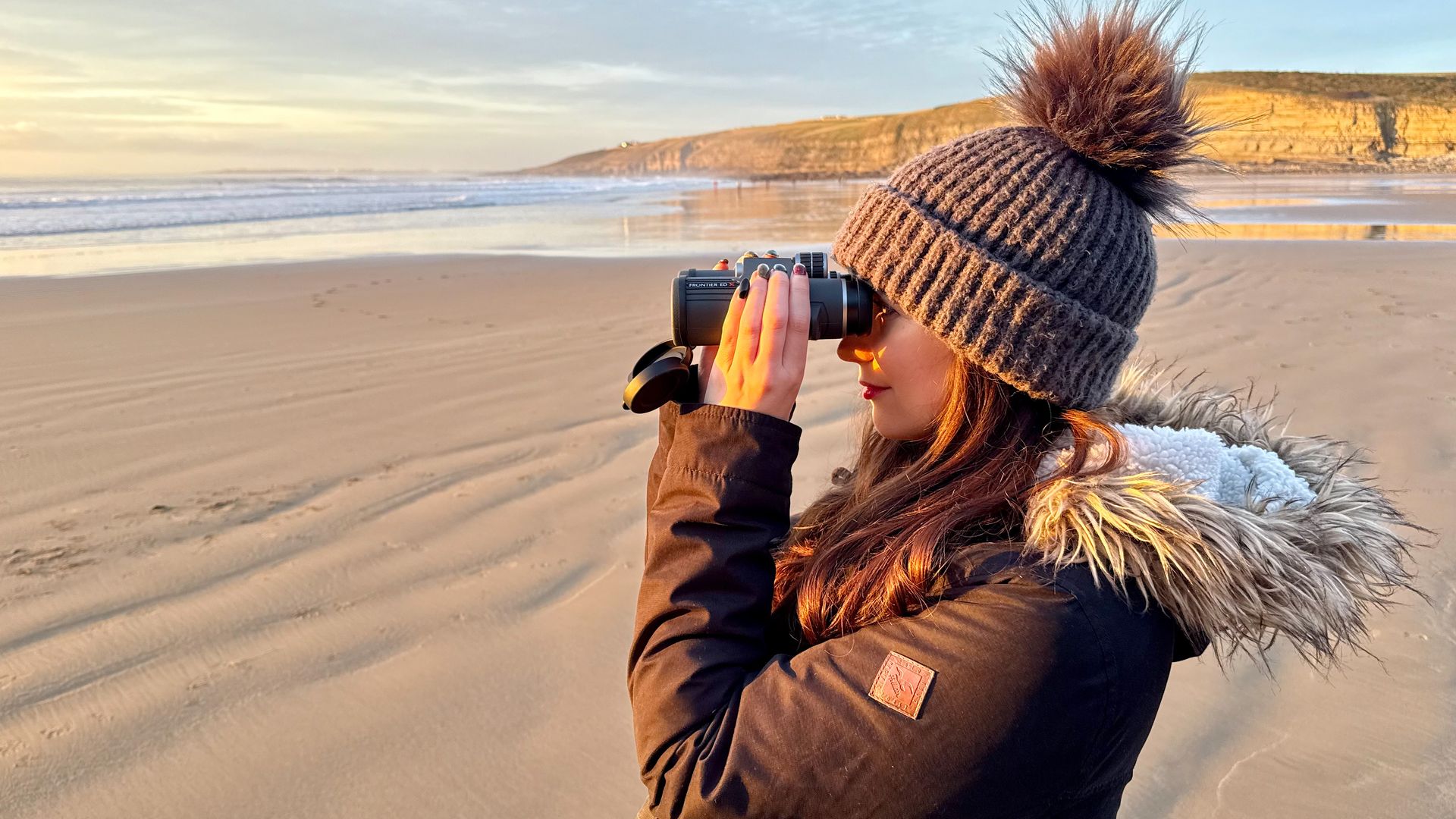 Hawke Frontier ED X 8x42Kimberley Lane
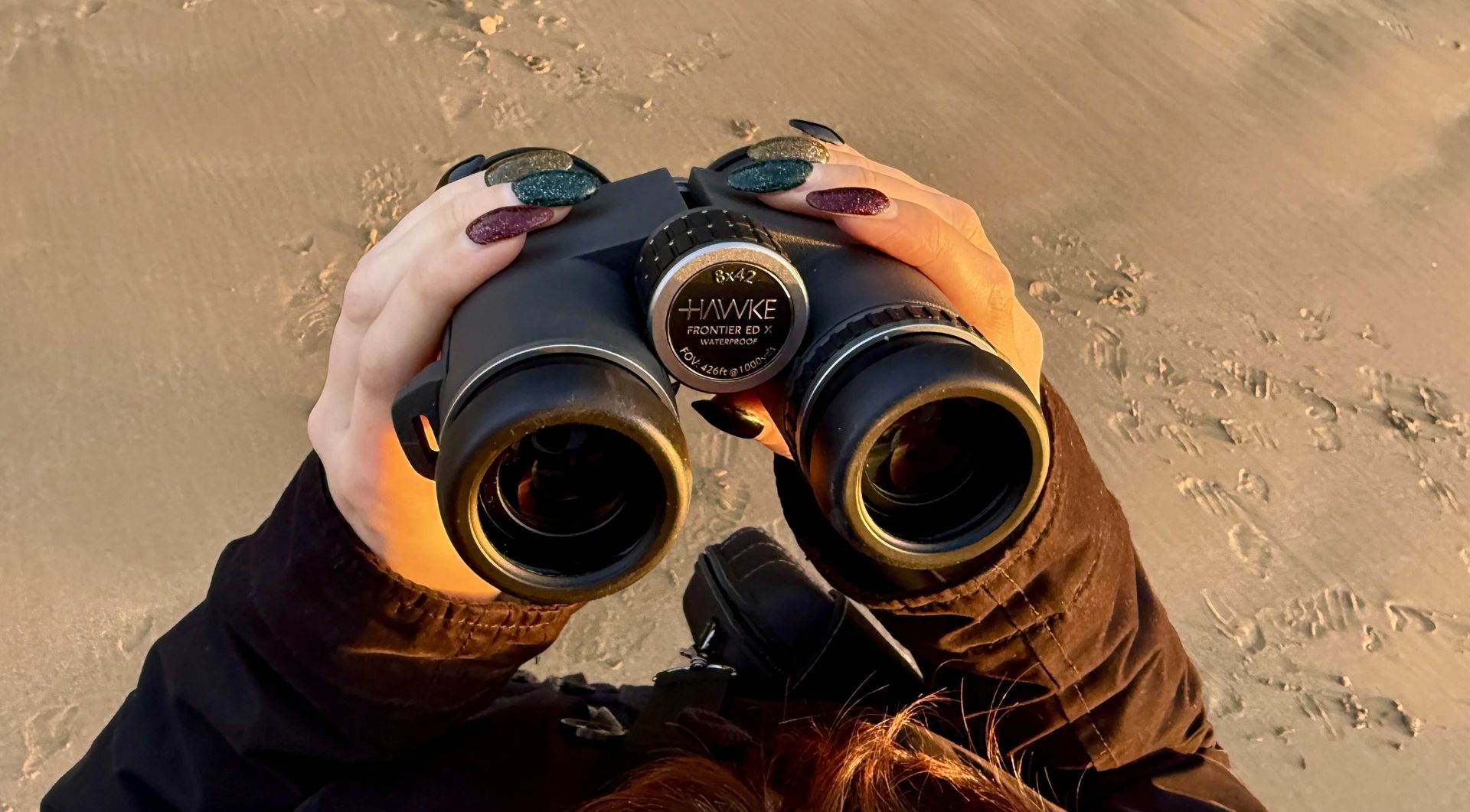 Hawke Frontier ED X 8x42Kimberley Lane
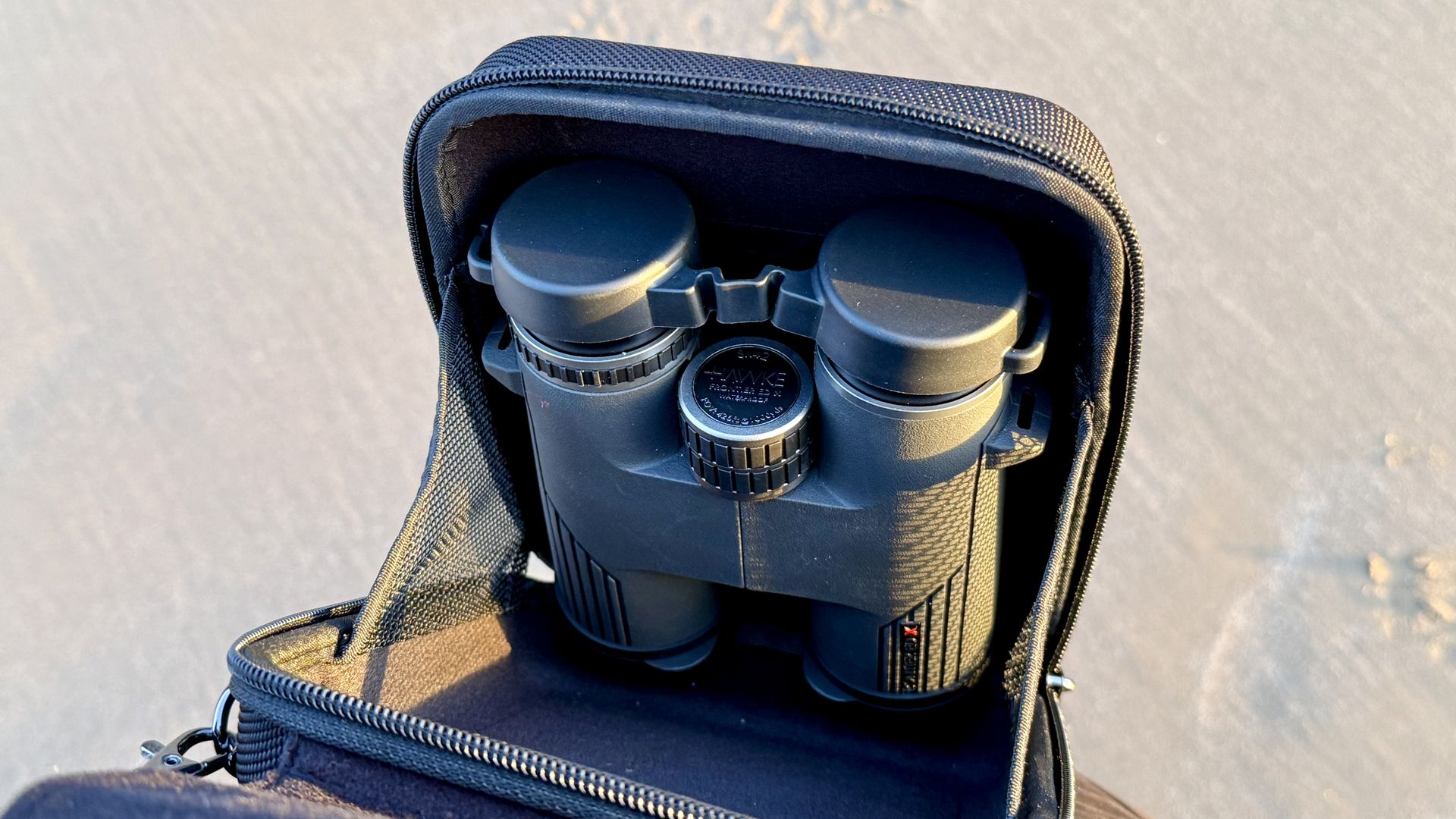 Hawke Frontier ED X 8x42Kimberley Lane
Best for stargazing
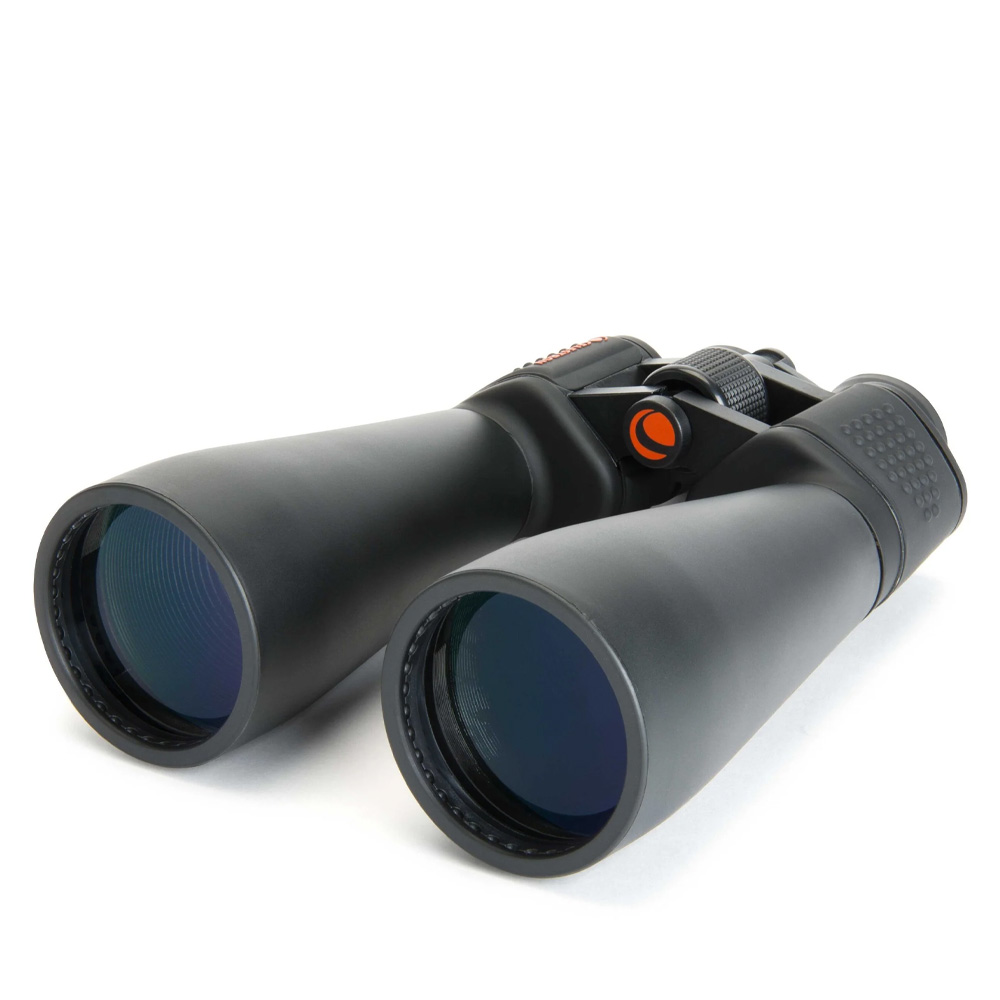 Excellent budget binos
Celestron SkyMaster 15x70 Binoculars
If you want something in-between handheld binoculars and a telescope, these large astronomy binoculars will do the job perfectly. They're an affordable entry point into stargazing that will give you great views of the moon, Jupiter's moons and bright deep-sky objects.
Read our full Celestron SkyMaster 15x70 review
Pros
- Affordable for beginners
- Bright, sharp views
- Can view a variety of celestial objects, from the moon to Jupiter's rings and brighter deep-space objects
- Tripod adapter included
- Comes with a carry bag and strap
- Generous 18mm eye relief
- 4.7mm exit pupil works well for astronomy
Cons
- Noticeable chromatic aberration due to lack of ED glass, but it's not too distracting for new observers
- Big and heavy — requires a tripod
- Stiff focus wheel
- Can't see Saturn's rings
- Lens caps aren't tethered, so they could be easily lost
- Not fogproof
 For serious deep-sky stargazing
Celestron SkyMaster 25x100
If you want the best possible binocular views of the night sky without having to buy and set up a telescope, these massive astronomy binoculars are like having two small telescopes side by side.
Read our full Celestron SkyMaster 25x100 review
Pros
- Large 25x magnification provides detailed views
- 100mm objective lenses are perfect for nighttime viewing
- Decent 15mm eye relief
- Individual eyepiece focus ensures you get a perfect view
- We had contrast-filled views of the moon, and great views of Juputer's moons and bright deep space objects
Cons
- Heavy at 8.75 lbs (3.97 kg) — a sturdy tripod is essential
- The tripod mounting tube often slipped loose when we tested them
- No central focus wheel
- For their size, we'd have liked them to feel more rugged
 For handheld stargazing
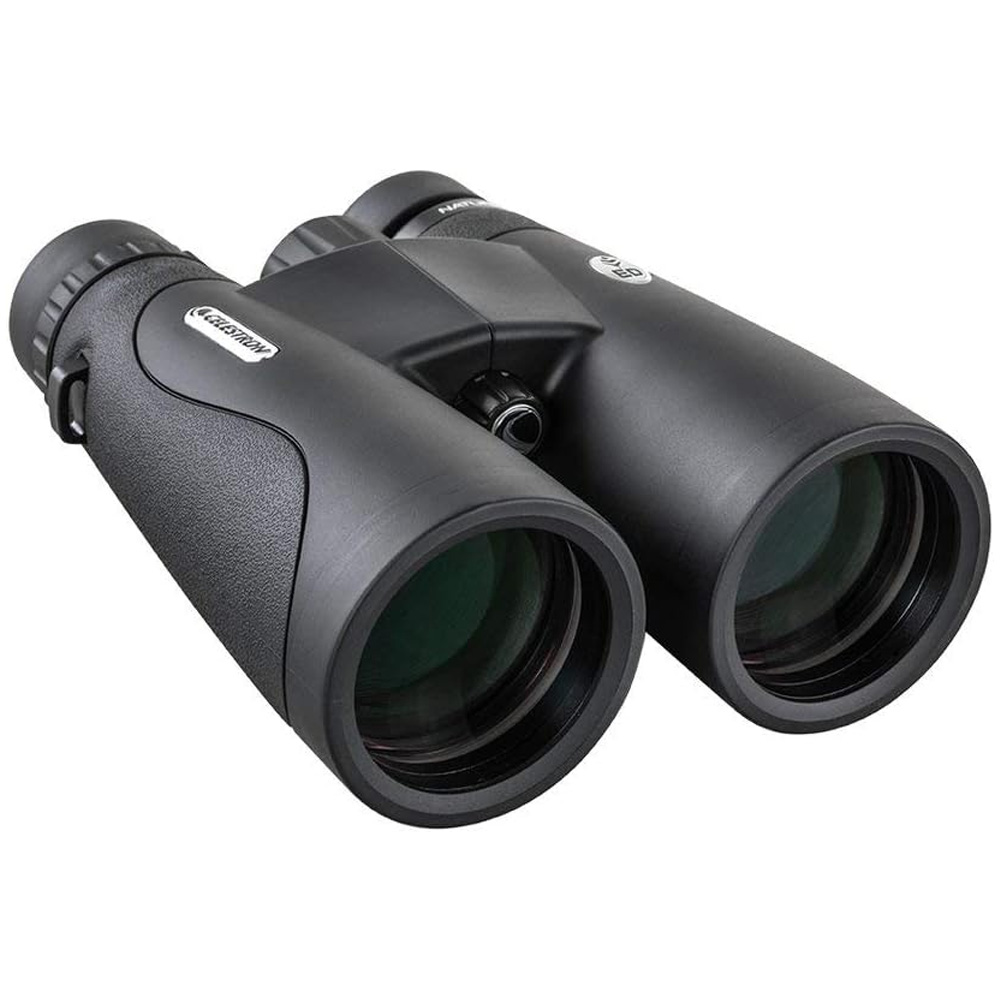
Celestron Nature DX ED 10x50
If you don't want to mount your binoculars on a tripod, these 10x50 handheld binos are perfect for taking on camping trips, hiking or if you just want to sweep them across the sky with ease.
Read our review of the 10x42 variant
Pros
- ED glass to reduce chromatic aberration
- Large 5mm exit pupil
- Waterproof and fogproof
- Sharp and clear optics for the price
- 10x50 is excellent for low light viewing
- They're lightweight enough to handhold, but they're also tripod mountable
- Generous 17.8mm eye relief
Cons
- Some color fringing around highly contrasted subjects
- Not the most premium feeling
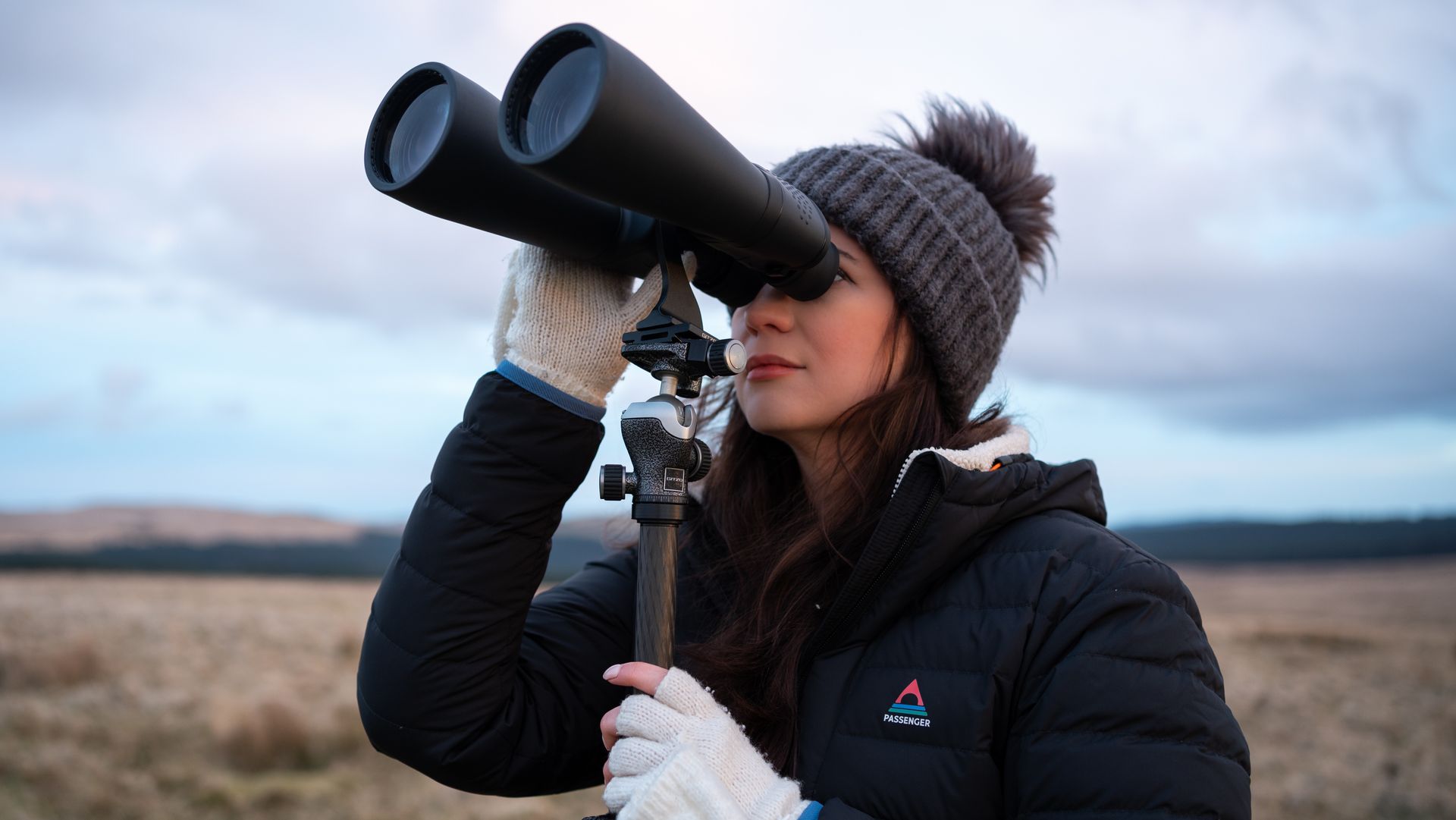 Celestron SkyMaster 15x70Jase Parnell-Brookes
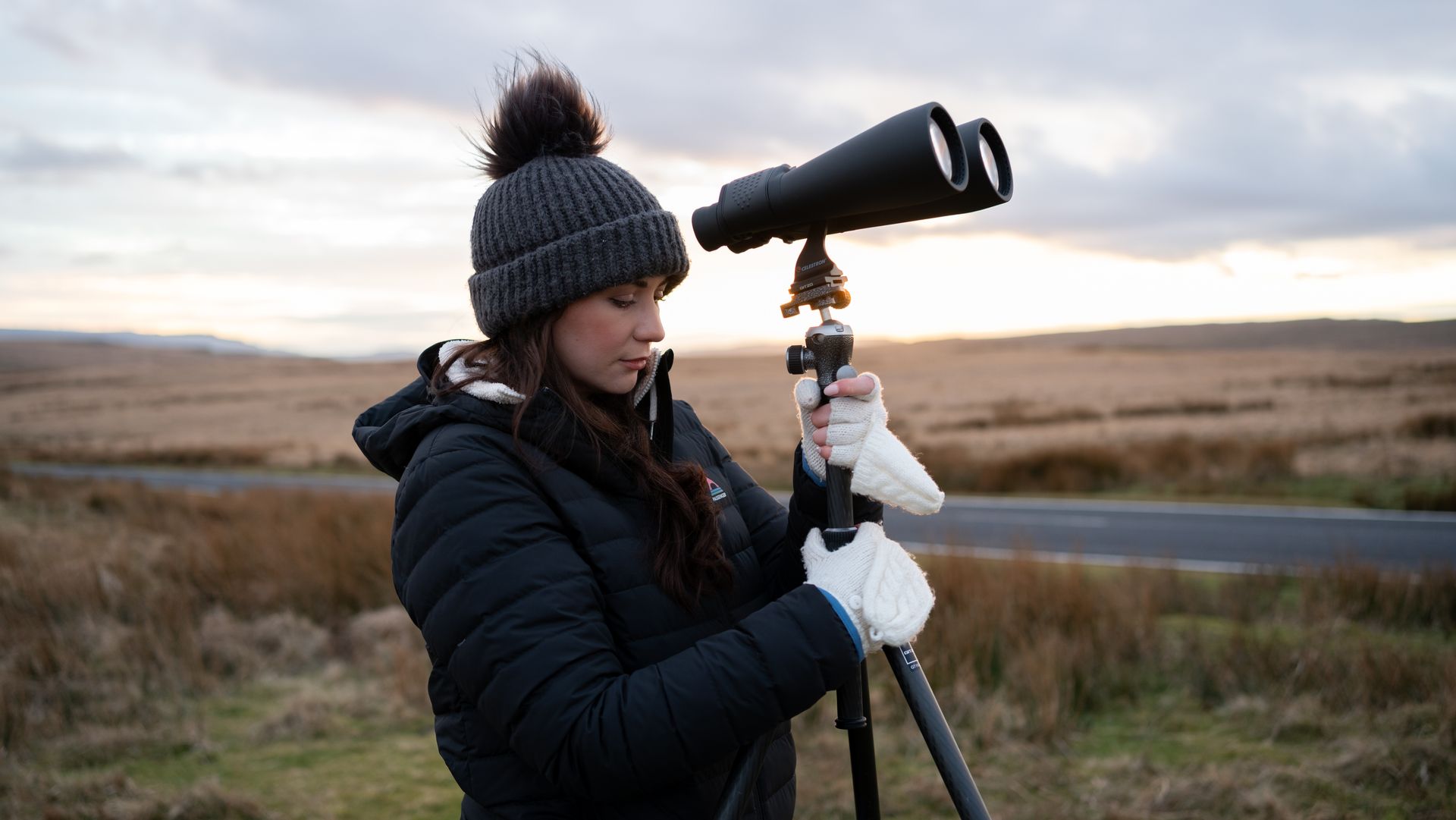 Celestron SkyMaster 15x70Jase Parnell-Brookes
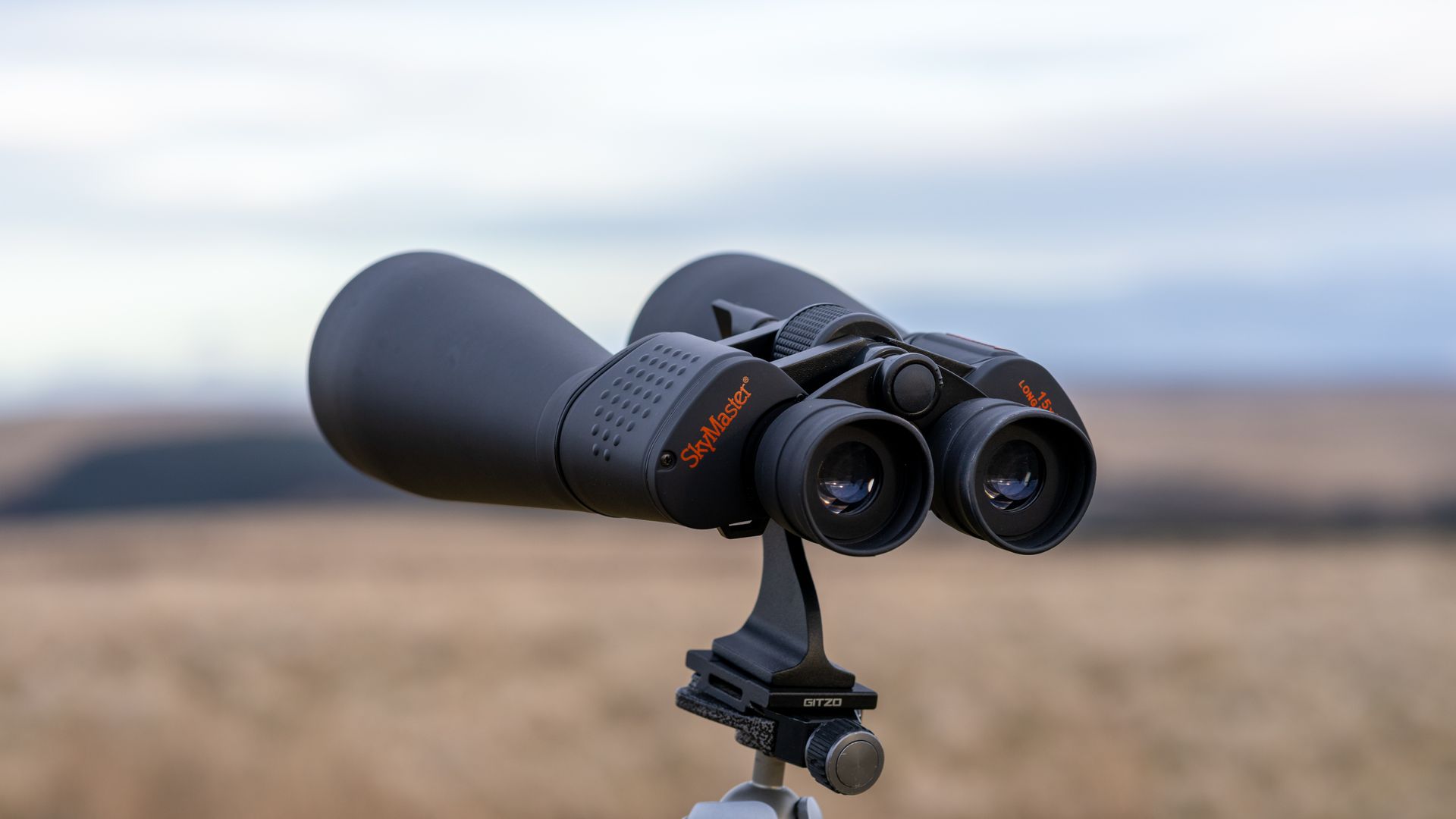 Celestron SkyMaster 15x70Jase Parnell-Brookes
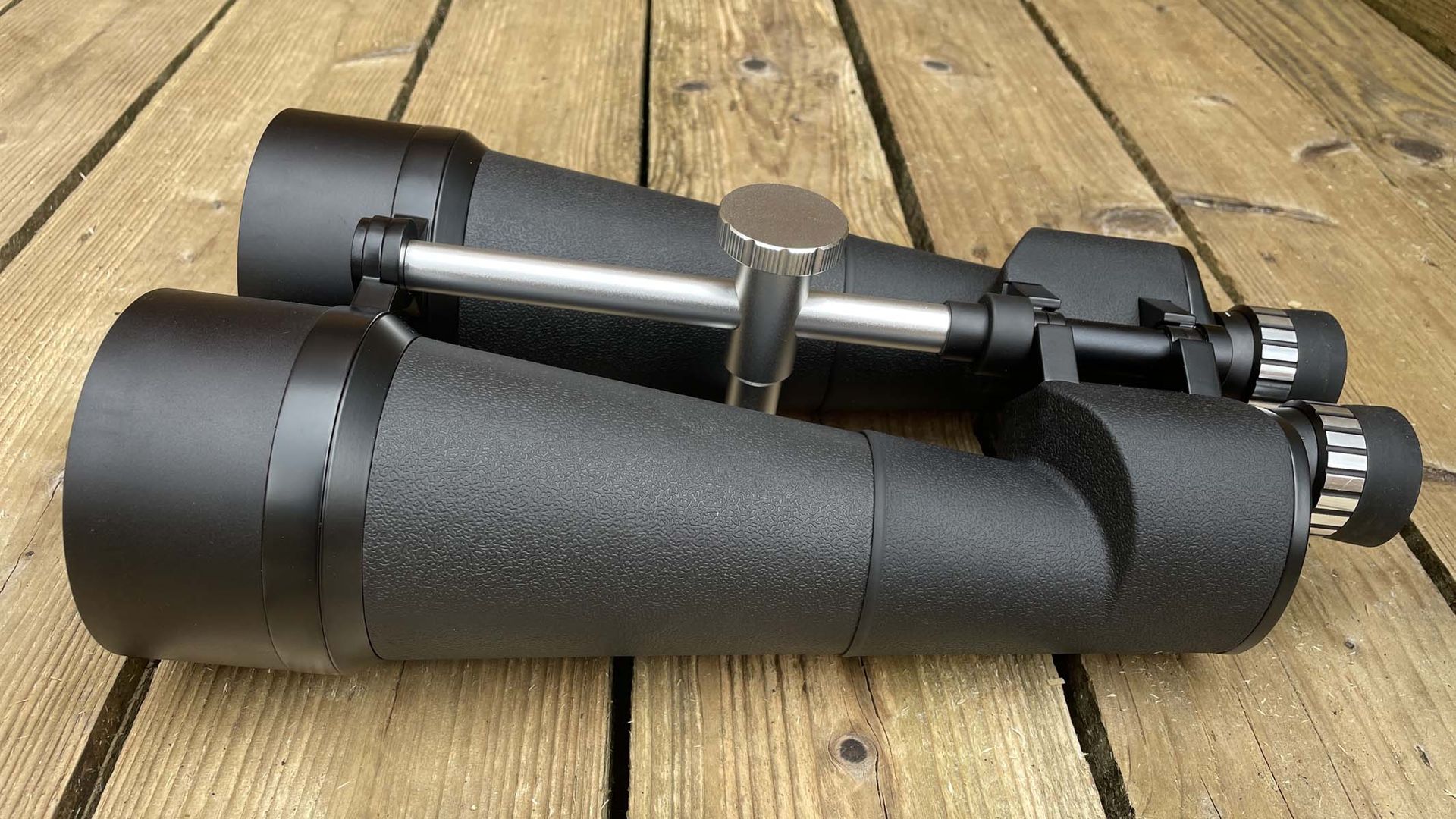 Celestron SkyMaster 25x100Matt Morris
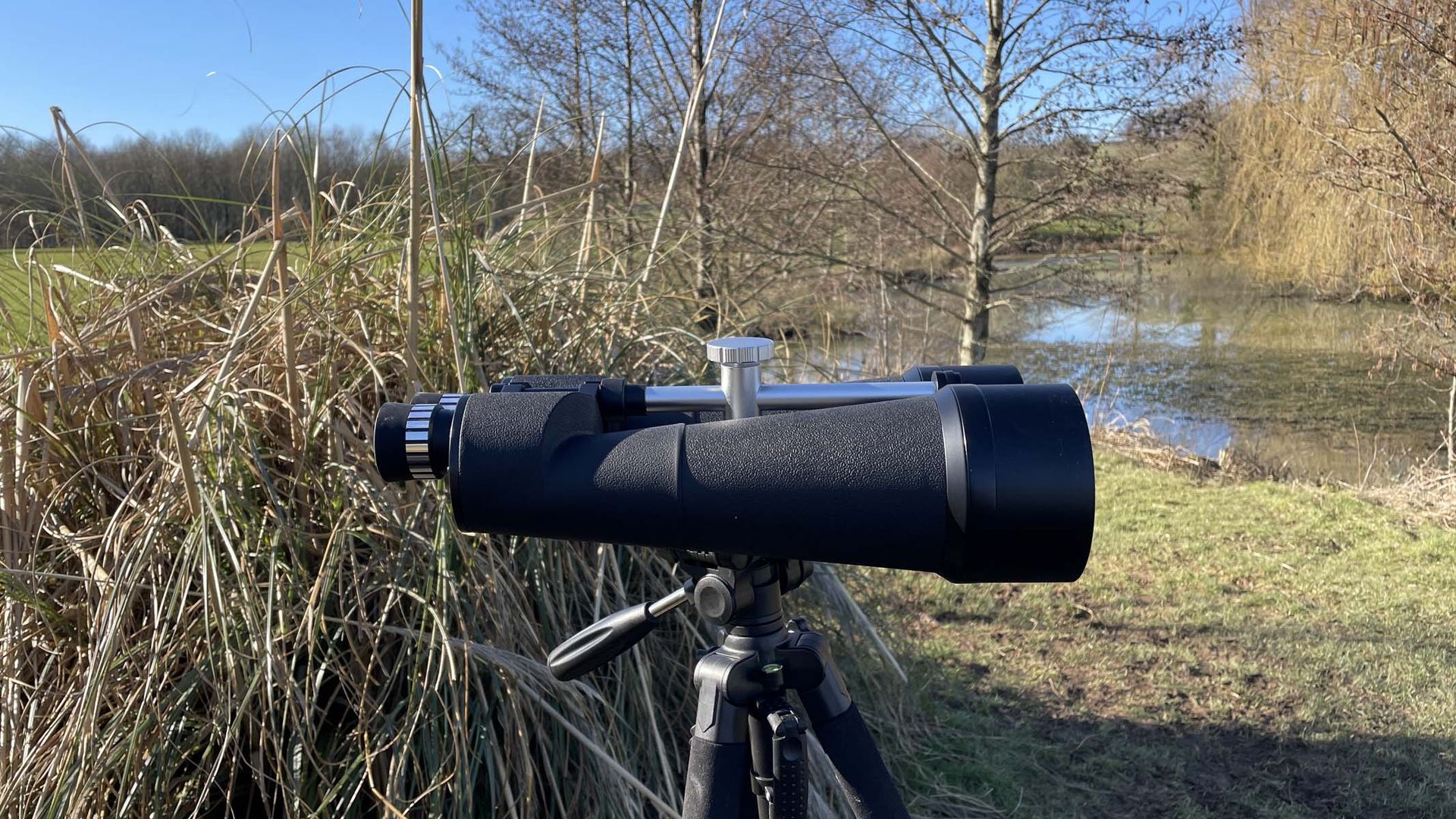 Celestron SkyMaster 25x100Matt Morris
Best compact binoculars
 Excellent for the price
An all-around fantastic pair of compact binoculars that are sharp, bright and fit in the palm of your hand. Our optics writer went out and bought herself a pair after testing them.
Read our full Hawke Endurance ED 8x25 review
Pros
- Barely any chromatic aberration thanks to the ED glass
- Small, lightweight folding design that fits in the palm of your hand
- Bright and sharp optics
- Surprisingly good for getting a (brief) closer look at the moon and stars
- Excellent optics for the price
Cons
- 13mm eye relief isn't great if you wear glasses
- Not the best for dedicated astronomy or low-light observations
- Small 3.1mm exit pupil
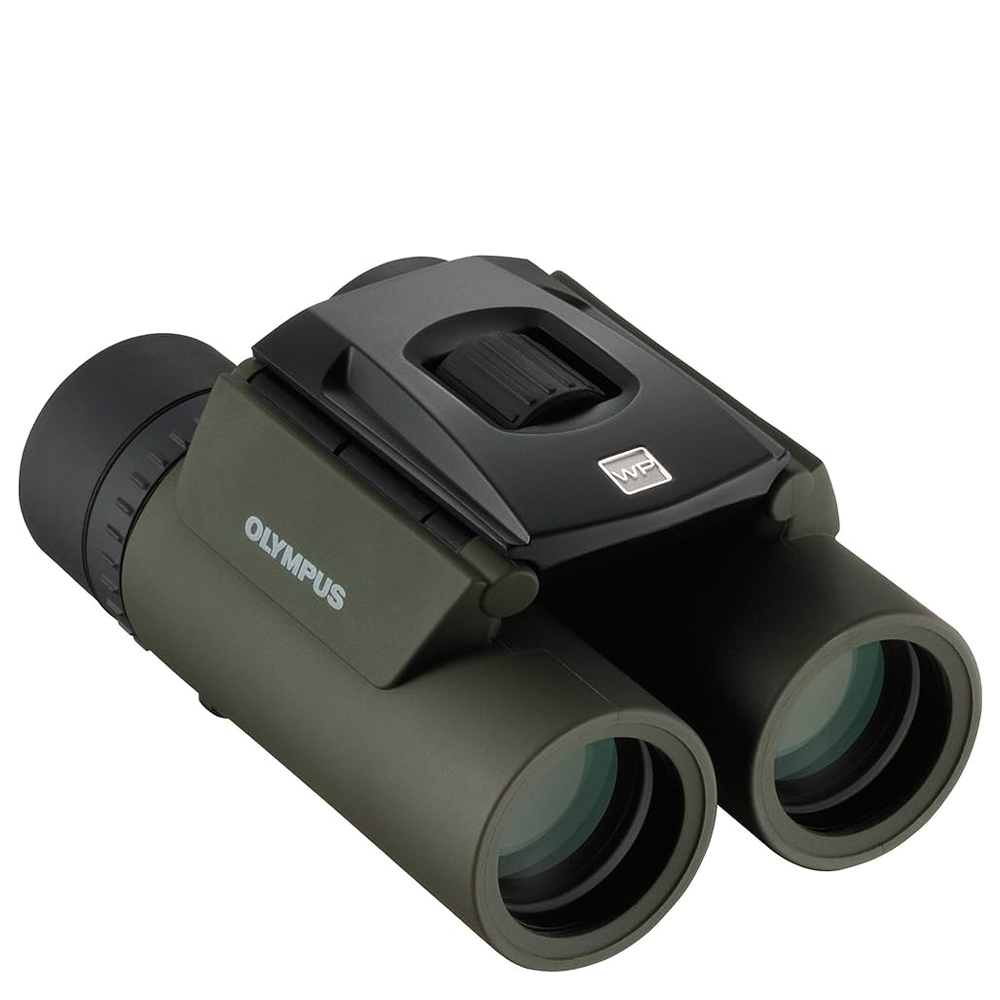 A great all-rounder
An affordable option to throw in your backpack or pocket for hiking, and a more "general purpose" pair of binoculars that offer good optics for the price. However, with no ED glass, birders will want to opt for another pair.
Read our full Olympus 8x25 WP II review
Pros
- Compact and portable
- Robustly constructed
- Better than expected image quality
- Reasonably priced
- Waterproof and fogproof
Cons
- The small untethered lens caps provided are easy to lose
- Small objective lens
- Average 15mm eye relief
- No ED glass to combat color fringing
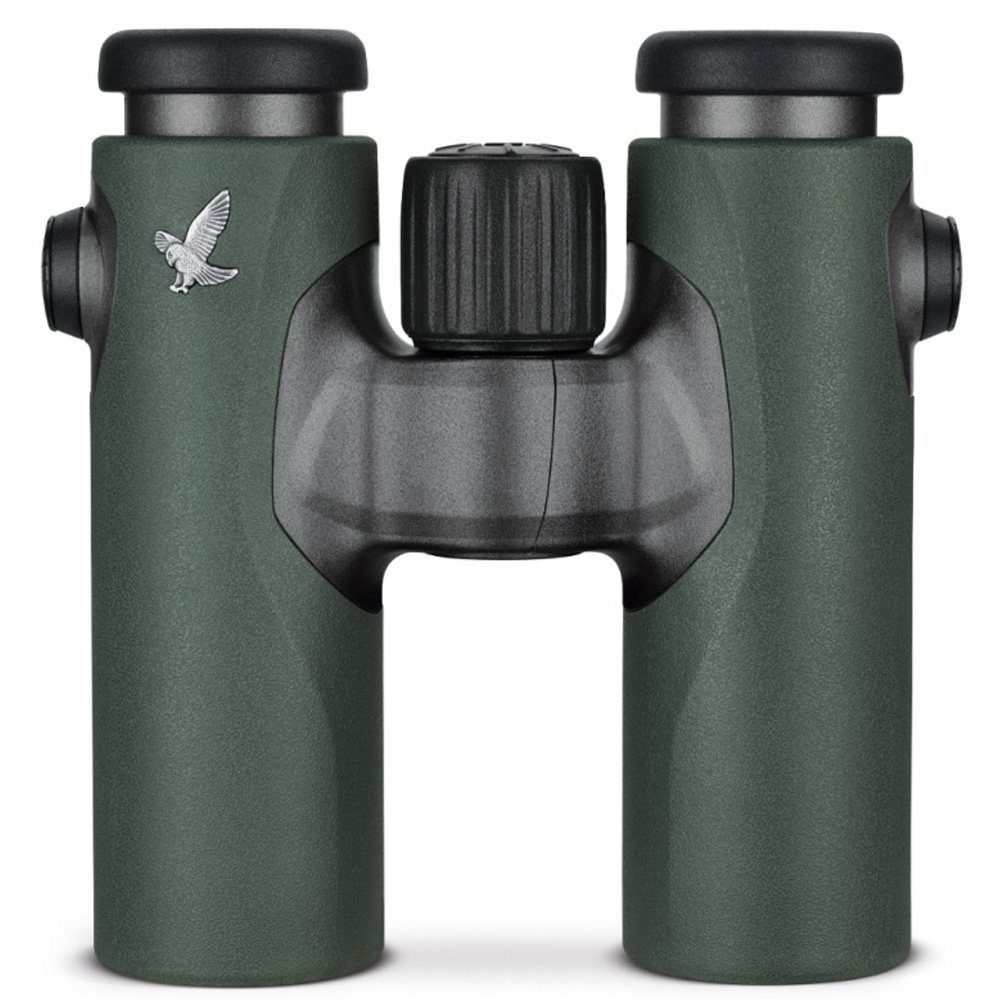 For superior optics
Swarovski CL Companion 10x30
A compact and lightweight option from Swarovski that offers crystal-clear optics, premium build quality and excellent performance. A great choice if you want a binocular for multiple purposes, as opposed to a dedicated birding or astronomy binocular.
Read the full review at our sister site, Digital Camera World
Pros
- Crystal-clear optics
- Can tolerate -25 to +55 degrees
- Waterproof down to 4m
- Compact and lightweight at just 490g
- Sharp all the way to the edges
- Generous 18mm eye relief
Cons
- Premium price point
- Small 3mm exit pupil
- Not best suited as a primary birding or astronomy binocular
- Not as portable as folding binoculars
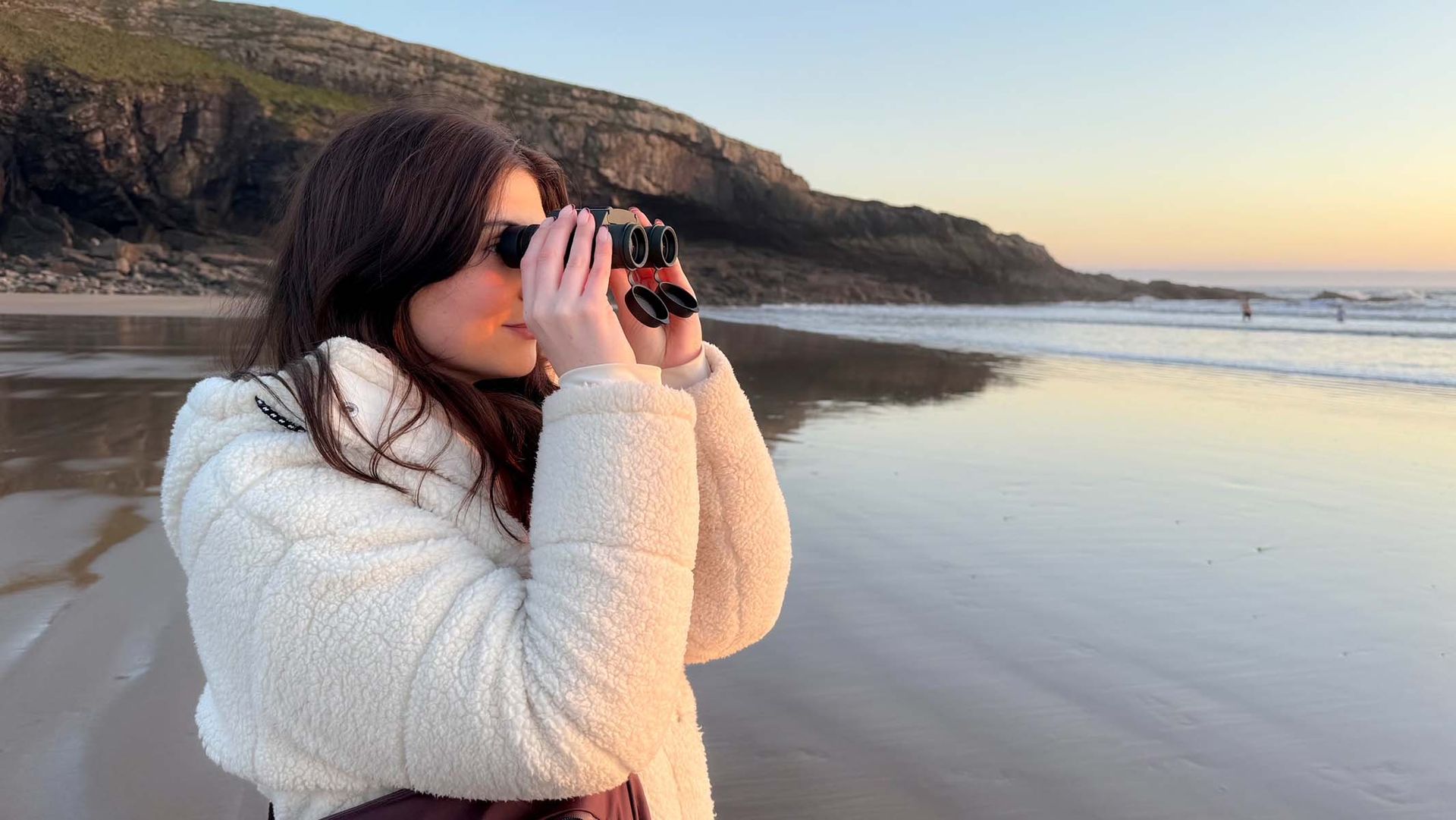 Hawke Endurance ED 8x25Kimberley Lane
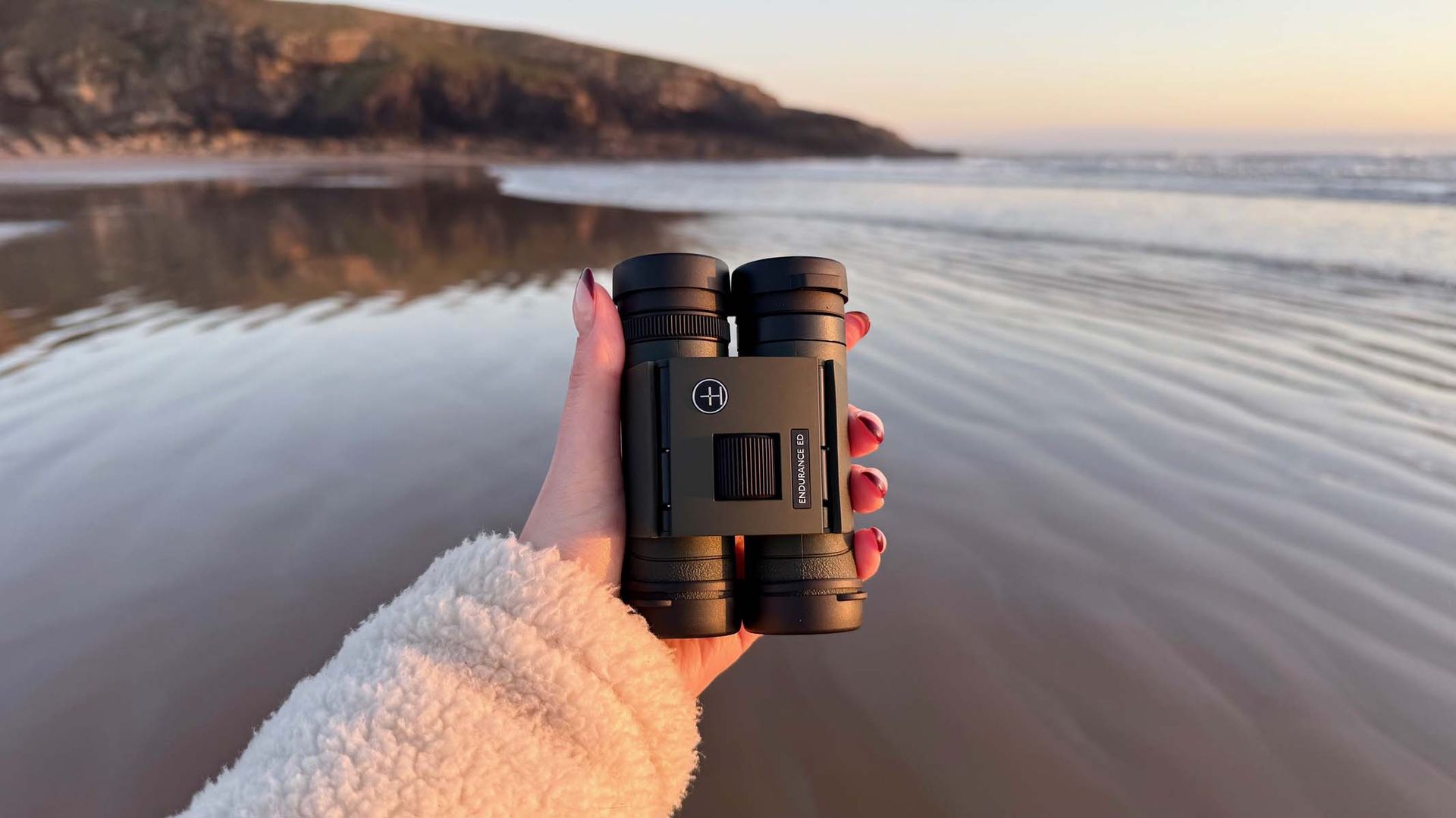 Hawke Endurance ED 8x25Kimberley Lane
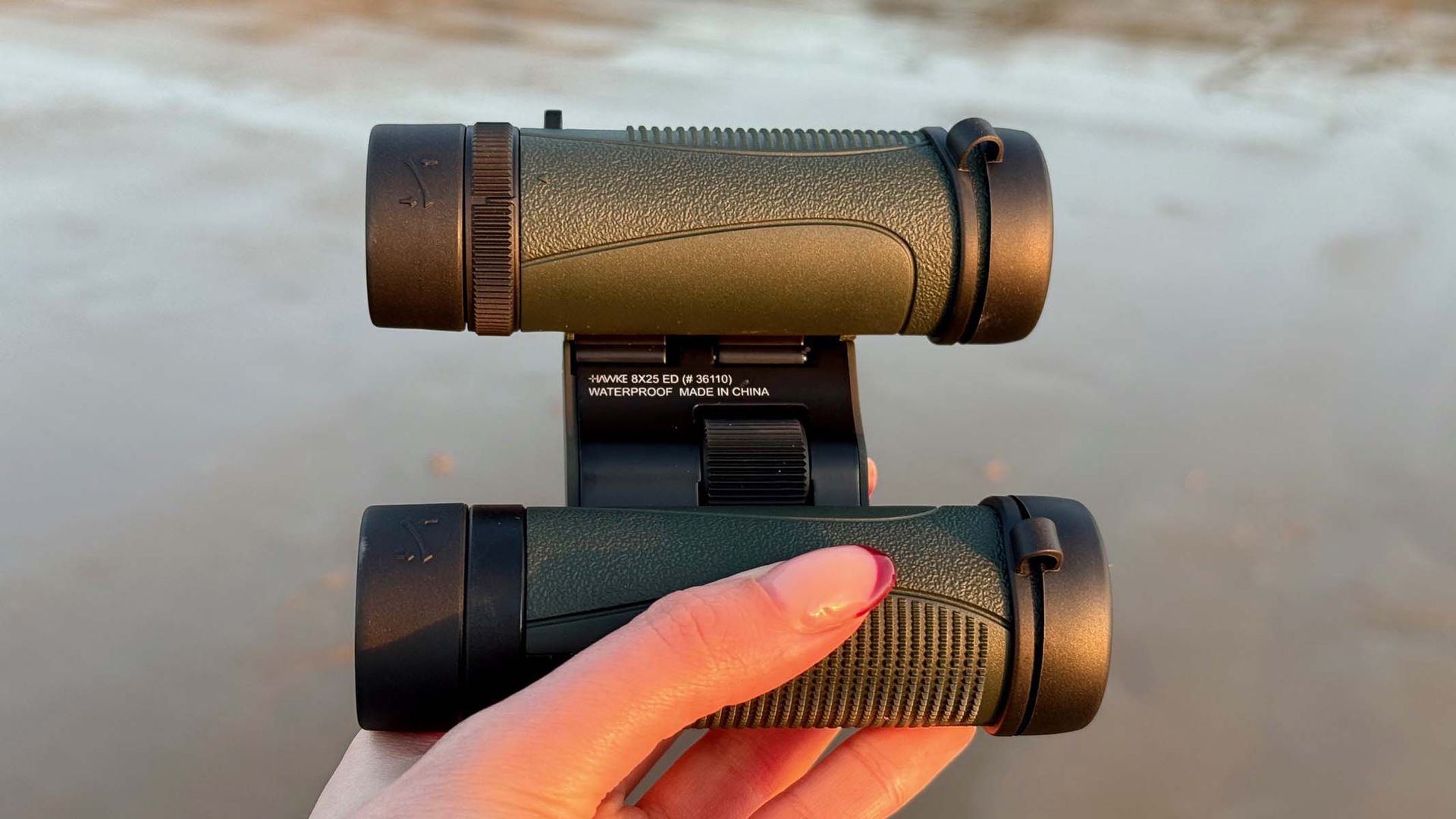 Hawke Endurance ED 8x25Kimberley Lane
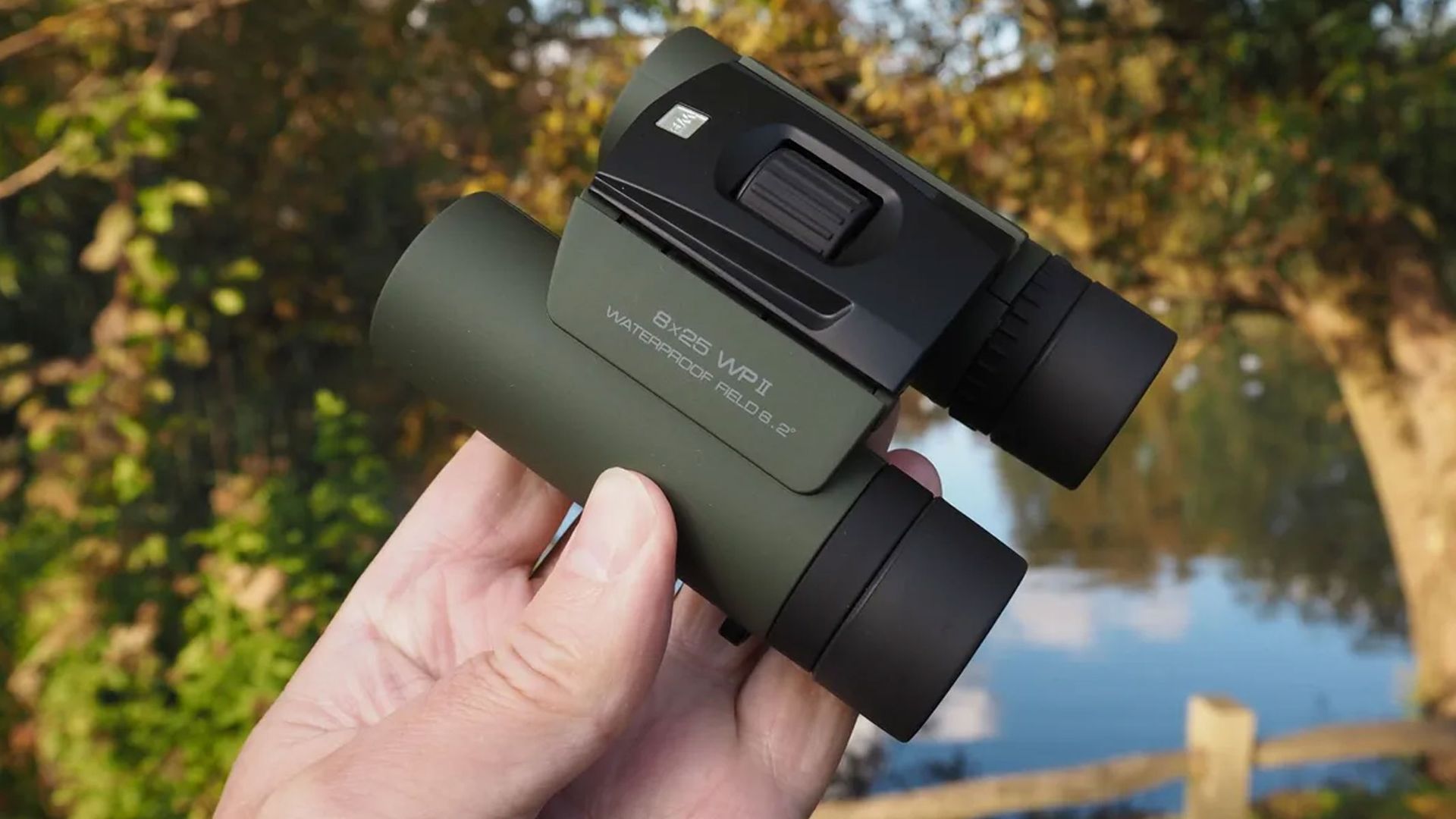 Olympus 8x25 WP II Future
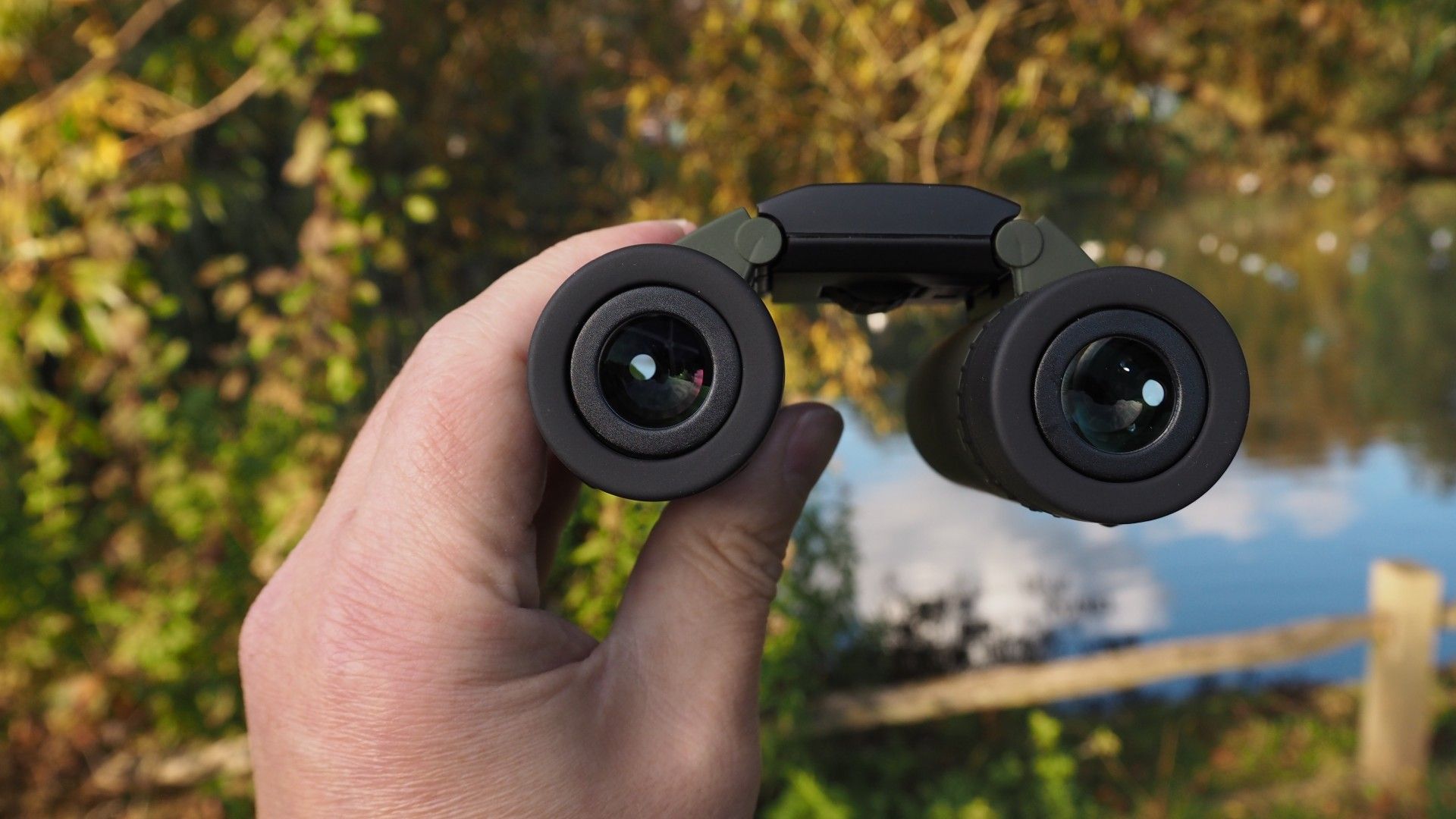 Olympus 8x25 WP II Future
Best image-stabilized
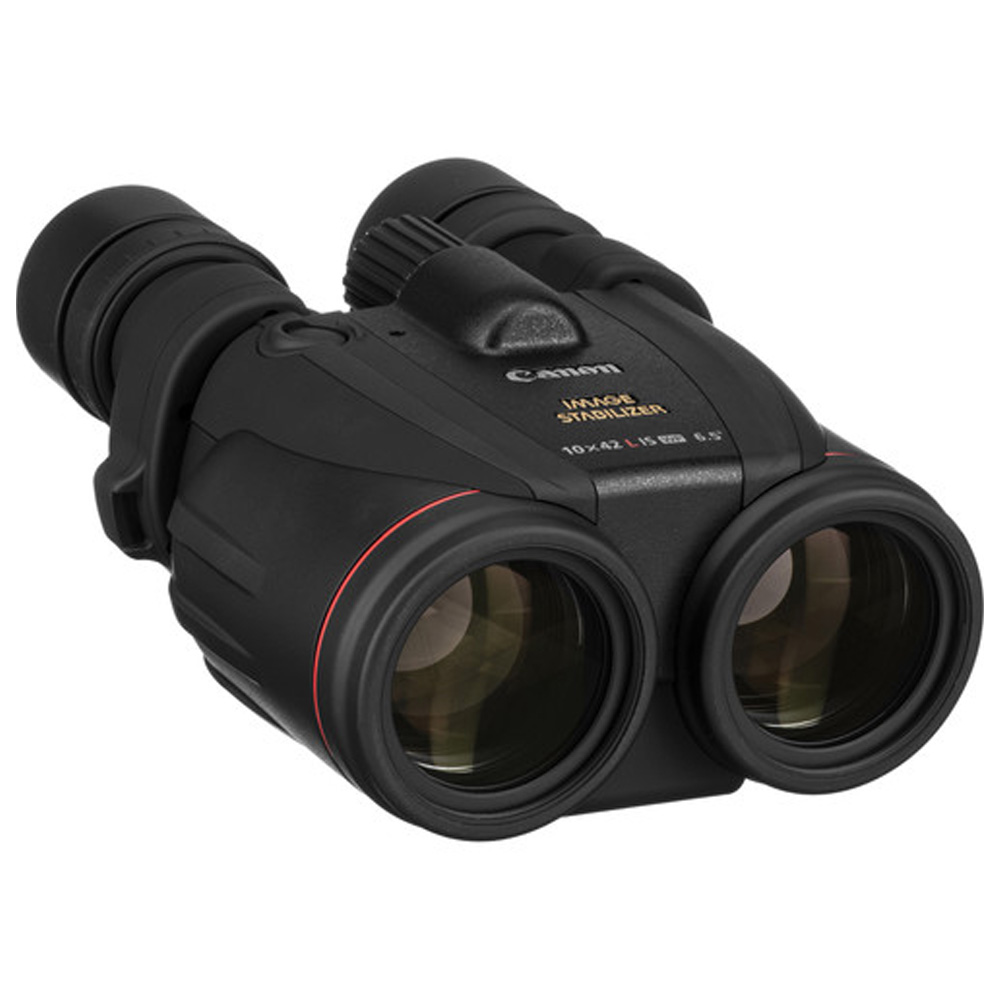 Best all-rounder
These binoculars feature Canon's bright L-series optics. shared with many of their camera lenses, which provide sharp views that become smooth and steady with the effective image stabilization.
Read our full Canon 10x42L IS WP review
Pros
- Canon’s first image-stabilized binos to offer waterproofing
- Powerful magnification and top-tier optical quality with Canon's 'L' series glass
- Stabilization works effectively at the push of a button
- Good 16mm eye relief
- Nice 4.2mm exit pupil
- Locking diopter prevents accidental defocusing
Cons
- Priced at a premium
- Heavy to hold for extended periods at 2.4 lbs (1.1 kg)
- Needs AA batteries for image stabilizer
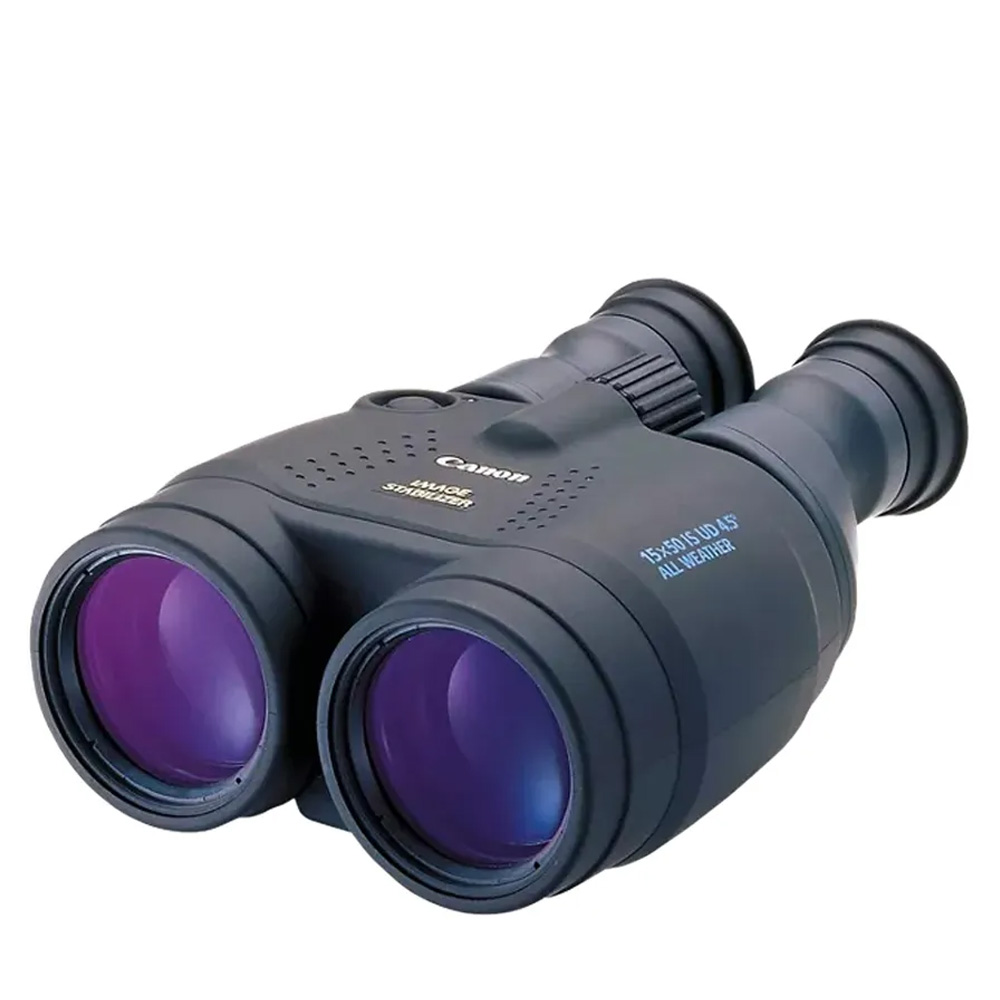 Extra reach
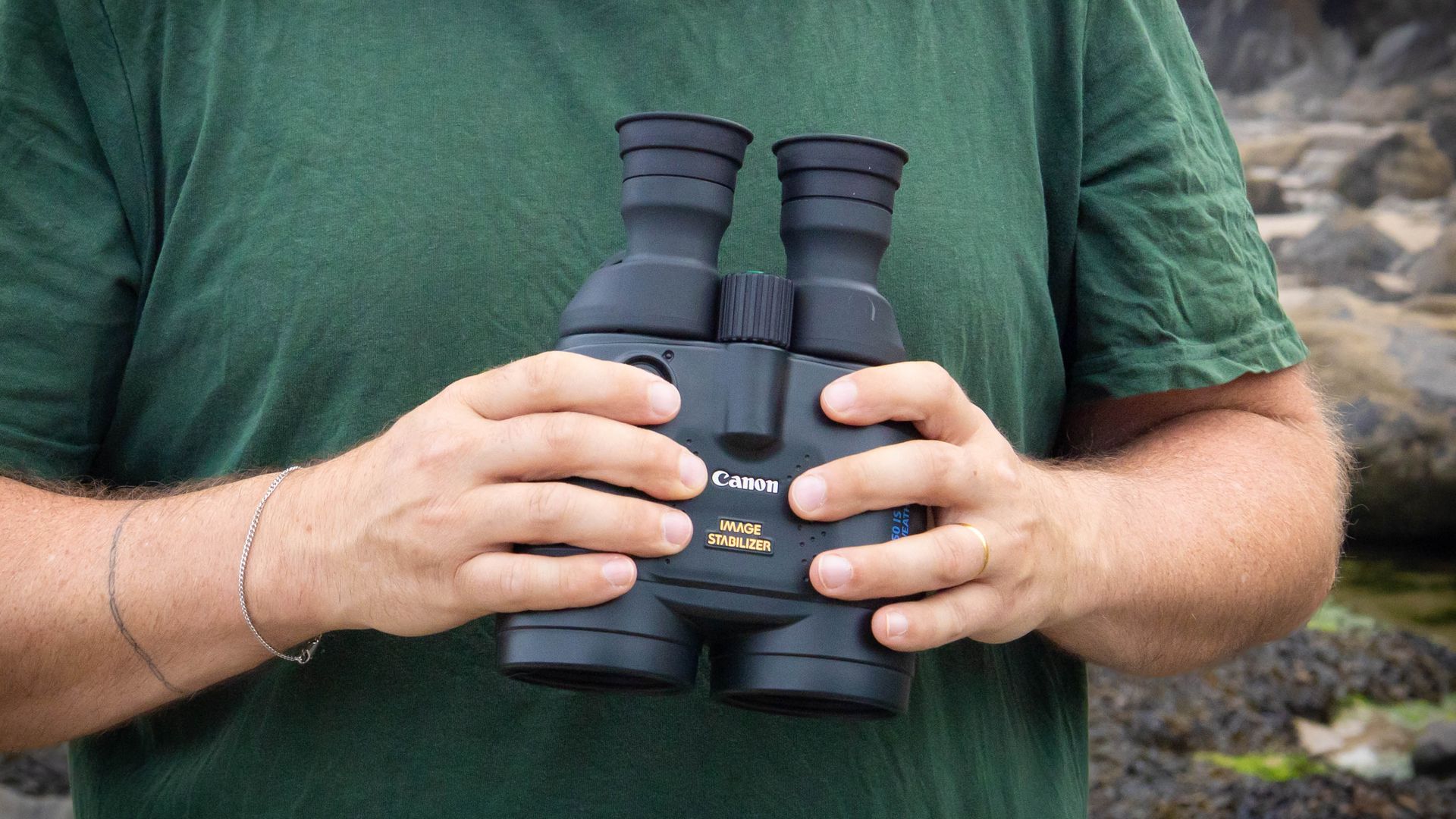
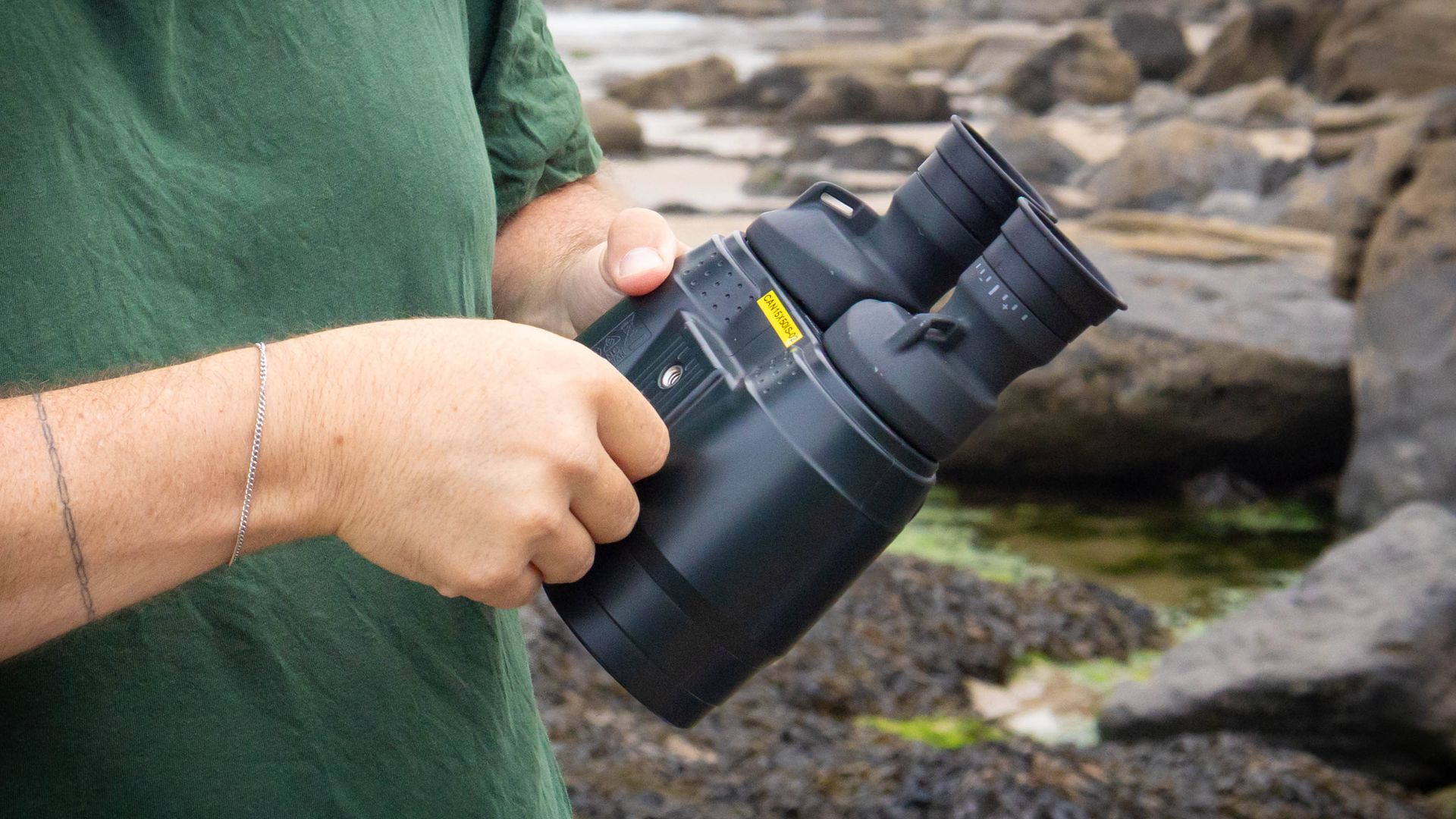
Canon 15x50 IS All Weather
For a higher magnification that doesn't require a tripod, these stabilized binoculars are ideal for stargazing, wildlife and marine use — although the "all-weather" label is somewhat misleading as they're only splash-proof as opposed to being fully waterproof.
Read our full Canon 15x50 IS All-Weather review
Pros
- Sharp optics free from distortion
- Stabilization steadies higher magnification
- Thoughtful eyepiece design
- Useful magnification for wildlife and stargazing
Cons
- Rubberized coating scratches easily
- Eyecup design gives limited eye relief
- Might be too large for some
- Not fully waterproof, only splash-resistant (JIS 4)
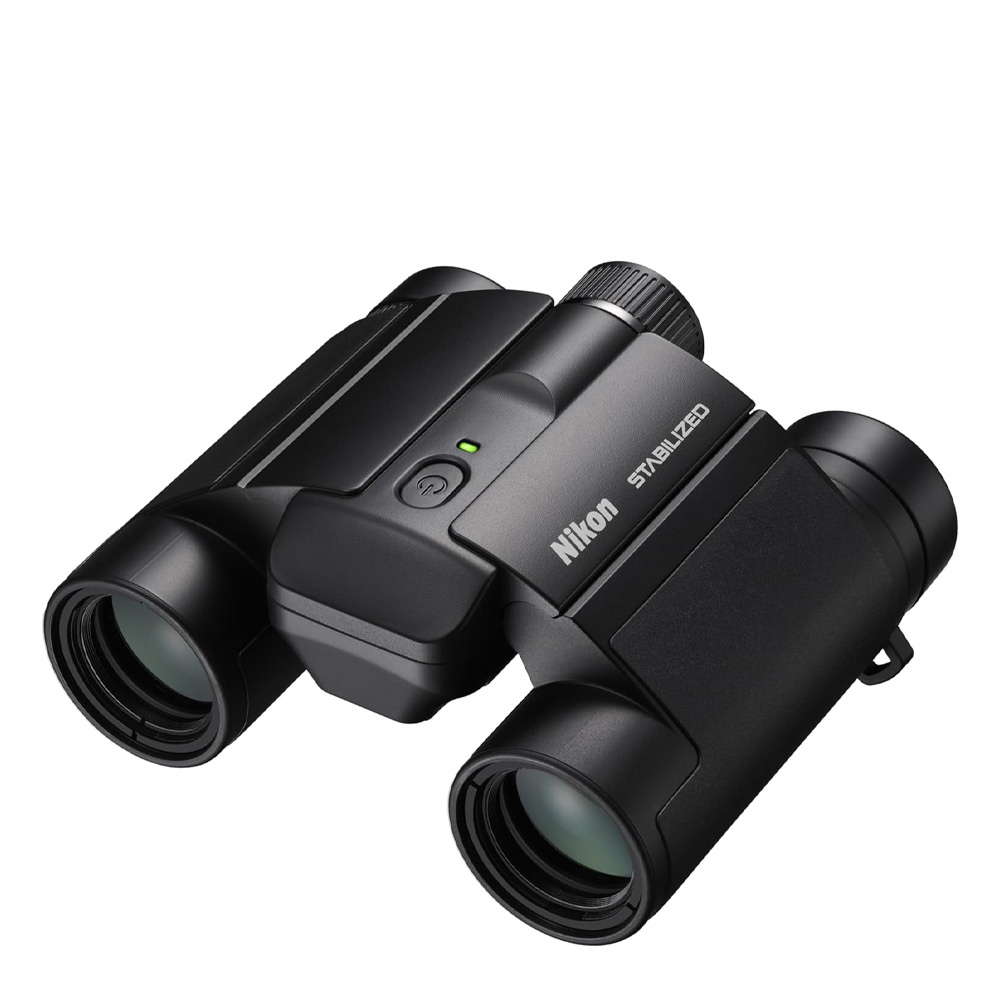 Compact stabilization
These tiny stabilized binoculars from Nikon are currently the smallest IS binos on the market, with 10x25 and 12x25 options available. They're perfect for general observations and marine use, although there are a few trade-offs to keep them so compact.
Read the Nikon 12x25 S review on our sister site, Space.com
Pros
- Tiny and lightweight at 14 oz (395 g), making them easy to carry and slip into a pocket
- Image stabilization provides steady views for stargazing and wildlife observation
- Decent price for IS binoculars
- Center of the image is sharp
- Good for getting a closer view of stars, plus the Andromeda Galaxy and Orion Nebula were just about visible
Cons
- Darker views compared to the naked eye
- Small 2.1mm exit pupil restricts views
- Not waterproof or fogproof
- Price is steep for compact binoculars (especially if you don't really need stabilization)
- Stabilization is not as strong as Canon 10x42L IS WP, but the appeal of the Nikon is its size and portability
- Softness towards the edge of the image circle
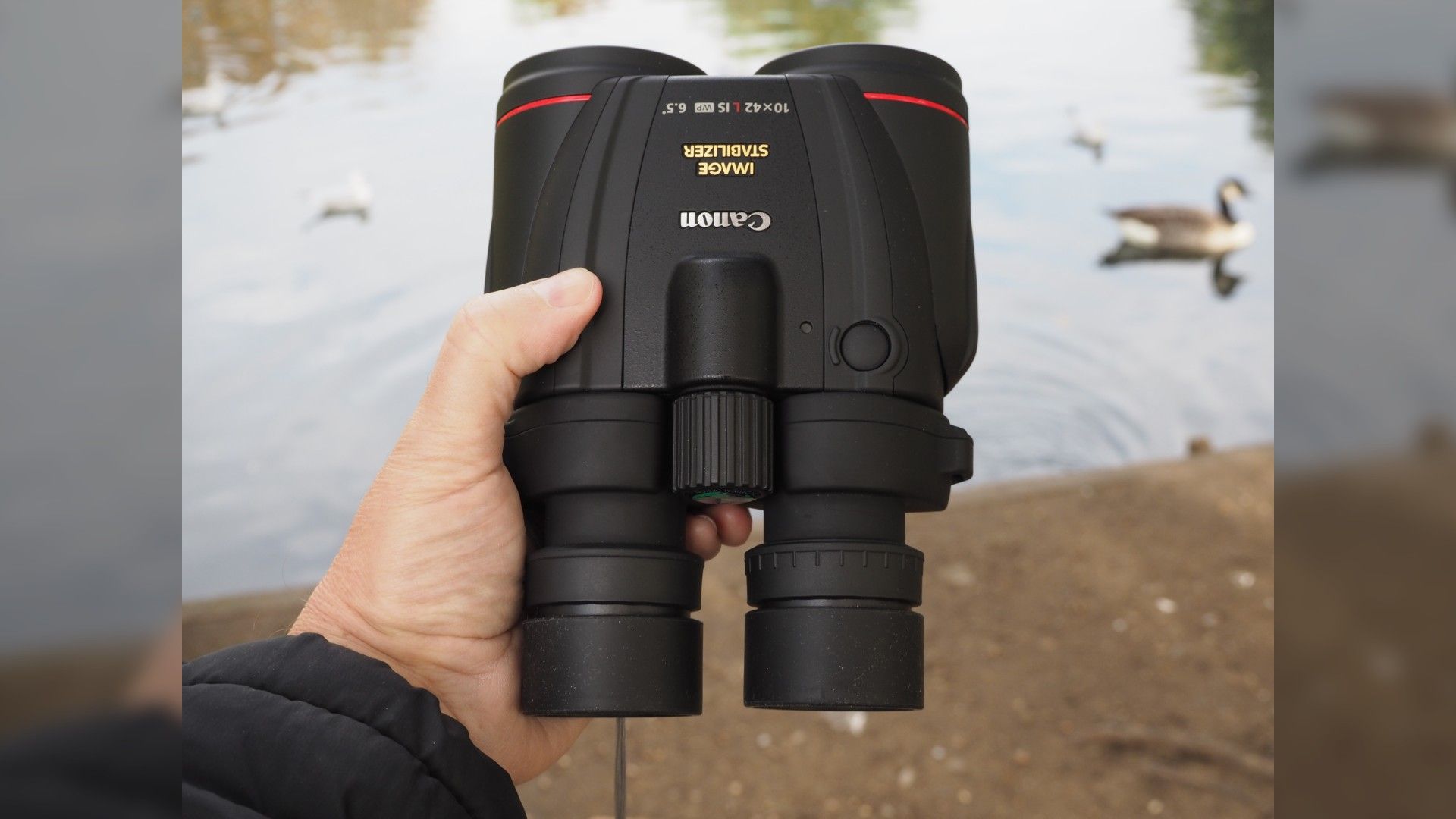 Canon 10x42L IS WPFuture
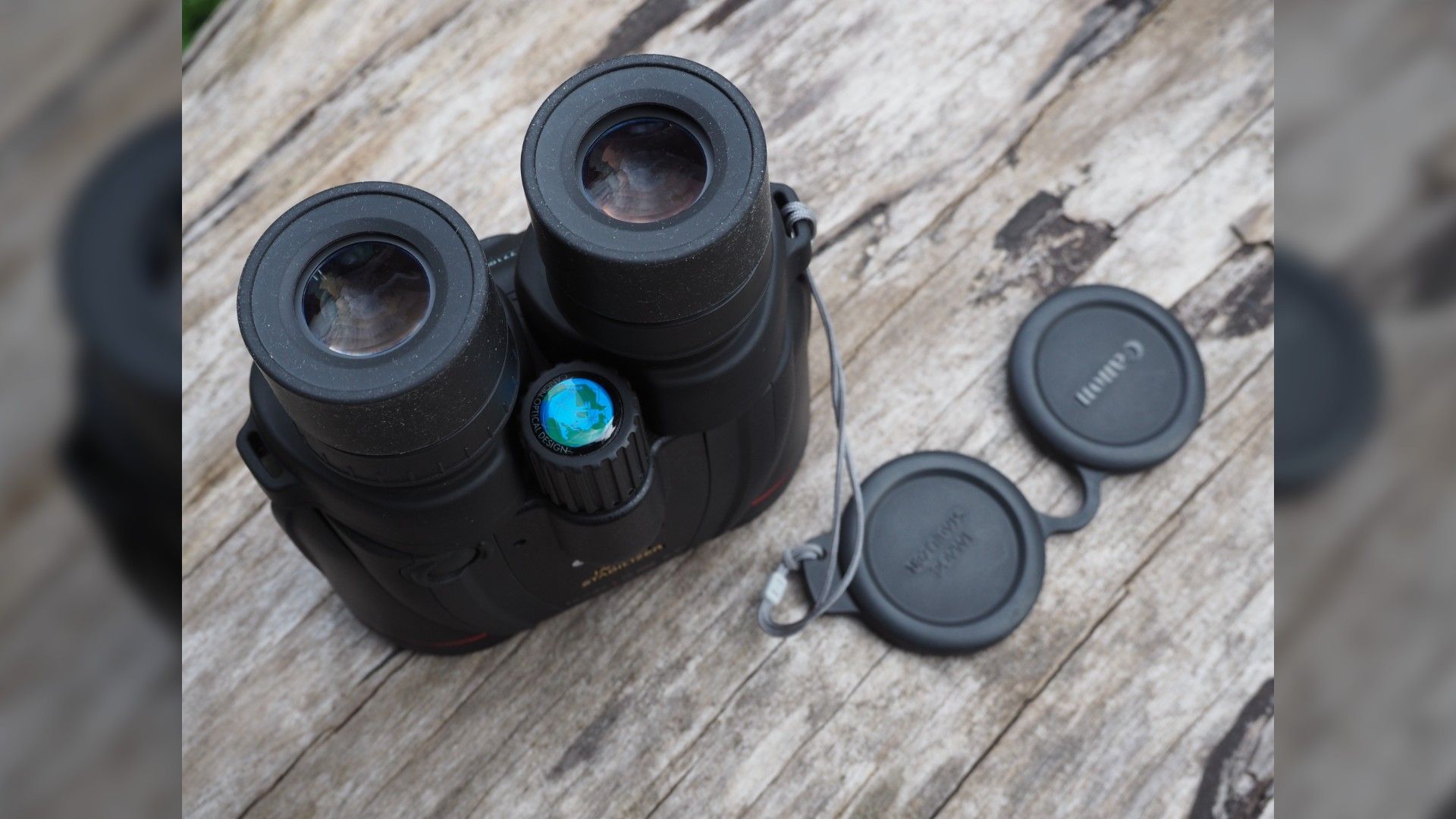 Canon 10x42L IS WPFuture
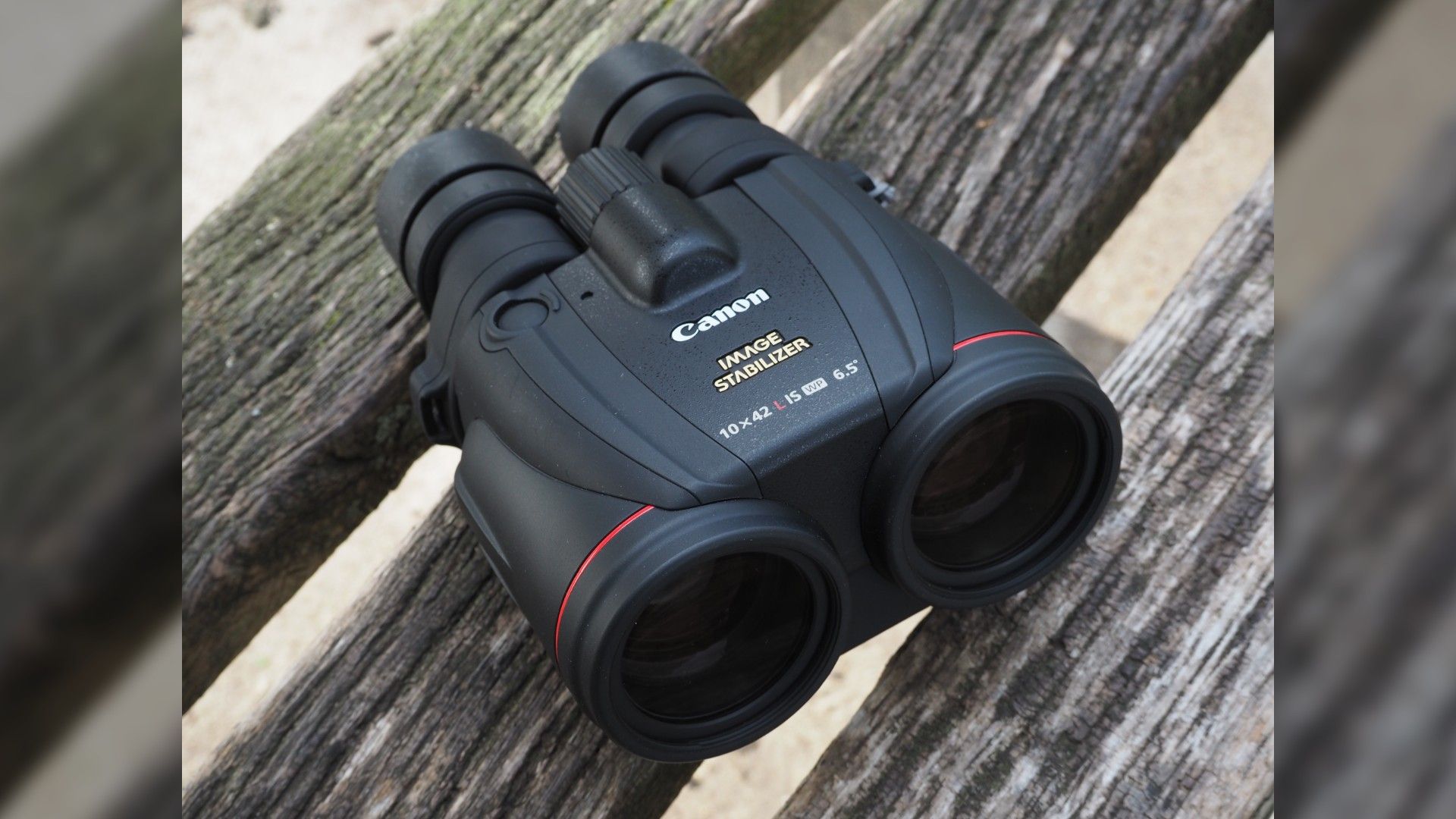 Canon 10x42L IS WPFuture
 Canon 15x50 IS All WeatherJason Parnell-Brookes
 Canon 15x50 IS All WeatherJason Parnell-Brookes
 Canon 15x50 IS All WeatherJason Parnell-Brookes
Best premium
 Compact quality
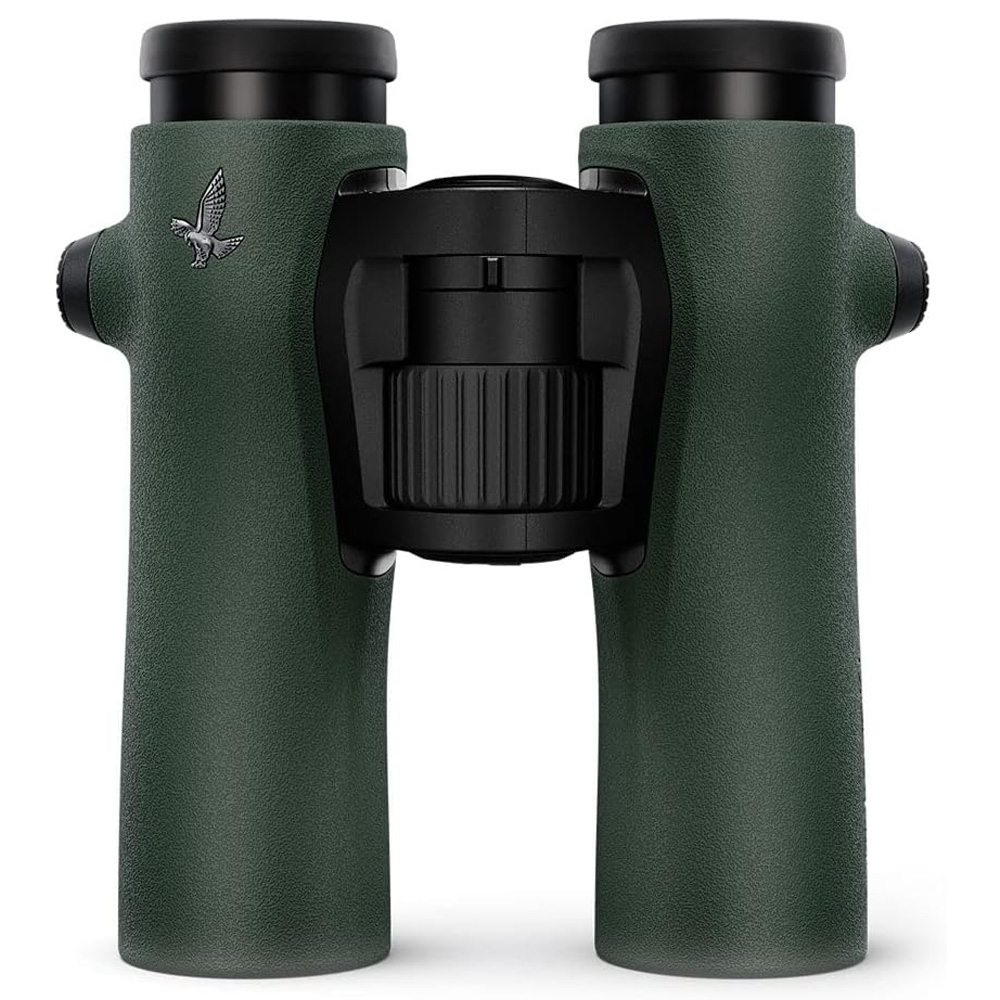
If you want a compact and lightweight binocular that doesn't skimp on optical quality, we loved the Swarovski NL Pure 8x32s. The images were crystal-clear and defect-free, and we thought they were worth every cent. Keep in mind, this variant isn't the most suitable for frequent low-light observing, so choose a pair with larger objective lenses for that.
Read our full Swarovski NL Pure 8x32 review
Pros
- Image quality is incredible
- Sharp right to the edges thanks to field-flattening technology (Swarovision) and no chromatic aberration at all thanks to the ED glass
- Compact and lightweight with an easy-to-hold wasp-waist design
- Great quality accessories — even the box is premium
- 18mm eye relief for glasses-wearers
- Good 4mm exit pupil for everyday use
- Waterproof and fogproof for use in any conditions
- Lots of variant options
Cons
- Stiff, awkwardly-placed diopter
- 8x32 variant isn't the best option for low-light viewing, although it's totally fine for casual stargazing
 The classic 8x42
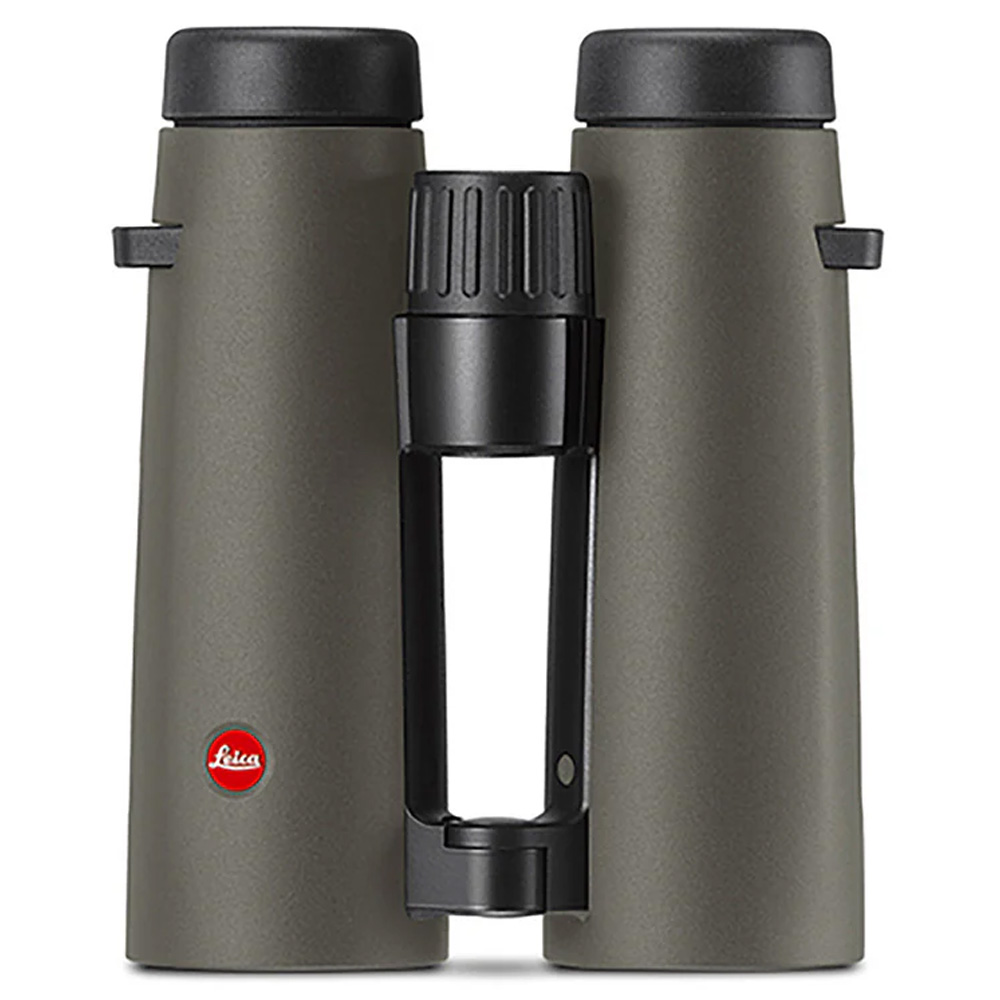
The Leica Noctivids are one of our favorite binoculars we've ever tested, boasting supreme sharpness and a premium finish from head to toe. The lack of a tripod adapter seems like an odd omission, but it's not a dealbreaker considering the outstanding optical quality.
Read our full Leica Noctivid 10x42 review
Pros
- Stunning finish on the olive green version
- Inconspicuous locking diopter wheel
- No chromatic aberration thanks to the ED glass
- Generous 19mm eye relief
- Bright views and excellent color reproduction, even on dull, overcast days
- Weighty and premium feel
- Waterproof down to 5m and fogproof
Cons
- Black color not as attractive as the green
- No tripod adapter
- Limited variants available — only 8x42 or 10x42
 The NL Pure rival
Often considered the main rival to Swarovski's NL Pure range, the Zeiss Victory SF are every bit as good on the whole, but with slightly cooler tones and ever so slightly brighter views.
Pros
- Sharp, high-resolution views with excellent color and contrast
- Ultra-wide 148m FOV at 1,000m — perfect for birding
- No color fringing, flare or ghosting
- Large 5.3mm exit pupil
- Generous 18mm eye relief
- Waterproof and fogproof
- They feel surprisingly light, despite weighing 1.7 lbs (790 g), with their "ErgoBalance" shifting the weight towards the eyepieces
- Field flattener ensures sharp views to the edge of the image circle
- SmartFocus system only requires only 1.4 turns to get from close focus (1.5m) to infinity
Cons
- The body is quite long for an 8x42
- NL Pure's have the edge for astronomy
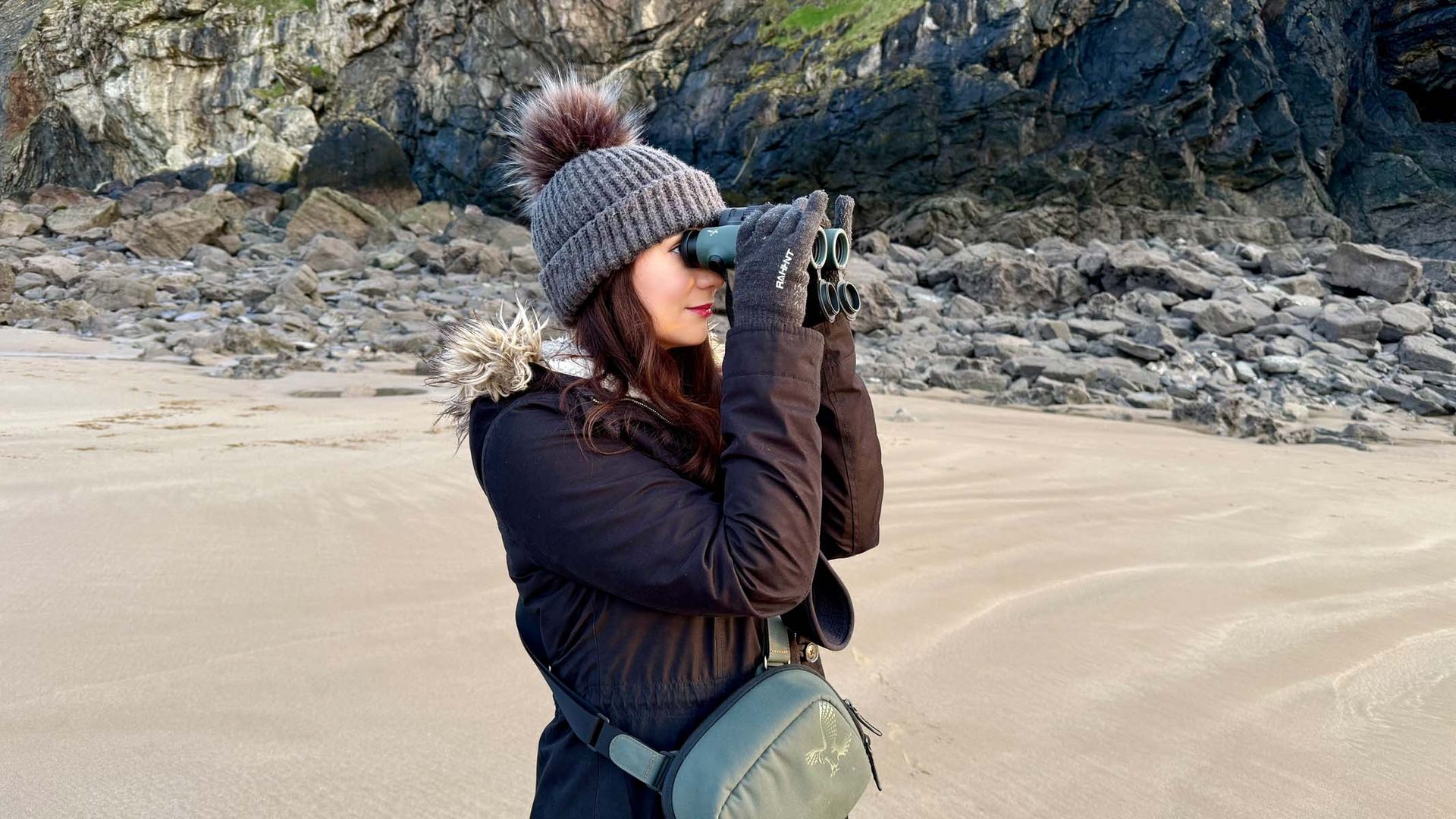 Swarovski NL Pure 8x32Kimberley Lane
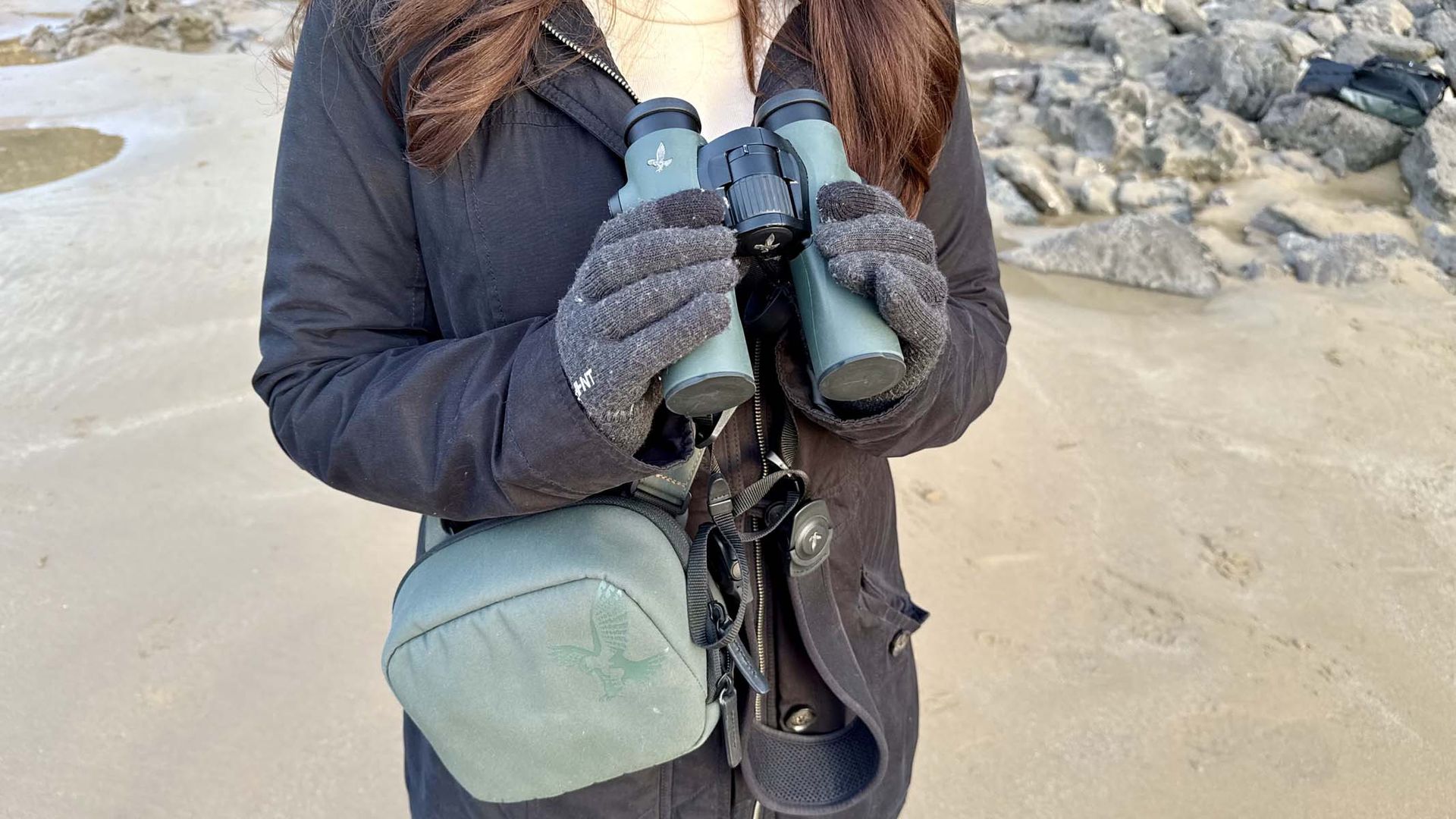 Swarovski NL Pure 8x32Kimberley Lane
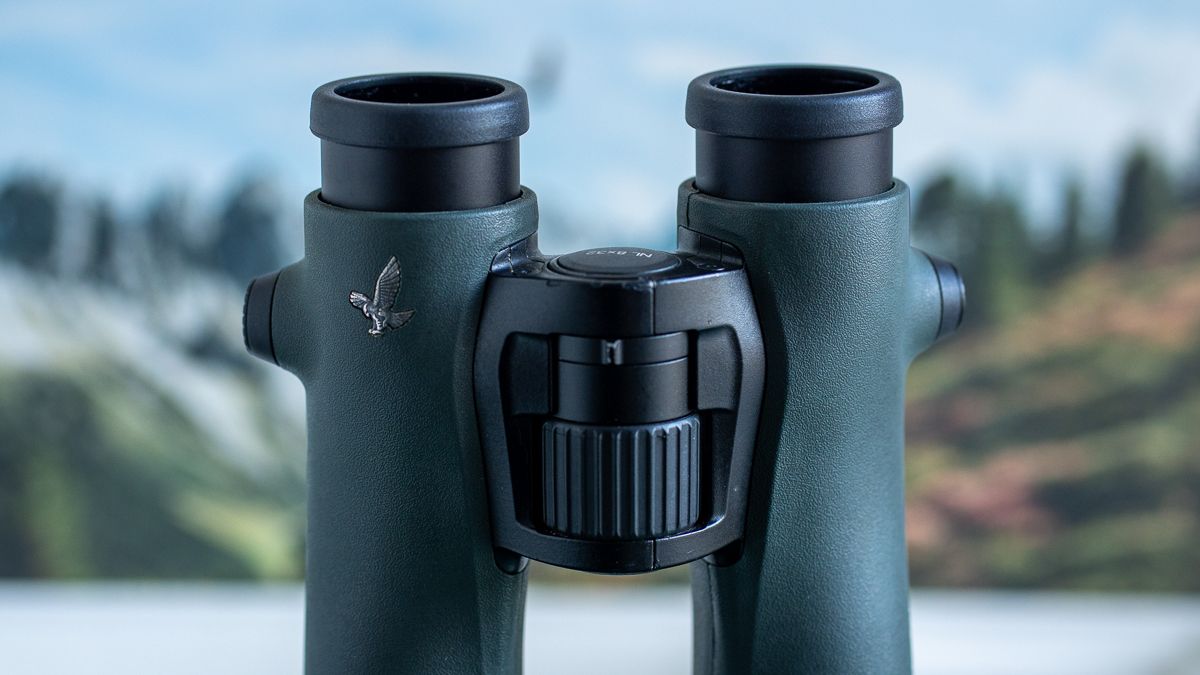 Swarovski NL Pure 8x32Kimberley Lane
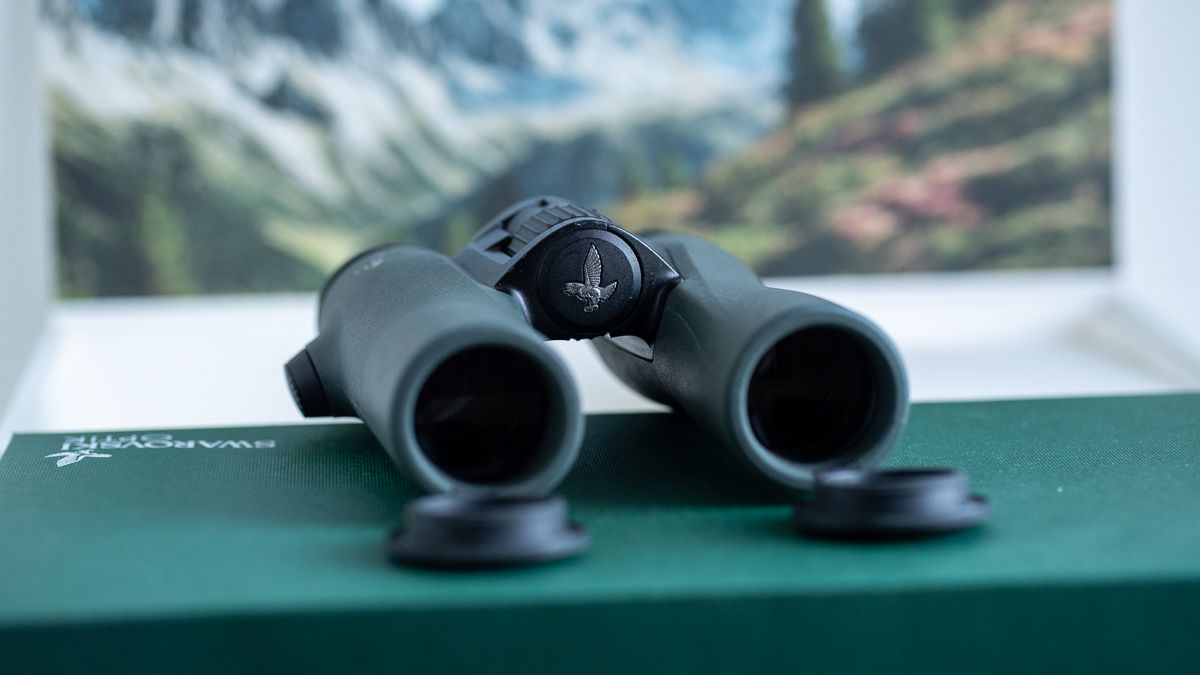 Swarovski NL Pure 8x32Kimberley Lane
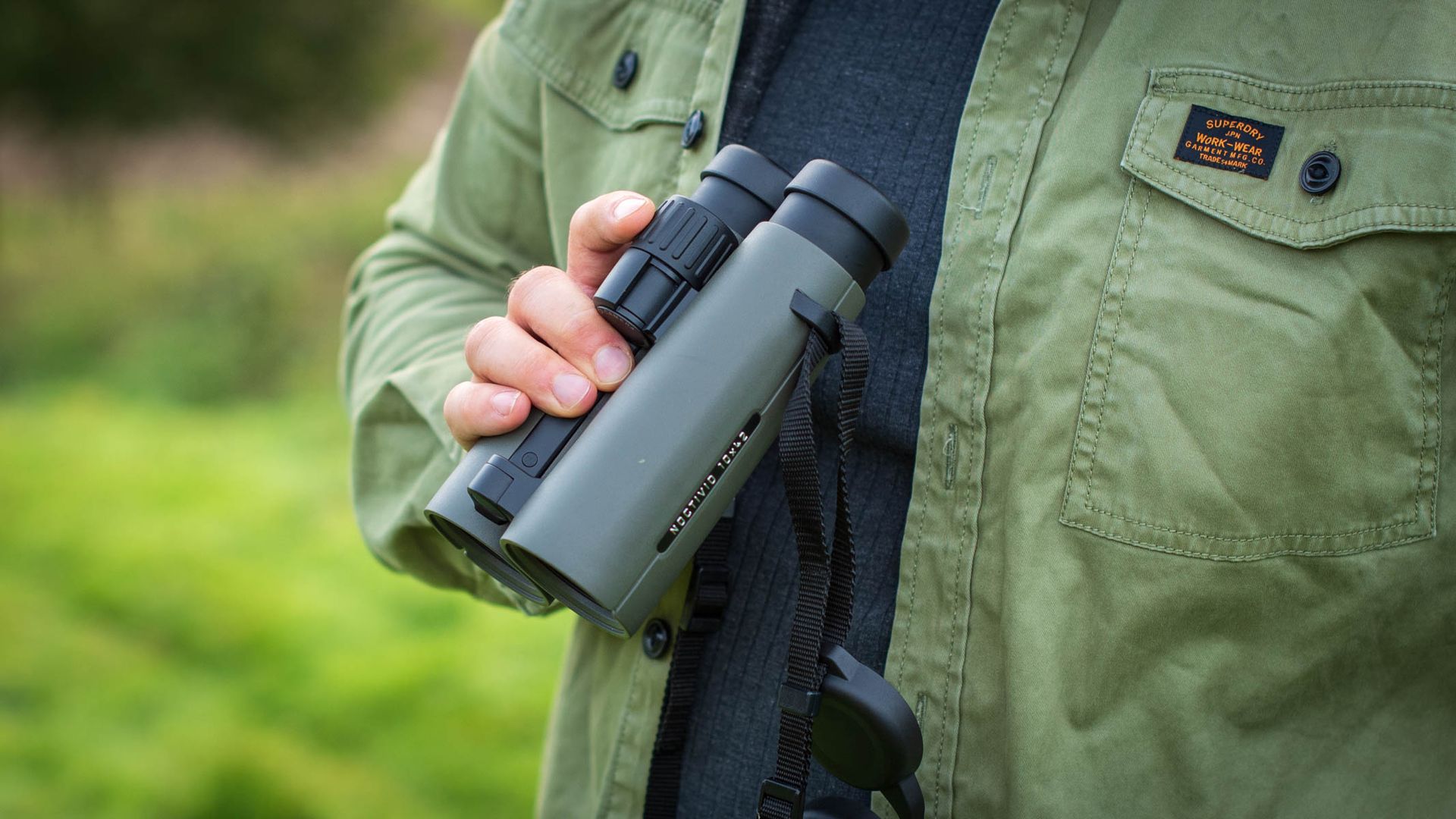 Leica Noctivid 10x42Jase Parnell-Brookes
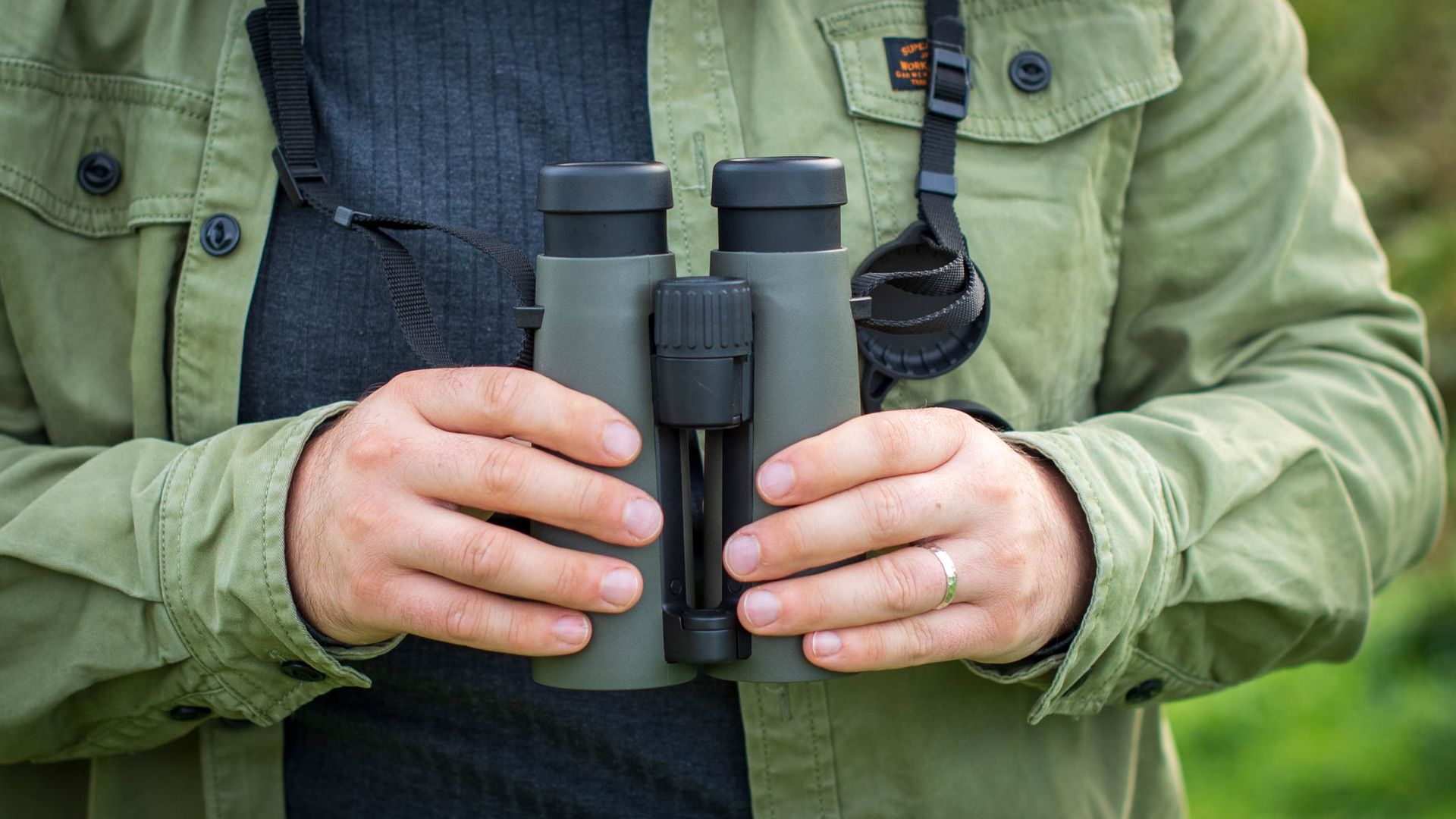 Leica Noctivid 10x42Jase Parnell-Brookes
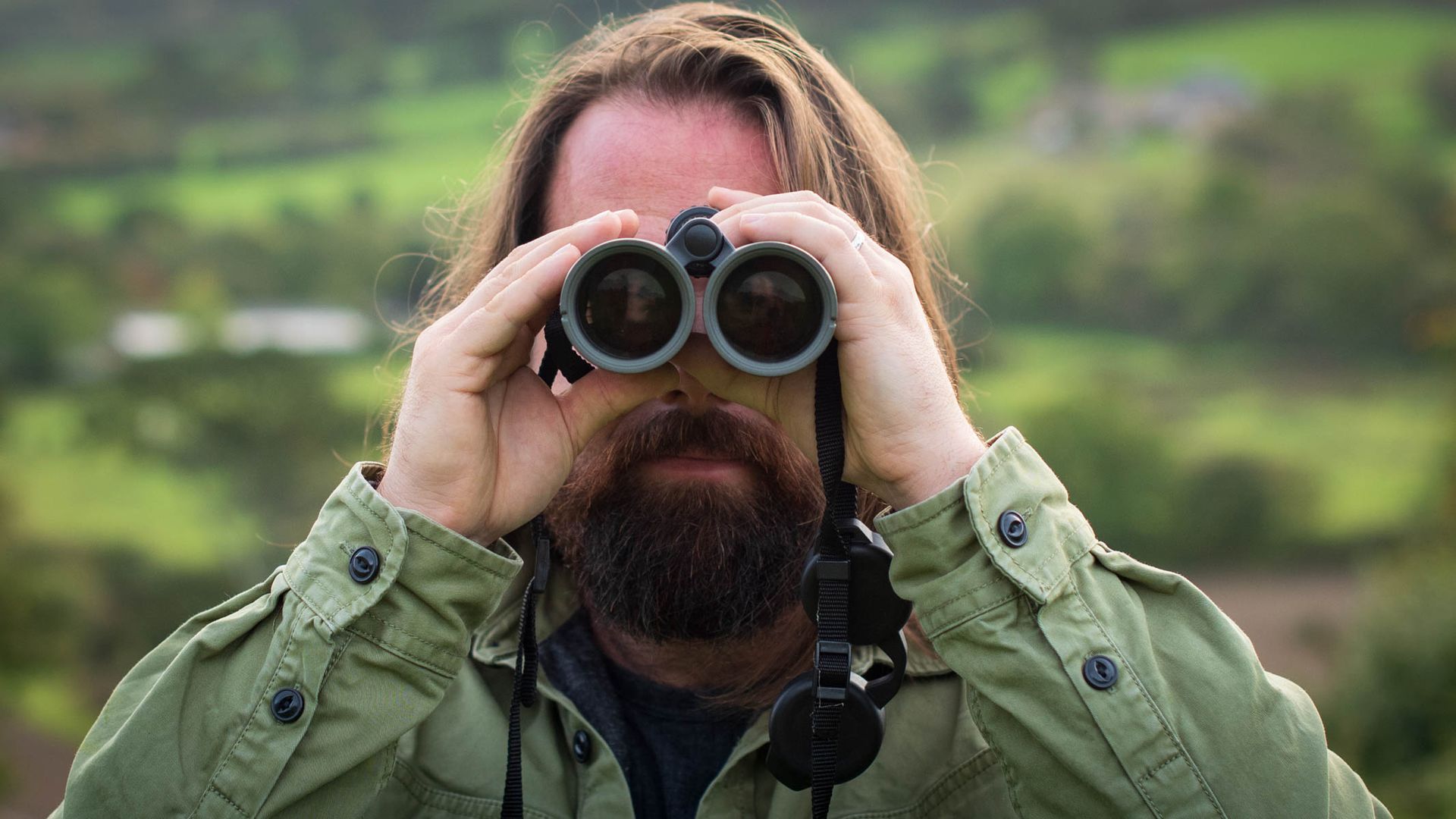 Leica Noctivid 10x42Jase Parnell-Brookes
Best binoculars: FAQs
What binocular magnification do I need?
It depends what you're observing. Small, compact binoculars tend to have 7x or 8x magnification to keep the size down, with 8x also being the sweet spot for birdwatching, giving you enough power to identify birds without introducing any wobble. 10x is great for general purpose viewing, and for stargazing, you can use anywhere from 8x all the way up to 25x, depending on how close you want to see the sky (objective lens diameter matters more for stargazing).
What size objective lenses do I need?
Simply put, the larger your objective lens, the more light the binocular will let in. If you want to observe in low-light conditions, pick a pair with at least 42mm. For dedicated stargazing, we'd recommend at least 50mm. 25mm and 32mm are ideal for casual daytime viewing, and the smaller lenses mean more lightweight and compact binoculars, too.
Can I use binoculars if I wear glasses?
Yes, provided the binoculars have enough eye relief. Eye relief is the distance (in milimeters) from your eye to the ocular lens without seeing any tunnel vision, vignetting or shadows. A long eye relief (above 15mm-ish) is perfect if you wear glasses, but it's worth noting that some smaller models have a fairly short eye relief, so it's worth checking before you buy if you can't take your glasses off.
What is ED glass?
ED stands for "Extra-Low Dispersion". When light passes through standard, non-ED glass, it bends and splits into individual colors, and typically shows up as purple or green fringing around contrasted edges, like birds against the sky, treetops or the moon. This is known as color fringing or chromatic aberration. ED glass prevents this by forcing the different wavelengths of light to bend and align at the exact same focal point. Think of it like using AutoTune on a tone-deaf choir.
This color fringing typically shows up a lot when you're birdwatching, so it's important to buy a pair with ED glass if that's your main focus.
Latest updates
'> Best binoculars 2026: The ultimate buying guide for birdwatching, stargazing and more Every Last Fish: A Deep Dive into the World of Fishes and Fishing" (Granta Books, 2025). George had previously written an award-winning book on the shipping industry, "
Deep Sea and Foreign Going: Inside Shipping, the Invisible Industry that Brings You 90% of Everything," (Granta Books, 2013) and had become more aware of the significant issues facing the fishing industry.
For the book, she traveled across continents, joining trawlers, fishers and aquaculturists (fish farmers) to learn more about the problems they face, while delving into fish intelligence and welfare with scientists. Finally, George also reveals some of the atrocities that take place at sea, including slavery and murder, as she tells Live Science in this interview about the book. "You can't police the sea; it's too big," she said.
"Every Last Fish" has been short-listed for the 2026 Royal Society Trivedi Science Book Prize.
Hannah Osborne: You're a vegetarian who gets bad motion sickness. What made you want to write a book about the fishing industry?
Rose George: When I wrote my shipping book, I had a lot of skepticism about how the shipping industry works. But whenever I spoke to shipping people, they would say, "Well, if you think we're bad, you should look at fishing." And they were right. Fishing is way more complicated, and baffling, and a difficult industry in many ways.
One of the other big triggers was that when I was doing my initial research, two things struck me. One was that for the first time in history, we're going to be eating more farmed fish than hunted fish. We have switched from hunter-gatherers to settled farmers, even though in this case, it's fish. There are all the horrible statistics about how many fish stocks are overfished and depleted and under pressure. People kind of know that, and I think they kind of switch off from it — it's quite hard to enthuse them about the fact that the ocean is in such a terrible state.
One of the things that really fascinated me was the research into fish abilities and fish sentience. I definitely wanted this book to be not just about fishing but about fishes, the creatures, the animals. Because I don't think we think of them as animals. Most people think of animals as kind of furry, cute things that they can empathize with or sympathize with, whereas sympathizing with fish, I mean, Samuel Coleridge called them "slimy things in the water." And, you know, they're not slimy, but I still think that's an overwhelming attitude [among the public].
In the last 20 years or so, [scientists have] looked at what their abilities actually are. They live in a very complex environment. They have to have complex abilities. I absolutely loved the research. In one study, scientists had goldfish steering around in an aquarium. It was nuts but fascinating.
I wanted to look at the industry and look at the animals. I wanted to make it more than a dead thing on the plate. And I hope I did that.
HO: You traveled to so many places for this book. Were there common themes among fishers from across the world? And if so, what were they, in terms of their problems, their work ethic, the things that they have to deal with?
RG: I didn't go fishing in Norway, but I did go to salmon farms, which is quite different. But I would say that there is a sense that it's a unique profession. It's a dangerous profession because you are in a dangerous element and every single ship can sink, no matter what size.
People die, and people get injured. There's all the heavy machinery if it's a sizable fishing vessel with winches and chains and everything under tension. And, of course, accidents happen. The fishing industry has gotten a lot safer in some parts of the world, but it's still dangerous.
For example, let's compare the small-boat fishermen who I went fishing with in England and the Senegalese fishers. There's a lot of similarity in that there's a pride in what they do and the sense of being beleaguered. Definitely in Senegal, it's very pronounced in that a lot of their fish has just been stolen by European and other nations, and has ended up as fish meal in European countries. In Senegal, Sardinella — a variety of sardine — is a staple fish, and it's just not there anymore. What happens is, the more you fish, the more you tend to fish the smaller fish. So you'll fish down. You'll end up fishing juvenile fish. And then, of course, you've got no fish to grow up.
I think West Africa, in general, is a very sad case of how the fishing industry works because hardly any of it is illegal. In Senegal, the government sold all the licenses to the Chinese trawlers and Spanish trawlers and what have you. A lot of the problems are from legal fishing.
Fishing boats on a beach in Senegal, where much of the fish caught ends up in other countries. (Image credit: Anadolu/Getty Images)Rex was banned from fishing wild salmon, and his fishing season was curtailed. [Editor's note: Rex Harrison is a small-scale fisher in England whom George spent time with for the book.] They definitely feel they're drowning in paperwork. I think that it's made it a very defensive industry, particularly in the U.K. because it is such a tiny industry. The biscuit industry is bigger. Yet fishing has this massive kind of cultural place that is really quite a nostalgic thing. There is an industry, but it's nothing like it was and the number of fishermen is much smaller. Young men don't want to go into fishing; young women don't want to go into fishing.
There's this sense of feeling beleaguered, but there's still pride in the fact that they do this activity, which is unique. They are the last hunters, really.
HO: What did you think was the biggest disconnect between the regulations and the reality of being on a boat?
RG: The fishing industry is so complex. It could mean a 3-foot [1 meter] wooden boat with no engine or one of the massive trawlers. That's all the fishing industry. But routinely, across the board, what the fishing industry needs is more and better monitoring.
You can't monitor a vessel at sea. It has to be self-reported. So what goes on at sea? All we have are fishing observers doing an extremely risky job. I think it's only about 2% of the fishing fleet that has an observer on board. There are some fish stocks that have much better, higher rates of observers. For example, in the U.S., Alaska — the Pacific Coast — has a very good observer system. [Editor's note: Fishing observers are independent specialists who travel on commercial vessels to monitor compliance and regulations.]
But then you look at Eritara [Aati Kaierua], the fishing observer from Kiribati who was pretty obviously murdered. There are observers of a lot of those big tuna boats in the Pacific. But routinely, what happens when a fishing observer goes missing or is injured or dies is, you get these forensic reports that say they all died of hypertension — it's like it's an epidemic down there. But they're all we have — the fishing observers — because there's no remote electronic monitoring yet. That would be much better. I think what we need is more data. But then again, you need someone to process the data, and you need a way for the data to be accurately sent. Self-reporting has its limits as a robust monitoring tool.
It's why you might find that the fish you're eating is not what you think it is, because there are so many opportunities for swaps. One fisher may have reached his quota on a particular stock of fish. There are lots of opportunities, particularly when you get into illegal fishing. You get something called trans-shipment, which is two fishing vessels exchanging catches at sea.
We have to stop taking everything from the ocean and assuming it's got an infinite bounty, because it clearly doesn't.
Rose George
HO: You just touched on the observers, and there are some awful stories in the book. What did you find most shocking while you were researching and writing the book?
RG: What shocked me the most was meeting the four Ghanaians who had taken jobs on a scalloper, thinking that the U.K. was reputable and everything was aboveboard. All their safety training had been done. Then, they got to work on this scalloper, and it was just a horror show. This was a scalloper that was working in the U.K. EEZ. [Editor's note: An EEZ, or exclusive economic zone, is the region between 14 and 230 miles (22.5 to 370 kilometers) from a country's coast that can be explored for its marine resources]. It was never on the high seas. It was always off the U.K., and yet these men were treated appallingly.
This is a particular company that was known to be rogue and has been somewhat prosecuted. What arose at that point was — and what the International Transport Workers' Federation highlighted around the time — that these cases were coming to light, and a lot of fishing vessels were using what was called trans-shipment visas.
What that essentially means is, if you're working on a ship and you call in at one country but you immediately get on your ship, you get a trans-shipment visa. Because [the crewmembers are] on these visas, they couldn't really come ashore; they were basically imprisoned on their boats. And that's in the U.K.
There are lots of perfectly good operators on the seas. But if you do want to be a criminal, there is no better place to do it. That is a problem. You can't police the sea; it's too big.
HO: On the flip side, you spent so much time with fishers. What was the most moving story for you?
RG: I really loved Rex's story of saving the birds. Rex looks like a Viking. He's such a nice guy, but he's quite eccentric. He had been fishing in Filey Bay [off the eastern coast of the U.K.] for 40 years and had just accepted that bycatch is a huge problem in fishing. When you catch one species, often you have to catch others. And often they end up just being chucked back into the water and they won't survive. It's just needless slaughter.
But another problem is seabird bycatch, because obviously the seabirds want the fish. Filey is right next to Bempton Cliffs, which is an RSPB [Royal Society for the Protection of Birds] reserve that's very famous for its puffins, but it's also got guillemots and kittiwakes and all sorts. Rex was just really sort of inured to this death toll of seabirds in his net. Then, this beautiful friendship arose between him and this guy from BirdLife International, Rory [Crawford].
Rory remembers turning up, and Rex and all his fellow fishers are kind of standing there with their arms folded, which is kind of typical. But they managed to become friends. And because Rex respected Rory, and Rory respected Rex, Rex changed his nets to a darker filament so that birds would see them more clearly, and changed the design of them so that they wouldn't get caught. It reduced bird bycatch in Filey Bay by 90%. It's just extraordinary.
I [also] really liked the fact that Captain Tom McClure [a trawler from the English county of Cornwall] and I managed to be friends, even though we disagree so profoundly about bottom trawling, and we always will. I think it's a terrible fishing method, but you don't have to be adverse. He still invites me out on his trawler, but given I was sick on it last time, I don't think I'm going to do that anytime soon. But the offer's there, which is nice.
Exclusive to Live Science Pro
HO: I really liked the story of Lillian Bilocca and everything that she did to try and improve the safety standards for fishers in the '70s and '80s. Do you think that safety has improved enough, or is there still a long way to go?
RG: It's definitely improved a lot. Lillian Bilocca was just a wonderful woman — a working class hero. She was a fishwife, worked in a fish processing factory, and it was a terrible time. In 1968, three full trawlers went down with only one survivor — about 50 or 60 men dead from one town.
It was a very close-knit town. Lillian became this astonishing campaigner. They ended up going to London to meet ministers, and this raft of measures was put through with astonishing speed just because of the publicity and the ministers were embarrassed.
But she had to face such enormous hostility. The trawler industry hated her. The trawler owners — their incentive was obviously to get as much fish as possible — so they would send out their boats to really unsafe Icelandic waters in the deepest winter. It was ludicrously unsafe, and at the time, the boats had no radio operator. There was no medical ship nearby. There was no help, and they just went down.
Since then, there have been loads of measures, but there are still serious issues.
HO: There's a lot of grim reading in the book about the state of the oceans, the industry, the things that happen at sea, and there doesn't seem to be an awful lot of change on the horizon. Did you see any signs of hope or signals that things could change that will make the fishing industry more sustainable and less destructive?
RG: Yes and no. I mean, if you learn anything about fishing, I don't think you're going to come away from it particularly optimistic. But then there are people who are absolute experts about fishing who do find some optimism, so we have to learn from that.
One of the biggest pieces of environmental legislation passed last year was the Global Ocean Treaty, which was amazing and astonishing and had all the NGOs doing press releases with exclamation marks. They were all absolutely delighted. The reason that is important is that most international legislation operates on consensus. So you have to wait for like 180 countries to agree, which is why the International Maritime Organization is so slow, because it operates on consensus. The Global Ocean Treaty does not, so states can nominate parts of the high seas that they want to be protected. It can be a lot more flexible, a lot more nimble, and it could protect the high seas.
The downside is that only 10% of fishing happens on the high seas. So although we need to protect as much of the ocean as possible, it may be that's not where the major problem lies, but it's a really good start.
The other thing that gave me hope is … that it is quite impressive how quickly the ocean can recover when given the chance. When there have been no-take zones established … they are astonishing because sea life recovers very quickly.
Also, it expands because obviously the fish move; the populations recover; they move; things grow. It's such a win-win situation just to protect small pockets of the ocean and see that protective effect expand. But to do that, we have to stop taking everything from the ocean and assuming it's got an infinite bounty, because it clearly doesn't.
This interview has been condensed and edited lightly for clarity.
Help us improve Live Science Pro: We're always trying to make our content better. Leave us feedback about Pro here.
greystonebooks
Every Last Fish: a Deep Dive Into Everything They Do for Us and We Do to Them
In Every Last Fish, Rose George dives into these questions by exploring the vast industries that support our appetite for fish sticks and salmon burgers, and the colossal illegal fishing trade whose practices and standards are unmonitored and often dangerous. Journeying to the bottom of the ocean and back, she examines the machinations of this $200 billion food system—one that’s growing rapidly even as fish populations disappear.
'> Author Rose George dives into the dark depths of the fishing industry
The burial, nicknamed the Tomb of the Stone Chamber, was excavated this summer, according to a translated statement from the Italian Superintendency of Archaeology, Fine Arts and Landscape for the Province of Viterbo and Southern Etruria (SABAP-VT-EM). But the discovery builds on work that French archaeologists carried out in the late 19th century.
In 1889, archaeologist Stéphane Gsell identified the circular enclosure of the Etruscan burial mound in the cemetery at Vulci. But while Gsell delineated what he thought was the perimeter of the grave, he never found the tomb itself because he ran out of time and money to dig further.
Now, archaeologists with the Return to Vulci project think they've finally found the burial chamber inside the "Gsell tumulus" — and it's much larger than they, and Gsell, expected.
"This is the burial. We are absolutely certain of it," Christian Mazet, an archaeologist at the British Museum and co-director of the project, told Etruscan Times. The discovery of weapons, parts of a chariot, gold objects and high-quality ceramics means "there is no doubt that this is a tomb of the very highest rank," he said.
The new excavation revealed the Tomb of the Stone Chamber, which dates to the seventh century B.C. Archaeologists uncovered the walls of the tomb's three burial chambers and found numerous artifacts preserved beneath the chambers' collapsed roofs, including jewelry, clothing and shoes.
In the side chambers of the tomb, archaeologists recovered much rarer items, according to the SABAP-VT-EM statement, such as a bronze tripod made on what is today the Greek island of Rhodes, just off Turkey's southwest coast. They also found a nearly complete banquet set, and some of the vessels were still in their original positions after spending centuries underground.
The Etruscan cemetery at Vulci is well known for its wealthy tombs, thousands of which were discovered in the 19th century. But although the Indigenous Etruscans ruled over central Italy for several centuries, their society began to decline in the fourth century B.C., owing to the rise of Roman civilization. Their language is only partly understood today, meaning most information about the Etruscans comes from archaeological sites such as Vulci.
The Tomb of the Stone Chamber was built in Vulci's heyday. Gsell had estimated the size of the tumulus at around 102 feet (31 meters) in diameter, calling it a "new Cuccumella," referring to the largest Etruscan burial mound previously discovered at Vulci. (The giant Cuccumella tumulus had a diameter of roughly 230 feet, or 70 m.) According to Etruscan Times, the Return to Vulci project experts' initial calculations suggest that the Tomb of the Stone Chamber may have been similar in size to Cuccumella, or perhaps even larger.
"Everything tells us that it is one of the most monumental at Vulci," Mazet told Etruscan Times.
The tomb and burial mound have been covered to preserve them, according to the SABAP-VT-EM statement, but research will continue in 2027.
'> Archaeologists discover 'tomb of the very highest rank' in 2,700-year-old Etruscan cemetery Victoria Arbour, manager of research and collections at the Royal B.C. Museum in Canada. Arbour was not involved in the new work.
Nodosaurids are armored dinosaurs covered in bony plates. They are closely related to ankylosaurids, but they lack the heavy tail clubs ankylosaurids used to protect themselves from predators. Nodosaurid fossils have primarily been found in North America and Europe, though a few have been uncovered in Asia.
In the new study, a team of researchers revisited one such fossil specimen originally discovered in 1995 on Hokkaido, the northernmost main island of Japan. The scientists performed computed tomography (CT) scans of the fossils, which are somewhere between 93 million and 100 million years old, and include the back of the skull, part of the lower jaw, and several teeth and bony plates.
Ancestors of Nipponopelta yezoensis likely migrated along the North American coastline and across the Bering Land Bridge to present-day Japan, which was connected to mainland Asia at the time, a new study suggests. (Image credit: Masato Hattori)CT scanning enables researchers to make digital 3D models of specimens, and "lets you just get more information than you'd be able to have otherwise, because you can look inside without breaking [the fossil]," Arbour told Live Science.
Based on the CT scans and an anatomical analysis, the team determined that the fossils represented a new species of nodosaurid, which they dubbed Nipponopelta yezoensis. "Nippon" refers to Japan, and "pelta" means "shield" in Greek. "Yezo" is the traditional name for Hokkaido.
N. yezoensis is closely related to North American nodosaurids, the team found. The dino's ancestors may have migrated from North America to Asia via a land bridge in what is now the Bering Strait 100 million to 110 million years ago.
CT scans show where the recovered Nipponopelta yezoensis fossils would have been inside the animal's head. (Image credit: Oyabu et al 2026)Coastal dinosaur?
A separate team of scientists originally uncovered the N. yezoensis specimen in marine sediments — rocks that formed under ancient seas. Nodosaurids didn't live in the ocean, so the findings suggest that after the animal died, its corpse may have been swept out to sea along a river or estuary and eventually sank to the ocean floor.
Several other nodosaurid fossils have been found in similar marine deposits, suggesting the creatures lived along coastlines. That may have helped them migrate along the Bering Land Bridge and disperse by following the coast, study co-author Darla Zelenitsky, a dinosaur paleobiologist at the University of Calgary, told Live Science.
Nipponopelta yezoensis would have walked on four legs, eaten plants, and lived in a coastal region, researchers suggest. (Image credit: Genya Masukawa)But just because nodosaurids are most commonly found in coastal environments doesn't mean that they couldn't have lived further inland as well, said Jordan Mallon, a paleontologist at the Canadian Museum of Nature who was not involved in the research. Upland and mountainous regions tend to produce few fossils because erosion wears down rocks in these biomes, Mallon told Live Science. So it's possible nodosaurids lived there, even if there's no fossil record of these armored dinosaurs at these locations.
"The nature of the fossil record is that it's patchy and incomplete," Mallon said. "It's very hard to tell a comprehensive story when you've only got a few pages out of a phone book's worth of time."
It's also not clear from the fossil record why so few nodosaurid species have been found in Asia compared with North America, Zelenitsky said. While several ankylosaurid species have been found further inland in Asia, few nodosaurid fossils have been unearthed on the continent.
"It could be the rock record, or just that [nodosaurids] weren't able to diversify as much in Asia," Zelenitsky said.
In future studies, "I hope that we find more of this animal," Mallon said. "It incites us to keep digging so that we can learn more about this animal and test some of our ideas about just what it is."
'> Rare armored dinosaur found in Japan may have ancestors that migrated across a land bridge 100 million years ago
intelligent alien technology, even though 3I/ATLAS behaved like a natural comet. However, according to the astronomers who are studying its mysteries in the data collected by dozens of telescopes and spacecraft, the ancient object may still have lessons to teach us about life in the cosmos.
3I/ATLAS is likely a preserved fragment of a planetesimal — a building block of a planet — from a distant system, Martin Cordiner, a researcher in astrochemistry and planetary science at NASA's Goddard Space Flight Center, told Live Science. Therefore, the comet's composition could offer clues to the prevalence of life's building blocks around distant stars. Some astronomers even hope this cosmic interloper will help constrain how likely life is elsewhere in our galaxy.
Blast from the past
Comets like 3I/ATLAS are important because scientists think they help "seed" planets with carbon-containing chemicals, Darryl Seligman, an assistant professor of astronomy at Michigan State University, told Live Science in an email. Some of these chemicals, like methanol, have simple structures. Others, like amino acids, are more complex. Together, these carbon-containing, or organic, compounds form the basis for biomolecules, like proteins and nucleic acids, that interact to produce life.
Samples returned from space rocks in our neighborhood strongly support the idea that they transported such molecules within the solar system. For instance, fragments from the solar system asteroid Bennu obtained during NASA's OSIRIS-REx mission contain all five nucleotide bases, the building blocks of nucleic acids. Matthew Belyakov, a postdoctoral researcher in planetary science at Caltech, noted that the Bennu samples also contained 14 of the 20 amino acids that form naturally on Earth.
3I/ATLAS, in its nearest close-up, taken by the Mars Reconnaissance Orbiter. Observations with space- and ground-based telescopes have found that the comet contains tons of organic molecules. But what does this mean for the prospect of life elsewhere in our galaxy? (Image credit: NASA/JPL-Caltech/University of Arizona)Inferences about such deliveries are possible only because the rocks are like time capsules: They emerge from the same swirling disk of gas and dust from which planets are born, and the chemical compositions of asteroids and comets don't change much after that. So, by studying space rocks that originate in other exoplanetary systems, "we can learn if they also contain the building blocks of life and could have helped to start life in exoplanetary systems," Seligman said.
Simulations suggest that comets that circle one planet before moving to another could similarly deliver such prebiotic molecules to baby exoplanets. However, there was no supporting observational data to back up this claim.
A chemical potpourri
To figure out which chemicals 3I/ATLAS contains, astronomers have been recording the comet's light intensity across a range of frequencies, using more than a dozen instruments on Earth and around the solar system. This was possible because the comet spewed tons of gas and dust to create a fuzzy bright halo, or coma, after the sun warmed it. Observations of this coma have turned up an eclectic group of chemicals essential for life as we know it.
One is hydrogen cyanide (HCN), which was detected by the Atacama Large Millimeter/submillimeter Array (ALMA). Despite its notorious reputation as a poisonous gas, HCN is important for creating life. A commentary noted that laboratory experiments dating back to the 1950s — including the famous Miller-Urey experiment, which attempted to recreate the conditions of primordial Earth — have found that HCN is involved in building molecules like amino acids.
The list of ingredients goes on. ALMA data also revealed that 3I/ATLAS released gigantic amounts of formaldehyde and methanol. Additionally, observations from the James Webb Space Telescope showed 3I/ATLAS spewing the greenhouse gas methane. This is important because, assuming the methane formed on planets in the comet's home system, it could have trapped heat on those planets, thus warming them and making them more hospitable to life.
Unlike other interstellar comets, 3I/ATLAS is rich in organic compounds, which NASA's SPHEREx telescope detected in early 2026. (Image credit: NASA/JPL-Caltech)The presence of all these molecules is significant, Cordiner said, because they are "heavily implicated in terrestrial prebiotic chemistry studies as key carbon and nitrogen feedstocks [raw materials] for helping build life's molecular precursors," he said. 3I/ATLAS is proof that these "feedstocks" also exist in pastures far beyond our solar system's fences.
These findings are especially important because astronomers couldn't study the previous two interstellar objects to the same extent, Seligman said. He noted that 1I/'Oumuamua, the first interstellar object ever detected in the solar system, was observable for only a few weeks.
"The second interstellar comet 2I/Borisov was discovered right before COVID, so a lot of observations were canceled because of that," Seligman added. (Cordiner noted that the few observations conducted on 2I/Borisov showed that it, too, appears to contain HCN.) In comparison, researchers had almost a year to study 3I/ATLAS with telescopes. These observations have shown that "3I/ATLAS is unique in terms of the *measured* chemical inventory," Cordiner said.
Not indicative of life
All of the chemicals that 3I/ATLAS appears to possess give us data about just one planetary system. But when combined with observations of other astronomical phenomena, 3I/ATLAS shows that the chemical building blocks of life are abundant across our galaxy. For instance, giant molecular clouds — dense regions of gas and dust that give rise to stars — contain nitriles and sugar acids that can form amino acids. The stuff of life, it seems, is plentiful in space.
James Webb telescope observations showed that 3I/ATLAS has a lot of methane. If its home system's planets contained similar amounts of methane, they may have warmed sufficiently to support liquid water and, possibly, life. (Image credit: NASA, ESA, CSA, STScI, M. Belyakov (Caltech), I. Wong (STScI), Image Processing: A. Pagan (STScI))Ingredients aside, these findings don't prove that life itself has developed in 3I/ATLAS' home system (or anywhere else). All of the organic molecules that 3I/ATLAS appears to contain have simple chemical structures. Cordiner said mixtures of such molecules in the lab have transformed into more complex ones via processes like ice irradiation. However, such compounds have not been found on 3I/ATLAS, despite the billions of years the comet likely spent exposed to the unabated radiation of interstellar space.
Most of the chemicals 3I/ATLAS released while zipping past the sun come from the comet's radiation-exposed upper layers and not from its pristine interior, a January study found. This would mean that what astronomers have measured may not be present in the comet's home system.
Nonetheless, many astronomers, including Seligman's group, are continuing to study 3I/ATLAS' composition. There is also the exciting possibility of future interstellar visitors, which are all but guaranteed to make an appearance, thanks to the Vera C. Rubin Observatory in Chile, which is expected to spot dozens more. The elements and isotopes found in these objects will help in "building a map of where bio-precursors reside, across the history of the Galaxy," Cordiner said.
Help us improve Live Science Pro: We're always trying to make our content better. Leave us feedback about Pro here.
'> Could Comet 3I/ATLAS teach us about life beyond Earth? Scientists say the story's not over yet.