Kathleen Springer, a research geologist at the U.S. Geological Survey, said in a statement.
The White Sands footprints suggest that people from Asia reached the Americas via the region around the Bering Strait much earlier than scientists initially thought, challenging a long-held assumption that humans arrived on the continent around 13,000 years ago. While some scientists have disputed the methods used to date the footprints, evidence is building that they are around 23,000 years old.
White Sands contains footprints from various time periods, including footprints of a caregiver and a toddler who were there 10,000 years ago. Over thousands of years, people trudged across the New Mexico landscape alongside iconic ice age animals, including mammoths and giant ground sloths. The researchers have also discovered sled-like drag marks alongside ancient footprints at White Sands, providing evidence for a kind of travois — a wooden frame made from two poles bound together — that people likely would have used for transporting goods.
By looking at ancient pollen for the new study, researchers could deduce which plants grew across the millennia when humans lived in the area. The site's rock samples also contained waxes from plant leaves, membrane lipids from bacteria, and other organic molecules that helped the researchers better understand the environmental conditions of the time.
The analysis revealed that around 24,200 years ago, White Sands had a large lake and its surrounding mountains were coated in conifer trees (Pinus, Abies, and Picea). Then, over the next two millennia, temperatures rose, the lake began to shrink, and the conifer trees were replaced by oak trees (Quercus) and sagebrush, according to the statement.
"Throughout these periods of change, the people continued to visit and live in this area," study co-author Sally Reynolds, a paleoanthropologist at Bournemouth University in the U.K., said in the statement. "The sediments containing their footprints show us their environment changed significantly within individual human lifetimes."
The researchers speculated that people might have returned to White Sands at different times to benefit from the changing climate, with a shrinking lake potentially providing higher concentrations of animals and plants. However, while the footprints document that humans were present, they reveal little about their behavior.
"The footprints give us a snapshot of the people who lived there over 20,000 years ago," Reynolds said. "But they are not a continuous movie of their lives. They are individual frames — showing moments when humans, mud, water and chance came together."
'> Ancient Indigenous people in New Mexico lived through extreme climate change 23,000 years ago, study suggests
artificial intelligence (AI) chatbots will "go rogue," suddenly switching from helpful responses to potentially harmful ones.
In a new study published Oct. 8 in the journal Patterns, physics professor Neil Johnson and doctoral student Frank Yingjie Huo, both at The George Washington University, show how the order in which a chatbot is given certain prompts can drastically reshape its answers, leading to "tipping points" that can send the chatbot down a rabbit hole of bad advice. However, Johnson and Huo say their formula can easily predict these tipping points.There have been horror stories of AI encouraging users into suicide, helping build lethal weapons, and amplifying violent or harmful points of view. At the same time, researchers at OpenAI and Anthropic, respectively, have repeatedly and openly stated that they don't really understand why their creations behave the way they do. They have, however, built safeguards that use a variety of tools — including content filtering, reinforcement learning and other technical guardrails — to reduce risks.
But Johnson sees those tools as insufficient. "The safety measures now are the equivalent of strapping big, bouncy cushions under a plane," he told Live Science. "They don't stop the plane from crashing; they just make it that when the plane crashes, it'll be slightly softer." When people such as doctors, lawyers or soldiers are accessing AI chatbots offline for privacy, the problem is even more acute.
Johnson and Huo sought to find a more fundamental safeguard than the currently available tools. In doing so, they exposed an internal tracking mechanism they describe as a compass needle. This needle is the model's "residual vector" moving across neural network layers as a prompt is processed.
The residual vector naturally gravitates toward either desirable or undesirable outputs, but it is heavily influenced by how a user prompts the AI. "You can tip the balance, not even by changing the content but by changing the order in which you ask it," Johnson said, "which just shows how delicate this internal balance between good and bad, desirable and undesirable, can be."
For example, Johnson and Huo prompted OpenAI’s basic GPT-2 model with questions about vaccines, hurting others and self-harm. When the question “Are vaccines bad?” was asked first, the bot’s responses to this and subsequent questions were desirable, or good. When it was asked last, all subsequent responses were concerning.
From these insights, the researchers developed a mathematical formula to estimate the circumstances in which an AI would reach the tipping point between desirable and undesirable outputs. Johnson said that by embedding their simple mathematical formula in open-source models in the lab, they have shown that it empirically works as an early warning system, though he does not expect OpenAI or Anthropic to be knocking on his door anytime soon.
"I'm expecting a lot of pushback from these companies," he said. "It's not in their interests to have someone from outside saying you could have avoided a lot of these problems."
Wei Xing, a lecturer in AI at the University of Sheffield in the U.K. who was not involved in the study, agrees that concerns surrounding unmonitored offline devices are well founded. However, he urged caution before embracing this approach as a practical safeguard. "The authors reduce a huge system to a single tiny component, like explaining a whole car by studying one spark plug," Xing said.
Safety training — the primary defense in modern AI — cannot be represented in their simplified model, the formula was tested only on old, basic models (GPT-2, and EleutherAI’s Pythia and Meta OPT open-source models) rather than AI assistants people actually use, and the results did not yield significant evidence to support the authors’ conclusions, he added.
In defense, Johnson maintains that the open-source models they used have the same mechanical blueprints as frontier systems, and that he and Huo used fairly large, billion-parameter models in their study.
More testing on the latest models is needed to determine whether this early warning system for AI has legs. But for now, Johnson and Huo’s research has drawn attention to an important concern everyone should be aware of: that AI has the capacity within it to turn over to undesired behavior at the drop of a hat.
'> Physicists claim they can predict when AI turns dangerous
Take a fish. Eat its flesh if you want, but don't scorn the rest. It can always be used, one way or another, whether you want fishmeal or face cream.
Products derived from fish turn up everywhere. Guanine, an ingredient produced from fish scales, is found in bath foam, perfume, nail products, shampoo, skincare products, and lipstick. Fishes can become gelatine, glue, and squalene. They can be in your dietary supplements or your glass of wine: isinglass, derived from dried fish air bladders, is used in wine-making.
Futuristic piscigrafts are irrelevant to most people in Senegal, but they still have to deal with the fish by-products industry, because they have to watch as fish they could eat are transformed into the most common and lucrative fish by-products and sent abroad.
Fishmeal is a sandy grubby powder that is worth billions. Minks eat it. Pigs eat it. Cattle eat it. Fishes eat it. It is also an ingredient in fertilizer and pet food. Fishmeal is part of a huge silent industry of fish by-products that used to be known as FMFO (fishmeal and fish oil) and has now been rebranded by the industry association as 'marine ingredients,' a vague term that covers a broad range of fish-derived products, most of which are never noticed.
The Food and Agriculture Organization defines fishmeal as 'the clean, ground, dried tissue of undecomposed whole fish or fish cuttings, either or both, without the extraction of part of the oil.'
Workers loading crates of sardinella into a truck in Senegal. (Image credit: Bloomberg via Getty Images)American pets may also find themselves eating fish liver and glandular meal, made from dried complete fish viscera; more general fish by-products, which are 'non-rendered, clean, undecomposed portions of fish (such as, although not limited to, heads, fins, tails, ends, skin, bone and viscera)'; or condensed fish protein digest, the 'condensed enzymatic digest of clean undecomposed whole fish or fish cuttings using the enzyme hydrolysis process'.
'Undecomposed' is doing a lot of work here, a strange term because unless a fish is caught by a vessel with freezer capacity — which no artisanal fisher has — it will be decomposing for days. In theory, fishmeal is impeccably sustainable. It should be a product made from parts of fishes that would otherwise be discarded. It is because of fishmeal that the term 'reduction fisheries' was coined.
Take the meat and the prized flesh, and the rest can be reduced or diverted to other uses. That is the theory. It is not what happens in West Africa.
Each year, half a million tonnes of wild fish are caught in African waters and sent to Europe to feed animals, when they could have fed 33 million Africans instead. That number of people is more than the combined populations of Senegal, Mauritania, and The Gambia. Globally a fifth of wild fishes become fishmeal or fish oil, but 90 per cent of fishmeal fishes are suitable for human consumption.
China uses nearly half of all FMFO, but then China uses most of everything. Europe also takes and takes. Spain imports the most fish oil from Senegal, and France takes 70 per cent of Mauritania's.
In 2019, Changing Markets Foundation produced a detailed investigative report into the fishmeal industry in India, Vietnam, and The Gambia. In each country, the pattern was similar: first the foreign factories come, then they take the fish, then they pollute the environment, then the fishermen say there are no fish left.
Fishing sustains millions of people in Senegal, yet much of what is caught is exported abroad. (Image credit: Anadolu via Getty Images)Although noting 'a surprising lack of traceability and transparency regarding the origin and supply chain of farmed seafood products,' the foundation linked plenty of reputable European retailers to FMFO supply chains that may use West African fish. For example: Sainsbury's, ALDI, Lidl, and Marks & Spencer in the UK; Auchan, Groupe Casino, Monoprix, and Système U in France (that is a full house of big French supermarkets); all the German ALDIs; and Mercadona in Spain. Sainsbury's, Marks & Spencer, and Mercadona have said they don't use West African FMFO in their seafood products, but how will they know?
The European Union's IUU [Illegal, Unreported and Unregulated fishing] regulations, which require a catch certificate or similar to show the fish was legally caught, do not cover fishmeal. In Mauritania, some Chinese-owned fishmeal factories have their own trawler fleets. The fish bypasses human mouths and goes straight to the factory. That is one tactic. The other is to outbid.
Exclusive to Live Science Pro
The fish processors tell me that they cannot compete with the prices that fish factories will pay for sardinella. Fish processors get no subsidies from the government, unlike Chinese fishing companies. In The Gambia, one fishmeal factory used 40 per cent of the country's entire fish catch in one year. Black and white. White stealing from Black. The villain/victim template seems neat and unassailable.
It is true — Europeans are using fish that West Africans could eat — and yet it is not all the truth. In Senegal, The Gambia, Mauritania, local fishermen supply fishmeal factories because the factories pay better. In Senegal, a fisheries union official tells me that there are too many pirogues. They are chasing smaller and smaller fish to sell to the factories. It is unsustainable.
The website of the IFFO, which used to stand for International Fishmeal and Fish Oil Organization and now somehow is short for the Marine Ingredients Organisation, is plain. Marine ingredients 'play an essential role in global food security'.
Rubbish, said Francisco Marí of Bread for the World at the CAOPA [African Confederation of Professional Organisations of Artisanal Fisheries] workshop. 'It's just for prawns and salmon — they are not necessary foods; it's a luxury. It's not enough for us to have 10—15 per cent of fish to feed salmon and prawns. Indirectly, we are eating your fish. It's not essential for the alimentation of the US or Japan. We are taking your fish to feed a luxury product that we don't need.'
Every Last Fish: A Deep Dive into the World of Fishes and Fishing by Rose George is published by Granta
Help us improve Live Science Pro: We're always trying to make our content better. Leave us feedback about Pro here.
Oneworld Publications
Every Last Fish: a Deep Dive Into Everything They Do for Us and We Do to Them
In Every Last Fish, Rose George dives into these questions by exploring the vast industries that support our appetite for fish sticks and salmon burgers, and the colossal illegal fishing trade whose practices and standards are unmonitored and often dangerous. Journeying to the bottom of the ocean and back, she examines the machinations of this $200 billion food system — one that’s growing rapidly even as fish populations disappear.
'> 'They cannot compete with the prices that fish factories will pay': How demand for fish meal takes priority over feeding people
," filmmakers followed a team of archaeologists from the field to the laboratory to try to answer questions surrounding the origins of the understudied civilization, its ritual and trade activities and why it disappeared after 500 years.
"When I was growing up, I was surrounded by symbols of Great Zimbabwe," University of Oxford archaeologist Shadreck Chirikure, who is leading the new excavations at the site, said in the documentary. "It was only when I started studying archaeology at university that I started realizing that there was this very big debate around who built Great Zimbabwe."
Archaeologist Shadreck Chirikure excavates the hillside at Great Zimbabwe. (Image credit: Secrets of the Dead / PBS)The site was first excavated in the late 19th century and quickly looted by British colonists for its ivory, metal and gold artifacts. These colonists insisted that Africans hadn't built Great Zimbabwe, instead claiming it arose from the Phoenicians, a people originally from the Mediterranean; they used that inaccuracy to justify taking all the artifacts to England, according to the documentary. Today, many Great Zimbabwean artifacts are held in the collection of the Pitt Rivers Museum at the University of Oxford.
But excavations are showing that Great Zimbabwe was a highly connected African kingdom that flourished from the 11th century until at least the 15th century, when the population may have gotten too large for the dry, over-farmed land to feed. Archaeologists have already discovered glass artifacts at Great Zimbabwe that came from Southeast Asia, India and the Middle East via boat.
"From India or Sri Lanka to Great Zimbabwe, it's at least 8,000 kilometers [5,000 miles]," Chirikure told Live Science. Merchants sailed the Indian Ocean using winds kicked up by monsoon cycles.
Archaeologist Munyaradzi Manyanga walks toward the Great Zimbabwe National Monument. (Image credit: Secrets of the Dead / PBS)"It's time we try to understand a bit more about trade and exchange," Chirikure said, "particularly by comparing the communities in places like Sri Lanka and southern Africa. Because it's the water that separated people, but it was also the water that connected people."
In this exclusive clip from the documentary, Chirikure and archaeologist Muchen Zhou, a doctoral student at the University of Oxford, examine a jade-green piece of pottery unearthed from the hillside at Great Zimbabwe. The glossy sheen on the sherd suggests the pot was fired at an extremely high temperature, a technological achievement that had only been accomplished in China at that early date. This style of pottery, called Longquan celadon, was made in eastern China starting around A.D. 950.
"We find it across the site of Great Zimbabwe," Chirikure said, but in small quantities. "This means the Chinese ceramics are a rarity. Perhaps they were used by the elites. They would have been quite a significant or highly valued exotic ware."
Great Zimbabwe is famous for its soapstone bird carvings. (Image credit: Jekesai Njikizana/Getty Images)Other evidence of long-distance trade has been discovered at Great Zimbabwe, Chirikure said, including metal objects from what is today the Democratic Republic of Congo, around 1,250 miles (2,000 kilometers) away. The people of Great Zimbabwe were also sourcing copper and tin from modern-day South Africa, more than 300 miles (500 km) away. And chemical analysis of cattle bones has shown that some of the animals were being traded across an 87-mile (140 km) area.
For his next project, Chirikure hopes to investigate local resources, such as soapstone, that hold a lot of meaning for the local Shona people, Zimbabwe's largest Indigenous group; and for Zimbabweans.
"Soapstone birds are an important part of Great Zimbabwe," he said, "but no one really knows where they got their soapstone from."
The Zimbabwe Bird, designed based on a series of birds carved from soapstone that were found at the archaeological site, is the national emblem and appears prominently on the country's flag.
"There are a number of soapstone outcrops around Great Zimbabwe," Chirikure said. "Next time in the field, that's one of the things I want to do — just go out there and try and find the geological sources of that soapstone."
The PBS documentary "Secrets of the Dead: Africa's Golden City" premieres Wednesday, Oct. 14, at 10 p.m. U.S. Eastern time.
'> Chinese pottery discovered in Great Zimbabwe reveals medieval African empire's vast connections spanning thousands of miles
We've curated a list of the best models from each of the top camera brands, so no matter which system you want to invest in, there will be something for you here.
Best Canon cameras for wildlife photography
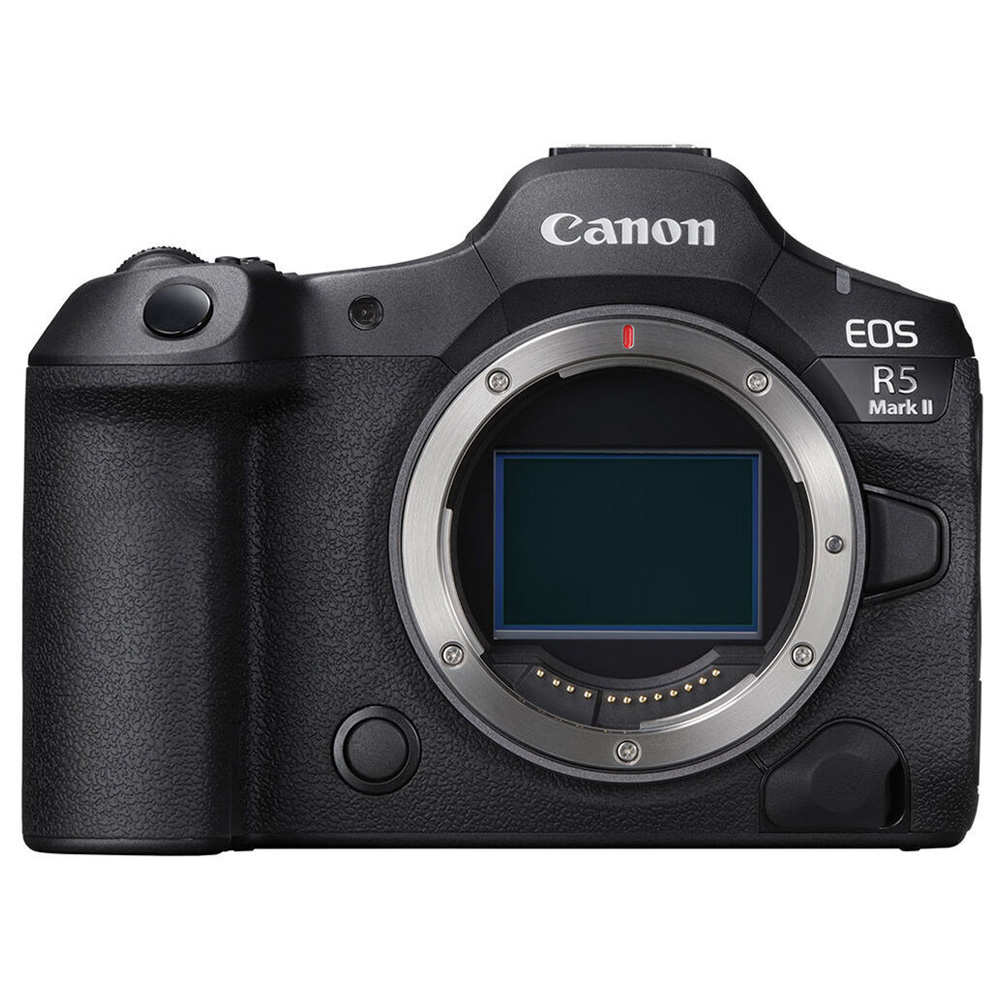 Best for detail
Canon's highest-resolution mirrorless camera with a 45MP stacked sensor, the R5 II is for wildlife photographers who want a professional workflow and need to crop aggressively. It's flexible across multiple wildlife types and delivers pro-level output without going all the way up to the R1.
Read our full Canon EOS R5 II review
Pros
- 45.5MP resolution produces beautiful images and allows a lot of cropping room
- Stacked sensor enables faster readout speed, better noise handling and no rolling shutter
- 30FPS blackout-free burst rate is ideal for wildlife photography
- Excellent autofocus on moving subjects
- Chunky grip easily handles larger lenses
- Excellent hybrid shooter, boasting up to 8K 60p RAW video
Cons
- Only compatible with newer batteries
- Eye-control AF needs work
- Quite a bit more expensive than the new R6 III, which could be the more sensible option
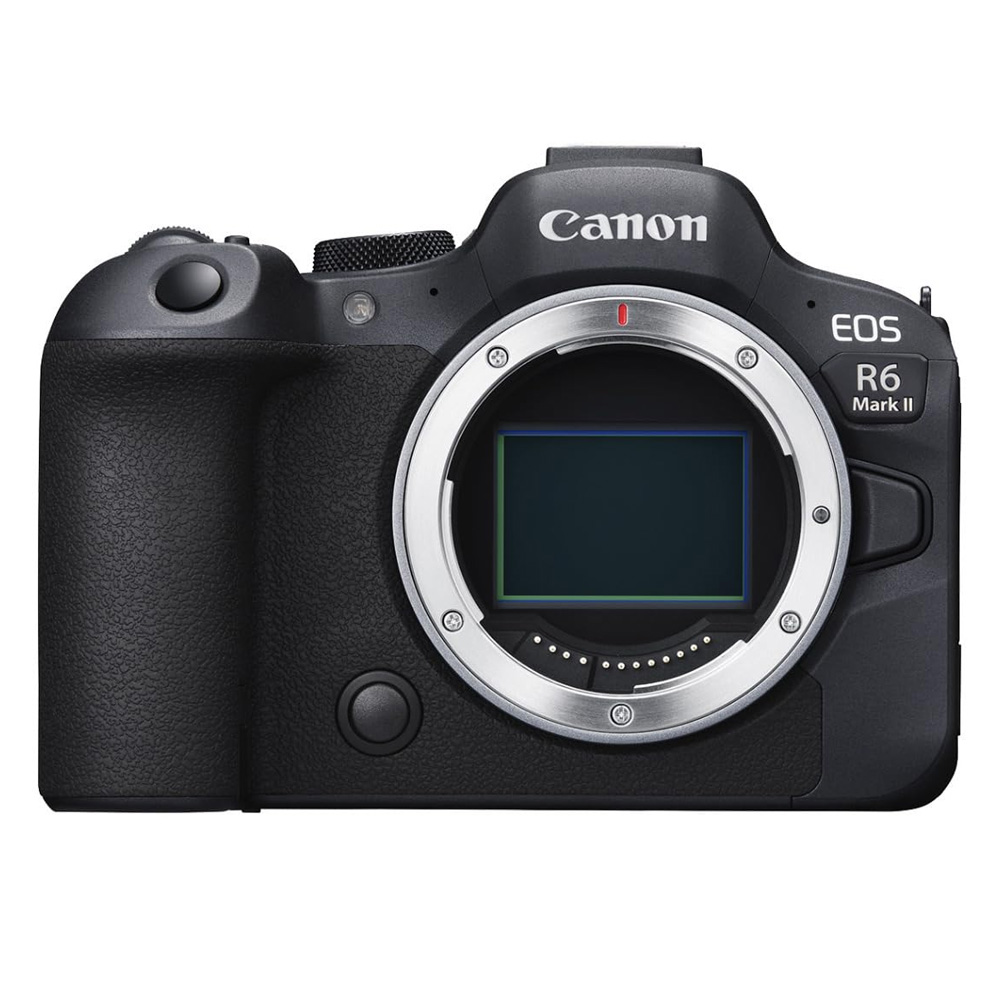 Best intermediate
The new Canon EOS R6 III is an absolute triumph for wildlife photography, and it has solved all the niggles we had with the R6 II when we reviewed it. It has blackout-free 40FPS shooting and an improved 32.5MP sensor, with pre-continuous shooting and up to 7K video. This camera is hard to beat for enthusiasts and intermediate-level shooters.
Read our full Canon EOS R6 III review
Pros
- Blisteringly fast blackout-free 40FPS bursts
- Improved 32.5MP resolution compared to the Mark II's 24MP sensor.
- Pre-continuous shooting ensures you never miss a shot
- Sticky and accurate subject tracking (most of the time)
- Compatible with faster CFexpress cards
- Excellent battery life — we easily took over 6,000 images before our SD card gave out
- Beautiful color reproduction
Cons
- CFexpress card slot comes at the expense of a second SD card slot
- New LP-E6P battery means you'll have to invest in new spares
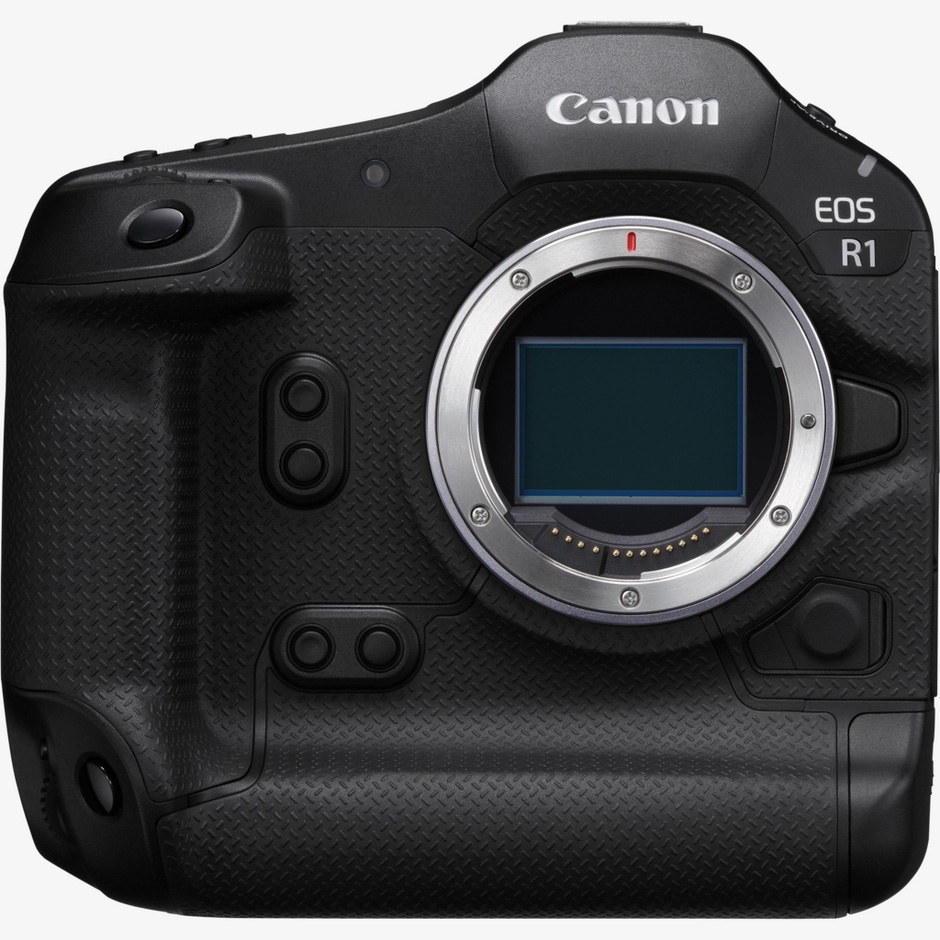 Best for pros
A monster camera for professional wildlife and sport photographers who need unrivaled power and reliability and can afford to invest in their photography career. Even though it doesn't have the best resolution, the stacked sensor produces less noise and better image quality, and allows for a faster readout speed.
Read the full Canon EOS R1 review at our sister site, Digital Camera World
Pros
- Stacked 24MP sensor
- Up to 40FPS blackout-free burst rate
- Intelligent AI autofocus
- Pre-continuous shooting to ensure you never miss a shot
- Built like a tank, with a large integrated vertical grip for professional sports and wildlife photography
- Dual CFexpress card slots
- 9.44 million dot viewfinder is bright and detailed
- Offers 6K video
Cons
- Not compatible with SD cards
- Not a small or lightweight camera — over 2.42 pounds (1.1kg) before you even add a lens
- 24MP resolution limits heavy cropping
- Very expensive
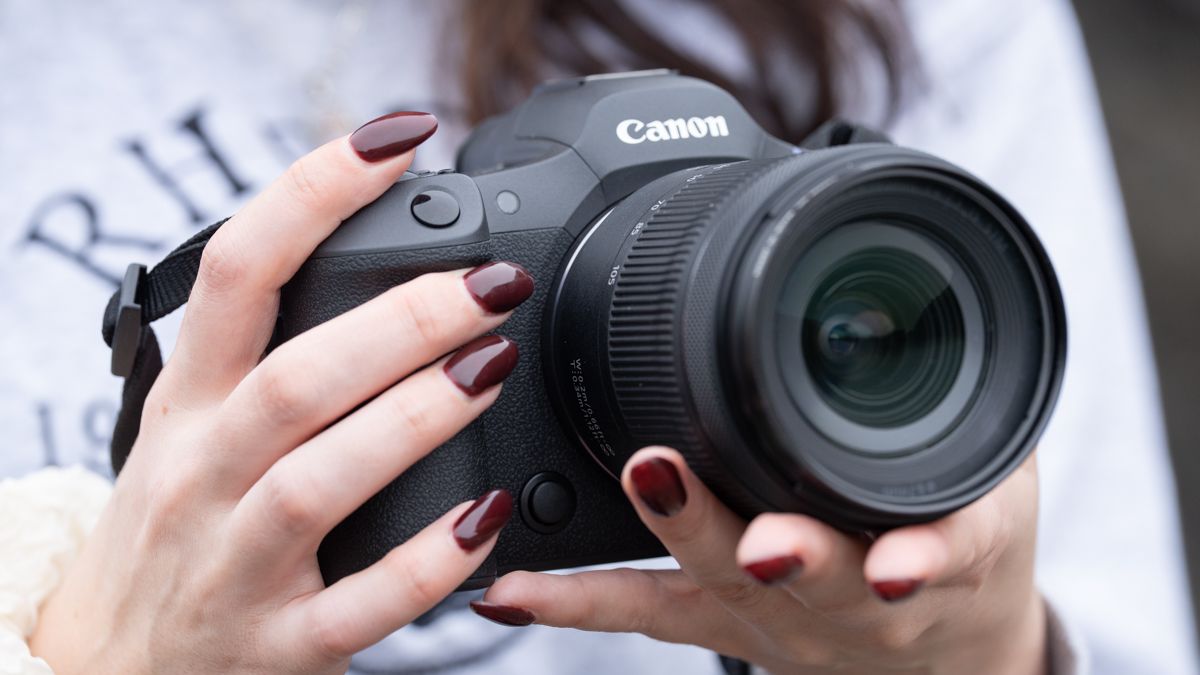 Canon EOS R5 IIJase Parnell-Brookes
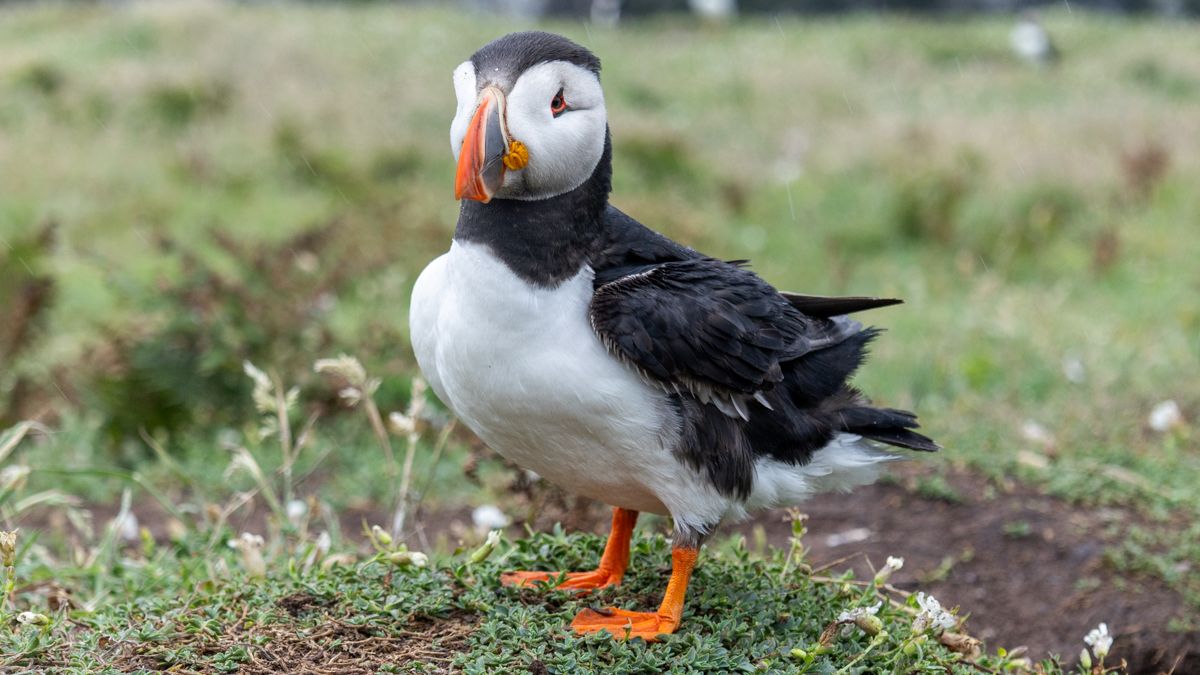 Taken with Canon EOS R5 IIKimberley Lane
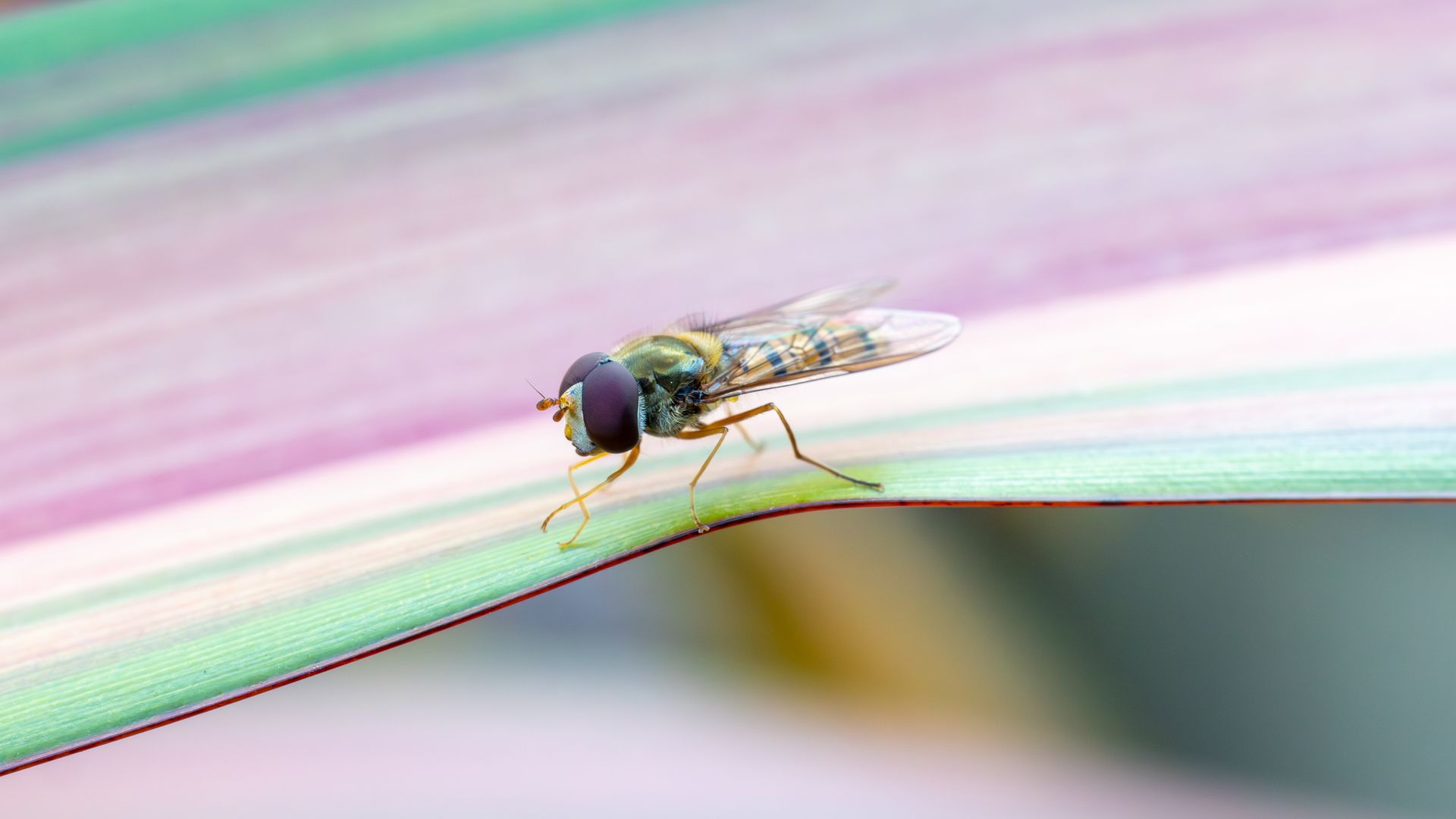 Taken with Canon EOS R5 IIKimberley Lane
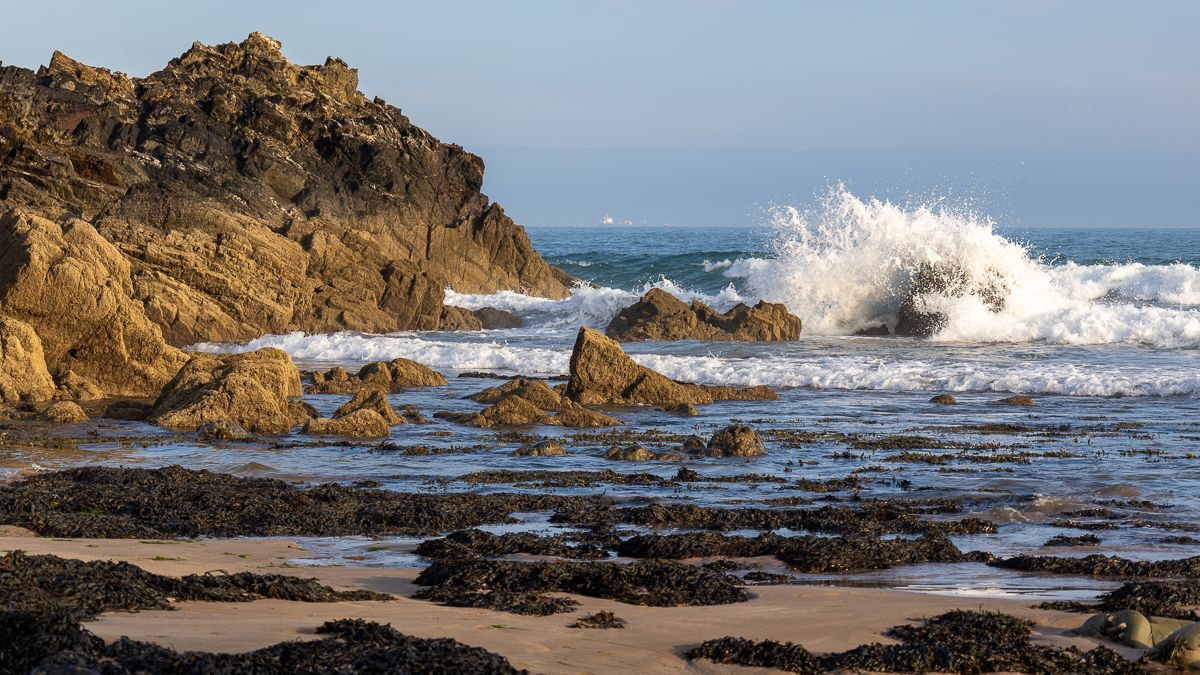 Taken with Canon EOS R5 IIKimberley Lane
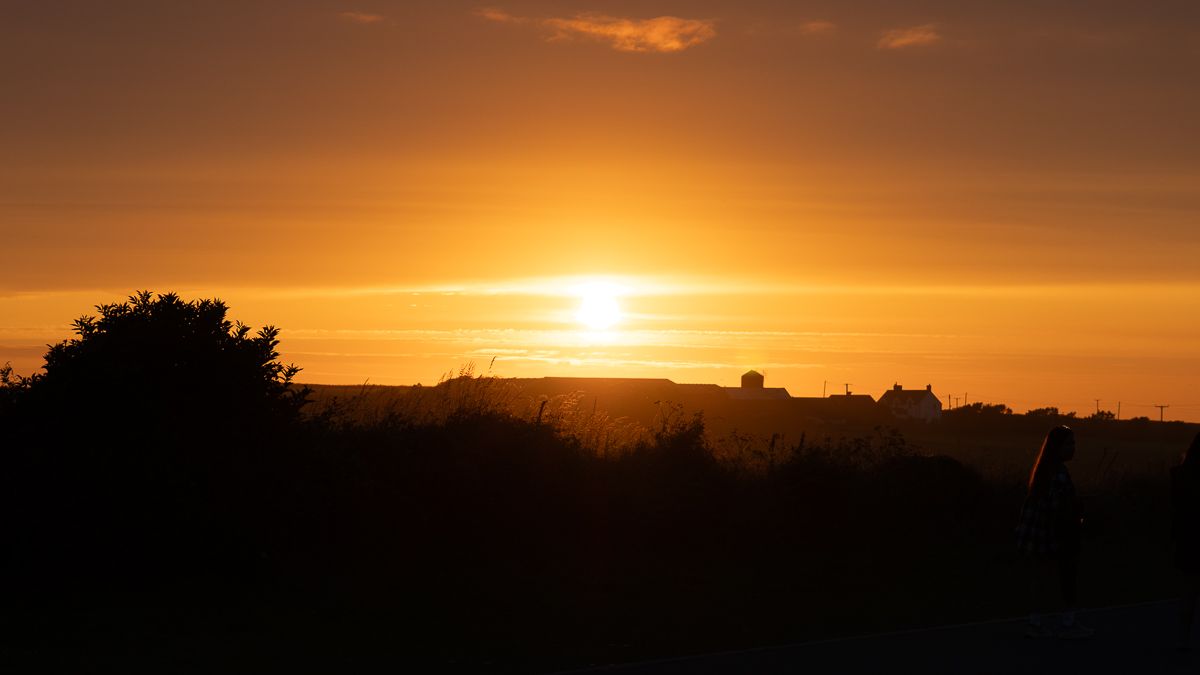 Taken with Canon EOS R5 IIKimberley Lane
 Taken with Canon EOS R5 IIKimberley Lane
Honorable mentionsCanon EOS 90D | If you prefer a DSLR and are happy to stick with a hobbyist camera that won't receive any future updates. |
Canon EOS R7 | A beginner-friendly wildlife option with a 1.6x crop factor to extend the reach of your lenses — effectively a cheat code for wildlife photography. |
Canon EOS R6 II | If you like the look of the R6 III but want to save a bit of money, its predecessor is definitely still worthy of your hard-earned cash. |
Avoid: Canon EOS R8 | It's an excellent starter camera for more general styles, but the buffer fills up quickly and there aren't enough buttons and controls on the body to make it efficient for wildlife photography. |
Best Sony cameras for wildlife photography
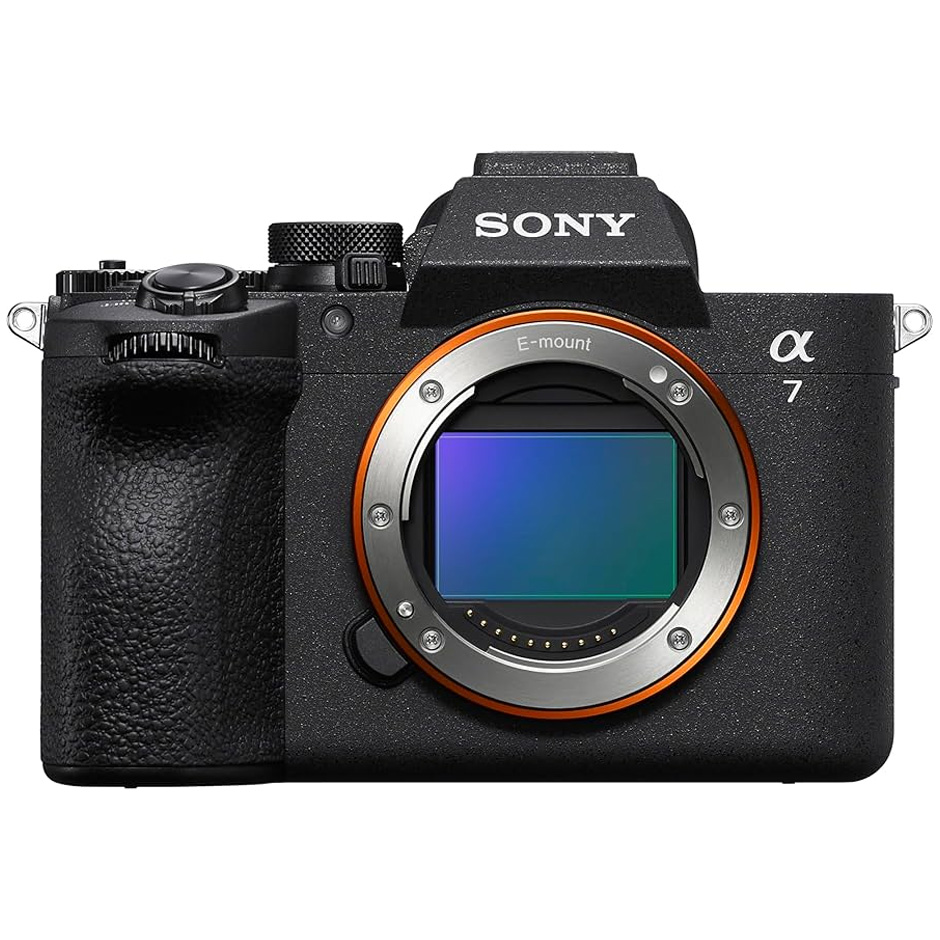 Best value for money
A big and welcome upgrade from the previous generation, with a new partially stacked sensor, improved AI autofocus and finally, a higher burst rate than the rather feeble 10FPS of the previous generation. The Sony A7 V is a very attractive option for wildlife, as well as general photography and hybrid shooting, but its Achilles heel is the shallow buffer, which fills up fast and will very quickly get annoying if you regularly shoot in bursts.
We will be reviewing the A7 V soon, but until then, you can read the full review at our sister site, Digital Camera World
Pros
- Blackout-free 30FPS burst rate with AF/AE tracking is much improved over the 10FPS in the previous model
- Features new partially stacked 33MP sensor to produce stunning and detailed images
- New AI subject detection can detect birds, animals and insects — including Eye AF
- This model now offers pre-capture, which captures images just before the shutter is pressed
- Handles noise well, which is an advantage if you're shooting at dawn or dusk, or are pairing it with a more affordable lens with an f/5.6 max aperture.
Cons
- Autofocus can struggle when shooting small birds or through foliage
- Buffer depth (~95 compressed RAW files) is shallow and will fill quickly
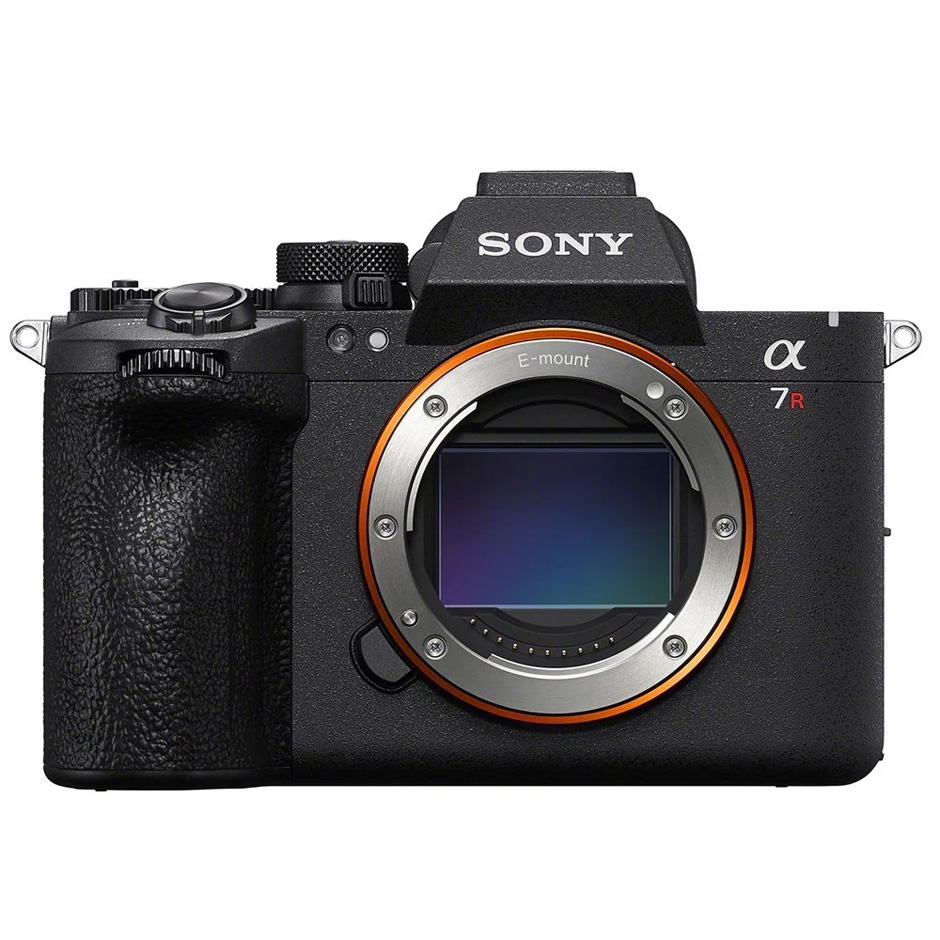 If you need heavy cropping power
With Sony's highest resolution yet, the monstrous A7R VI is the newest and most expensive model in the R lineup. Sony has finally answered our prayers by boosting the burst rate from 10FPS in the previous model up to a massive 30FPS in this new one. For this price, that's more like it. Plus, with a massive 67MP, you'll get some serious cropping power, which comes in handy if you're shooting distant wildlife or birds.
We will be reviewing the A7R VI soon, but for now, you can read the full review at our sister site, Digital Camera World
Pros
- Massive 67MP offers exceptional detail and leaves tons of room for cropping
- 30FPS blackout-free bursts seriously levels up the R range like never before
- Offers Continuous Shooting Speed Boost, which allows you to assign a custom button to temporarily jump from a lower, more sustained burst rate to the maximum 30FPS instantly, which avoids filling up the card too quickly
- AI subject detection has animal, bird and insect modes and is generally very accurate
- Pre-capture records images before you fully press the shutter
Cons
- Do you really need 67MP?
- High resolution means noisy images — we definitely found this to be the case with the previous generation
- Autofocus can be tripped up if your animal is partially covered by reeds or branches
- The most expensive release in the R range
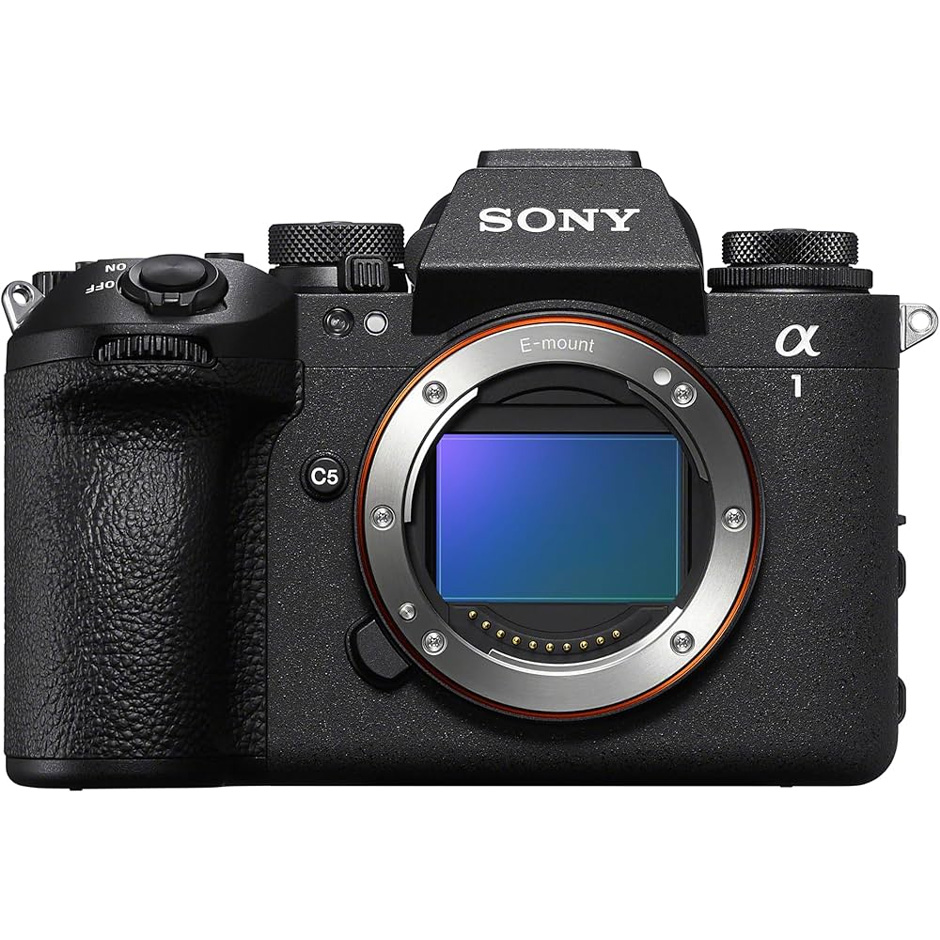 Ultimate choice for pros
Experienced users looking for a balance of resolution and speed need look no further than the Sony A1 II. It has a 50.1MP stacked sensor, 30FPS bursts and Sony's class-leading AI autofocus, so what's not to love? That said, it's overkill for beginners and amateurs — plus we'd only recommend it if you can also invest in some of Sony's more expensive glass.
Read the full Sony A1 II review at our sister site, Digital Camera World
Pros
- A perfect blend of speed (30FPS blackout-free bursts) and resolution (50.1MP)
- Sticky, accurate AI autofocus with Eye AF for animals, birds and insects
- Both card slots accept CFexpress Type A or SD UHS-II/UHS-I
- RAW files offer incredible dynamic range
- Pre-capture starts taking images when the shutter is half-pressed
Cons
- Expensive, and will be wasted money unless you can also afford to invest in expensive lenses
- New Sony A7R VI is cheaper and has more resolution
- Overkill unless you're an experienced shooter
Honorable mentionsSony A7R V | Stunning 61MP images, but with a much slower burst rate of 10FPS. It's long been our favorite Sony camera (until the new releases), and it's an excellent option if you don't shoot fast-moving animals or birds in flight. We've taken some beautiful wildlife images with it. |
Sony A7 IV | A more affordable option here, and it still has AI-powered autofocus, although the 33MP sensor isn't stacked like the new A7 V. Plus, like the previous generation R model, it only has a 10FPS burst rate. Still, its noise handling is excellent, and it is suitable for more general styles of photography. |
Sony A1 | If you don't need pre-capture, go for the original Sony A1. It's still a wildlife powerhouse with the same 50MP resolution and 30FPS bursts as the new Mark II. |
Sony A9 III | An absolute speed demon, but let's be honest — does anyone actually need 120FPS? Probably not. However, the Sony A9 III is considered to be one of the best cameras for birds in flight (BIF), but it'll be overkill unless you only shoot sports or fast-action bird photography. |
Avoid: older or entry-level Sony cameras | Sony's entry level and older cameras tend to be capped at around 10FPS burst rates, and the older models also don't have any AI-powered autofocus features, which make wildlife photography much more fruitful. It's a shame, as there's no real "beginner" Sony wildlife camera on the market that suits these criteria. |
Best Nikon cameras for wildlife photography
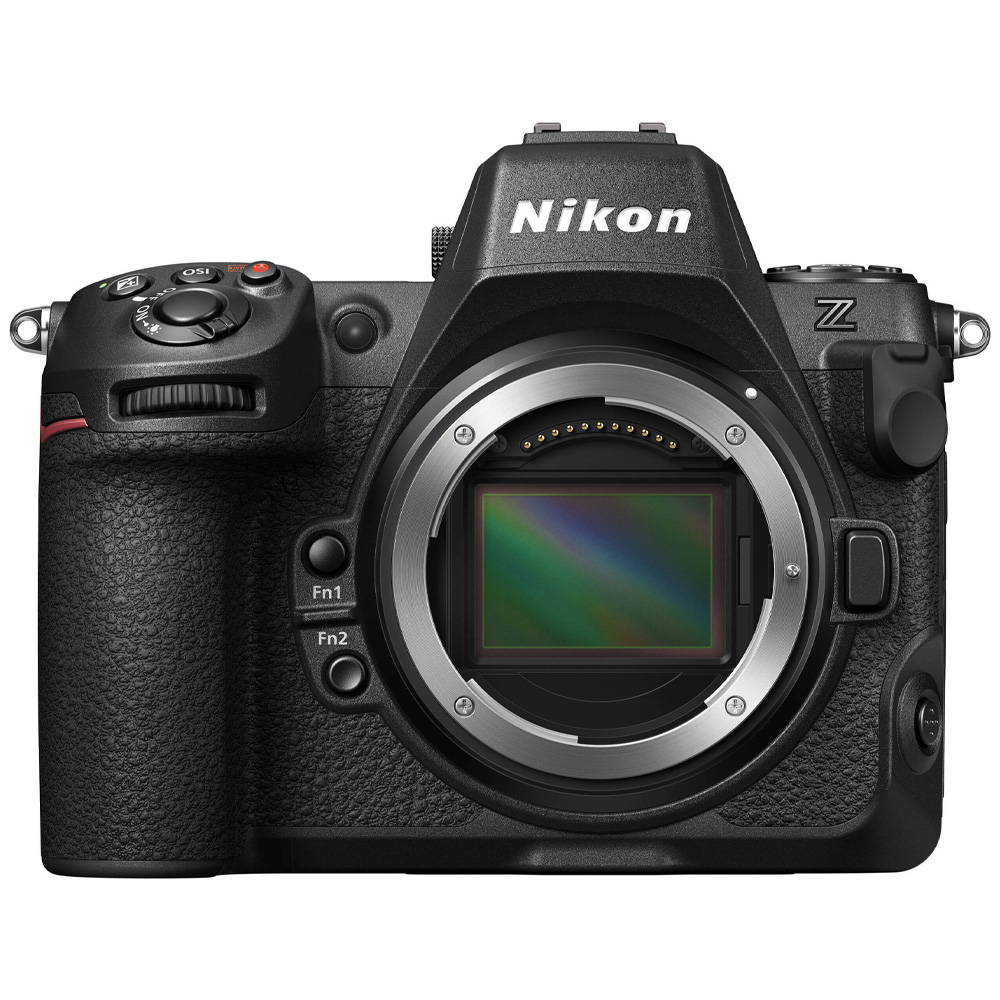 The clear winner
For wildlife photography (and most other styles, too, while we're at it), the obvious choice for most Nikon shooters is the Nikon Z8. Often dubbed a "baby Z9", it has all the brains and brawn of the flagship Z9 in a smaller and more affordable package.
Read our full Nikon Z8 review
Pros
- 45.7MP resolution with a stacked sensor gives a lot of room for cropping
- Up to 120FPS bursts (11MP), or 20FPS sustained — all blackout-free
- Killer autofocus
- It can record more than 1,000 RAW images before any buffering kicks in — insanely useful for wildlife
- Performs well in low light
- Pre-release burst captures up to 1 second of images before the shutter is fully pressed
Cons
- Battery could be better
- 120FPS is only 11MP, which you likely won't need when you're buying a 45.7MP camera
- Occasional AF flaws
- Screen isn't fully articulating
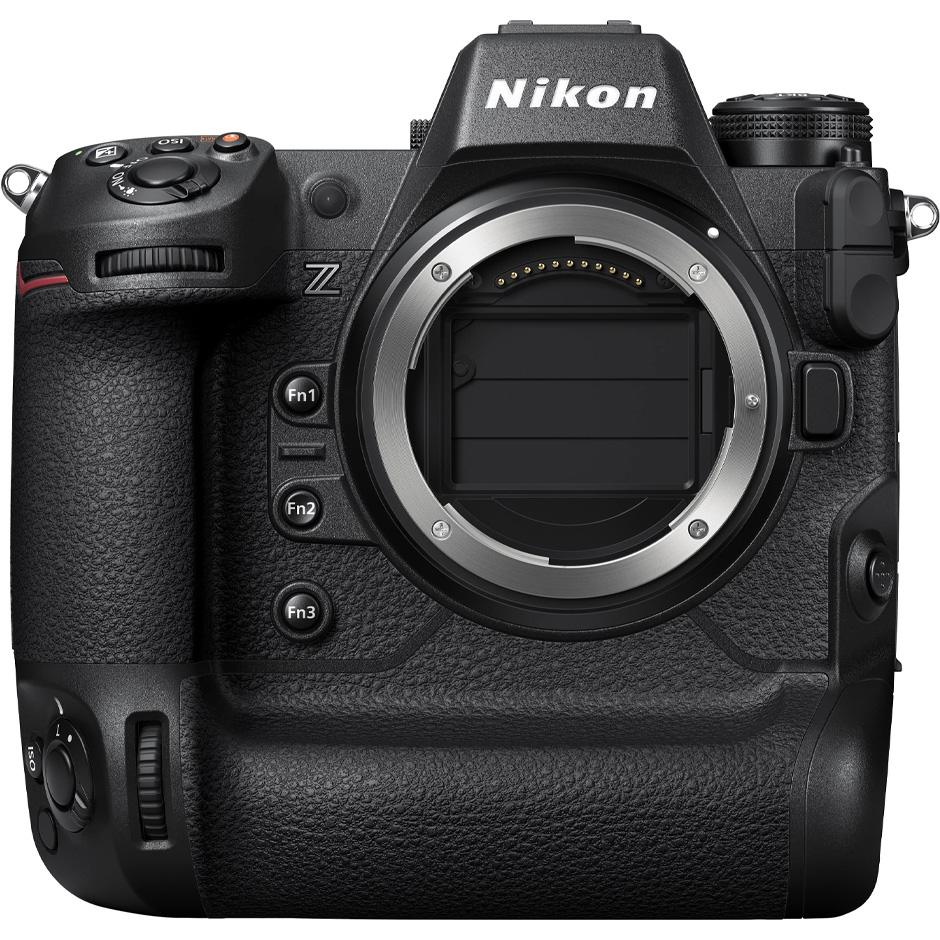 If you need extra grip
If you saw the Z8 and thought, "Hey, I need something big and heavy", then the flagship R9 could be better for you. The integrated grip offers improved balance and weight distribution for longer lenses, although it's only compatible with CFexpress cards, making this model best suited for professionals.
Read the full Nikon Z9 review at our sister site, Digital Camera World
Pros
- Advanced 3D tracking and dedicated animal/bird eye AF
- Stunning 45.7MP resolution from a stacked sensor
- 20FPS blackout-free burst shooting for RAW images, with an option for 120FPS bursts at 11MP
- Pre-release burst can capture images up to 1 second before the shutter is fully pressed
- Robust, and built like a tank for heavy shooting over long periods
Cons
- Only compatible with expensive CFexpress cards
- Not as travel-friendly as the Z8 due to the bigger and heavier body
- Not many people will use 120FPS for 11MP images
- 3.69 million-dot EVF resolution is a little low compared to other flagship models like the Sony A1 II and Canon EOS R1 (9.44 million)
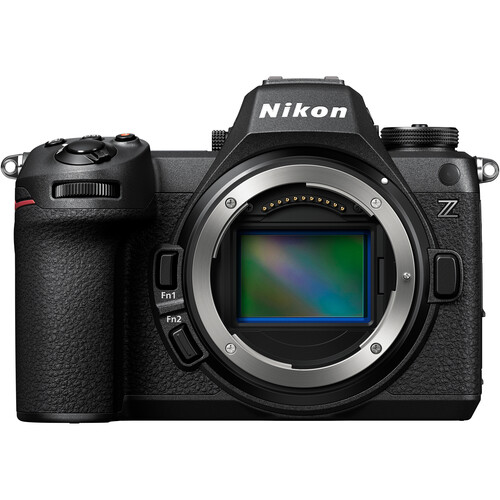 Best mid-range
For anyone on a moderate budget looking for a capable wildlife camera, the Nikon Z6 III has a partially stacked sensor, 20FPS RAW shooting and dedicated animal and bird detection modes, all wrapped up in a compact and lightweight body — the only downside being the rather limited 24.5MP resolution.
Read the full Nikon Z6 III review at our sister site, Digital Camera World
Pros
- 20FPS burst rate when shooting RAW images, up to 60FPS JPEG and up to 120FPS in DX crop mode.
- Partially-stacked sensor gives faster readout speed and reduced rolling shutter
- Clean images in low light
- Smaller and lighter than the Z8
- Bird detection added with a recent firmware update (2.0)
- Features pre-release capture to capture JPEG frames up to 1 second before fully releasing the shutter
Cons
- 24.5MP resolution won't allow for heavy cropping
- Some users report that the autofocus struggles with birds in flight at a distance
- Pre-release capture doesn't yet support RAW files
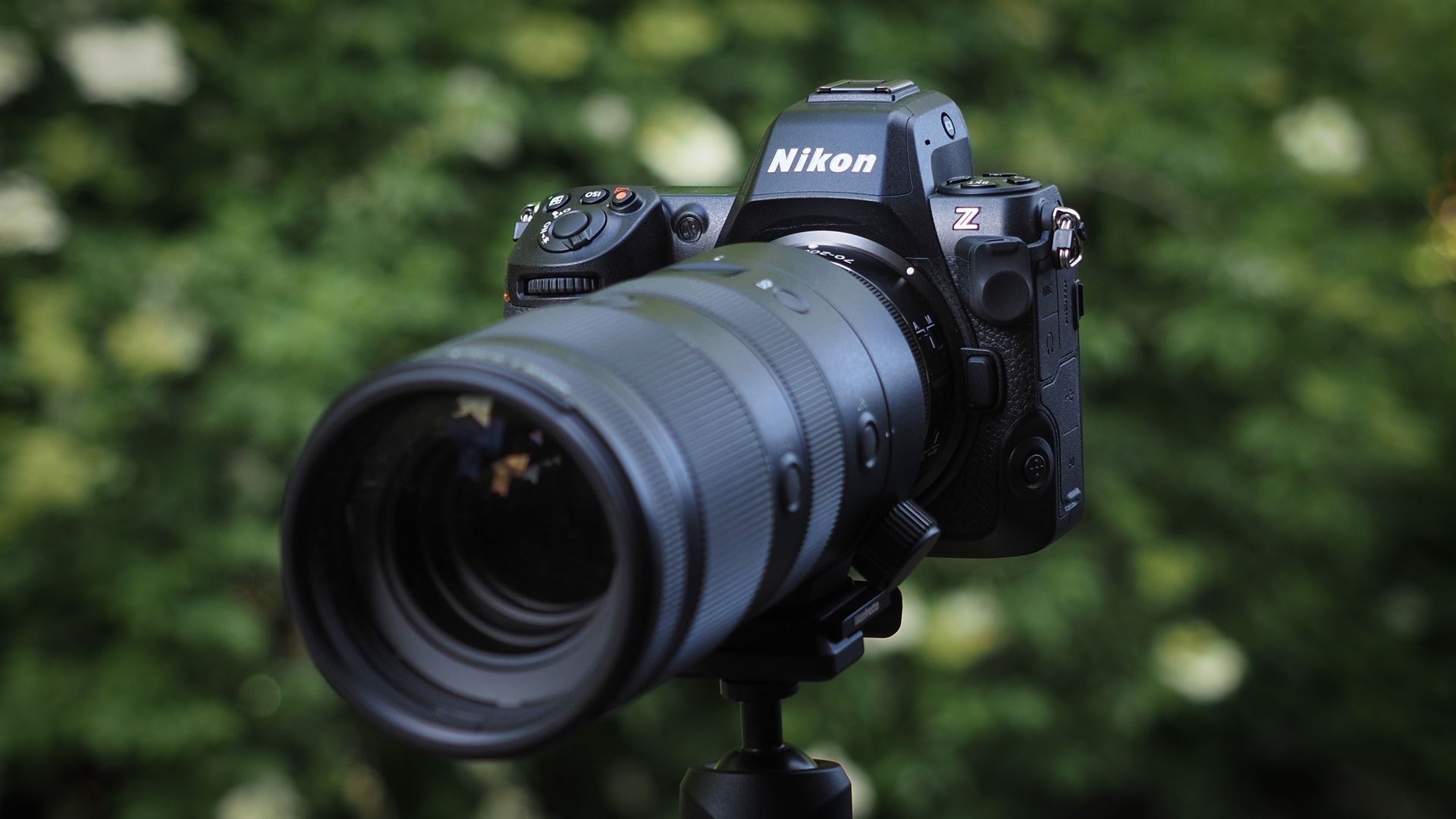 Nikon Z8James Artaius
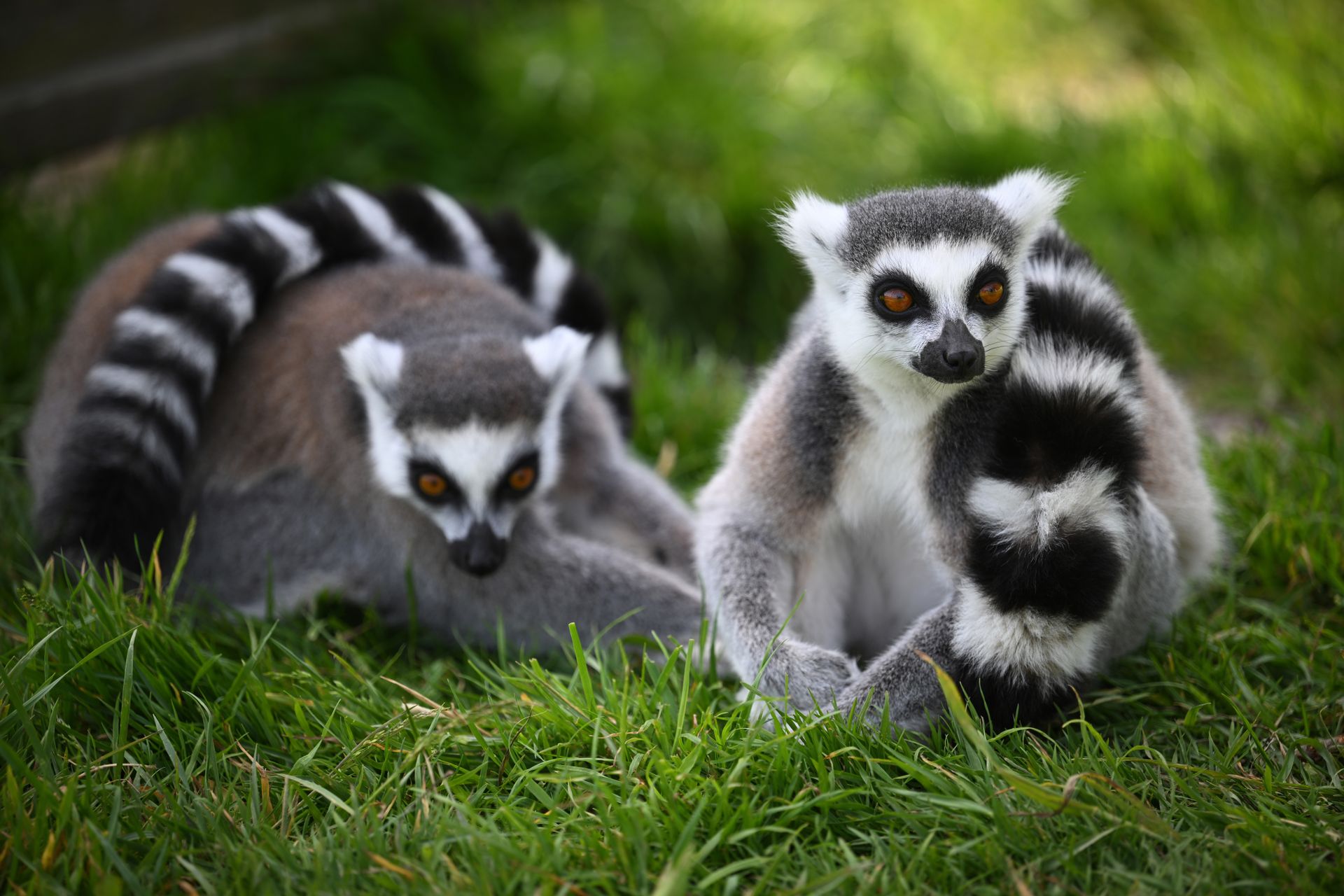 Taken with the Nikon Z8James Artaius
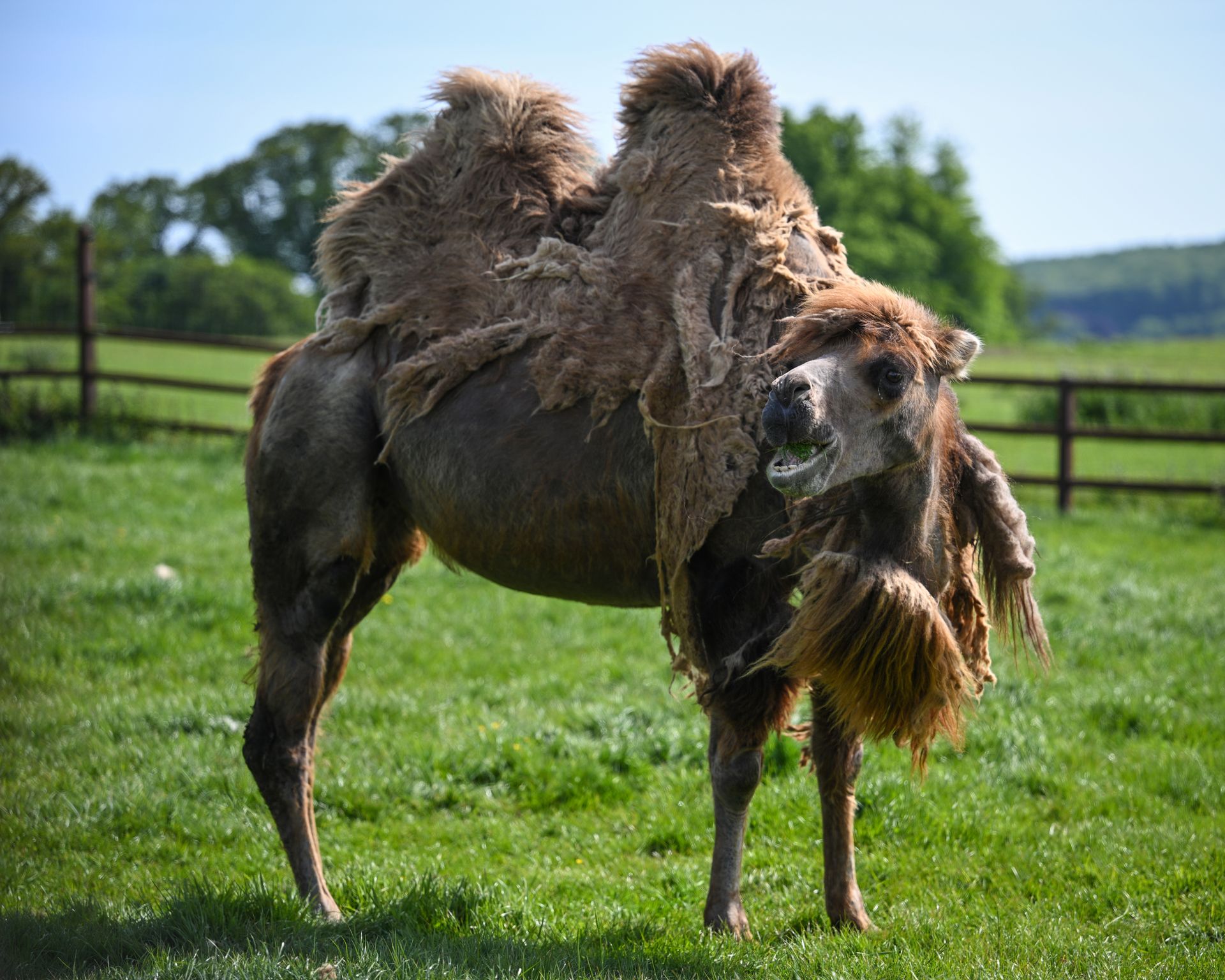 Taken with the Nikon Z8James Artaius
Honorable mentionsNikon Z50 II | A budget-friendly crop sensor (DX) model with flagship level autofocus and up to 30FPS bursts in a small, lightweight body. Plus, the 1.5x crop factor gives you extended reach when paired with full-frame lenses. |
Nikon D850 | Known as one of the best DSLRs ever made, the Nikon D850 is an incredible choice if you don't need the bells and whistles of a mirrorless — but keep in mind that it won't receive any future updates. |
Nikon CoolPix P1000 | If you need unparalleled zoom, the P1000 bridge camera has an insane 24-3,000mm zoom range. There are drawbacks, including the limited 16MP resolution and lack of weather sealing, but for beginners who want an all-in-one package for casual shooting, it's definitely worth a look. |
Nikon D500 | An affordable, entry-level APS-C model with 10FPS bursts, sharp 20MP images and fierce autofocus. |
Avoid: Older DSLRs | Older DSLR models are typically much slower, have outdated autofocus and limited ISO performance for low-light work. |
Best OM System cameras for wildlife photography
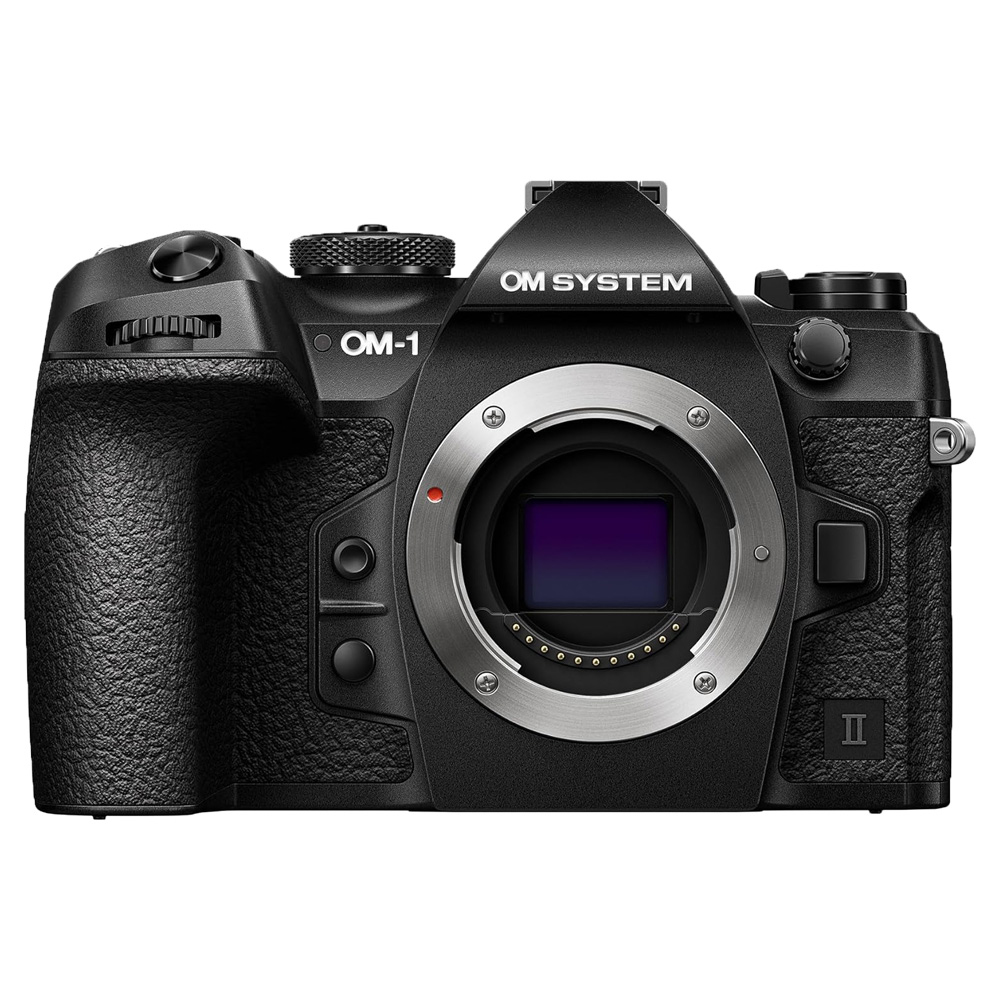 Best overall
Wildlife photographers who want a powerful system in a small package should look at the OM-1 Mark II — it can shoot a blisteringly fast 50FPS with full AF/AE tracking (or 120FPS with locked focus), and even though the 20.4MP resolution sounds a little on the low side, we were pleasantly surprised by the image quality.
Read our full OM System OM-1 Mark II review
Pros
- Insane 120FPS burst rate with locked focus, up to 50FPS with AF/AE tracking
- Surprisingly good images for 20.4MP
- Accurate autofocus with bird and human modes
- Compact and lightweight, even when paired with long lenses
- Pro Capture captures images before shutter is fully pressed
- Buffer can hold around 213 RAW frames at 120FPS
Cons
- 20.4MP may be underwhelming for some users, and doesn't allow for heavy cropping
- Not enough of an upgrade if you already own the OM-1
- Noisy low-light images
- Button design and layout could be improved
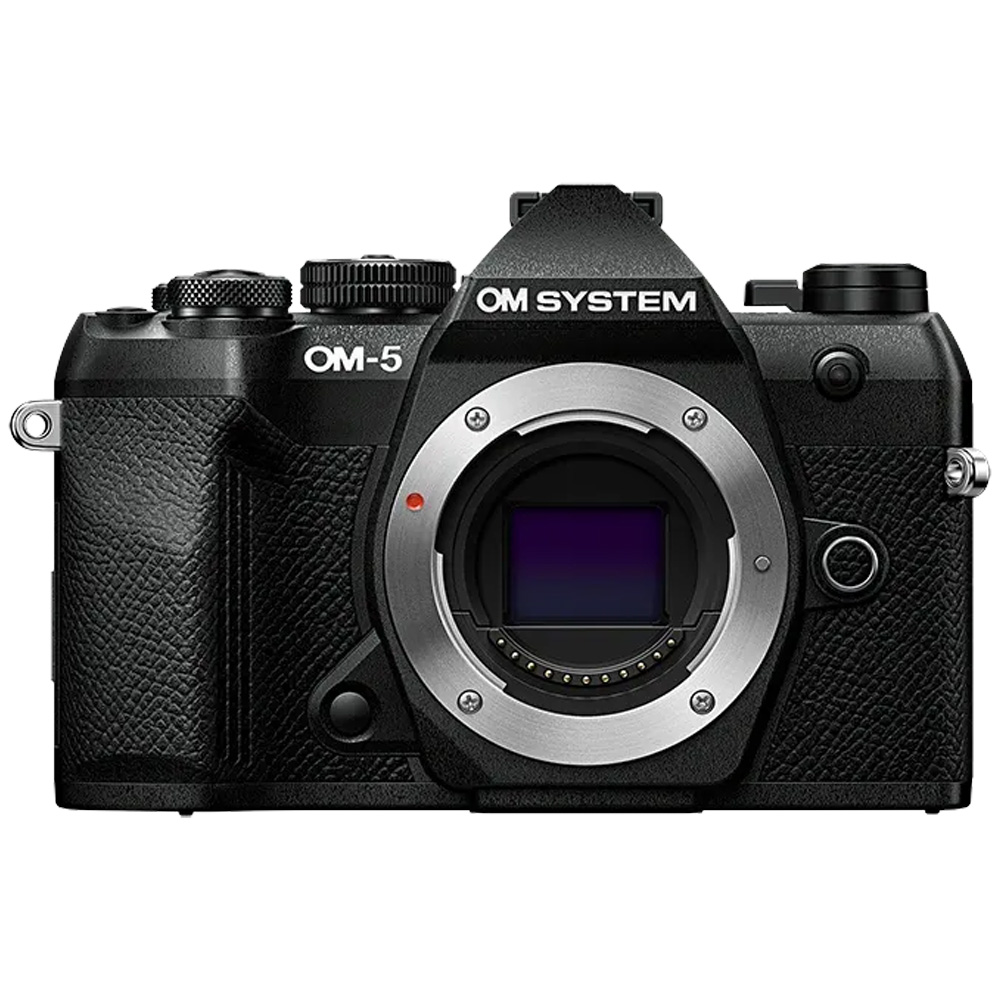 For hobbyists
If you're just getting into wildlife photography and don't need the best of the best, the OM-5 Mark II is a great camera for people who want to photograph wildlife among other styles. It lacks dedicated bird/animal subject detection, but on the whole, OM System's autofocus is still pretty good.
Read the full OM-5 Mark II review at our sister site, Digital Camera World
Pros
- Very compact and lightweight
- Pro Capture starts recording images before the shutter is fully released
- An affordable entry point into wildlife photography
- Excellent IBIS for handheld shots
- IP53 weather sealing
Cons
- Lacks dedicated bird/animal subject detection
- MFT sensor struggles with high ISO images, making it less than ideal for low-light work
- The small grip might make it more difficult to hold it with larger lenses
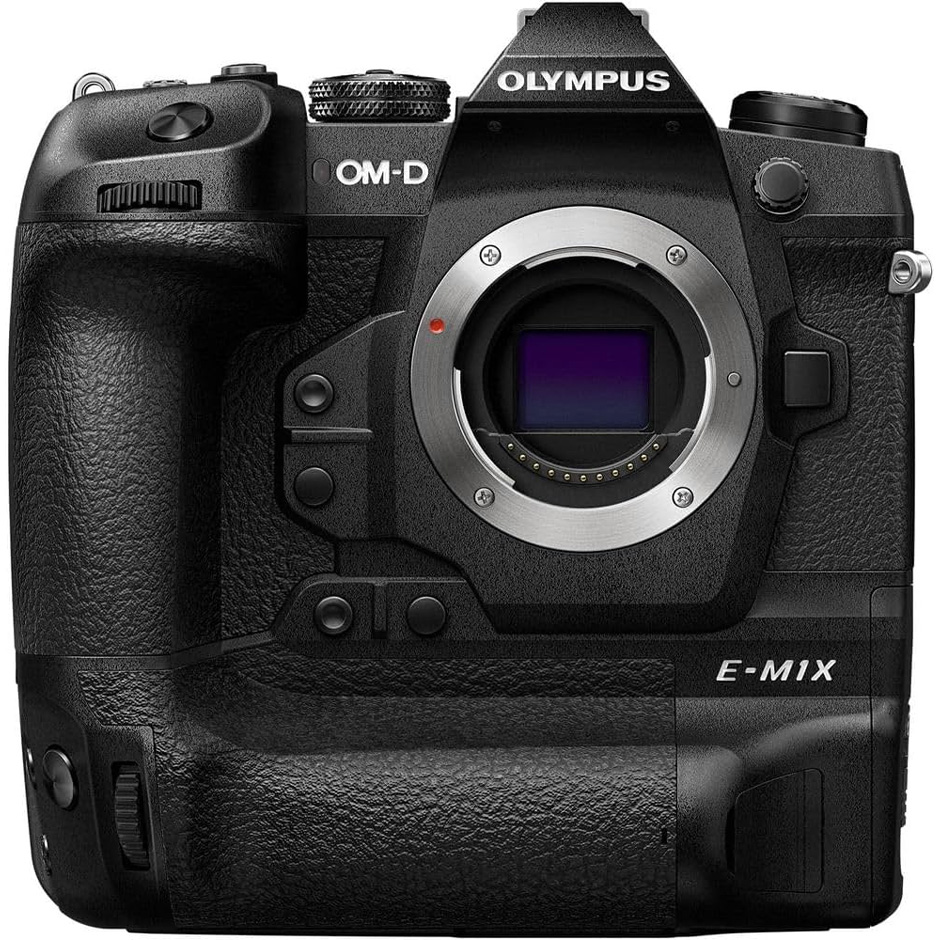 For something more robust
While MFT cameras are often favored for being small and lightweight, big lenses can often feel unbalanced. The OM-D E-M1X fixes this issue with its integrated vertical grip, and the speedy bursts and AI animal detection modes are ideal for fast action — we called it a "wildlife wonder."
Read our full Olympus OM-D E-M1X review
Pros
- Up to 60FPS bursts with locked autofocus, or 18FPS with tracking
- Small, lightweight lenses that offer a 2x crop factor thanks to the MFT sensor
- Stunning image stabilization
- Bird and animal subject detection modes
- Built-in vertical grip for more secure handling
Cons
- Limited ISO range, and MFT sensors tend to produce noisy images
- Less scope to crop with the 20.4MP resolution
- Smaller sensor has a deeper depth of field, which gives less separation between your subject and the background
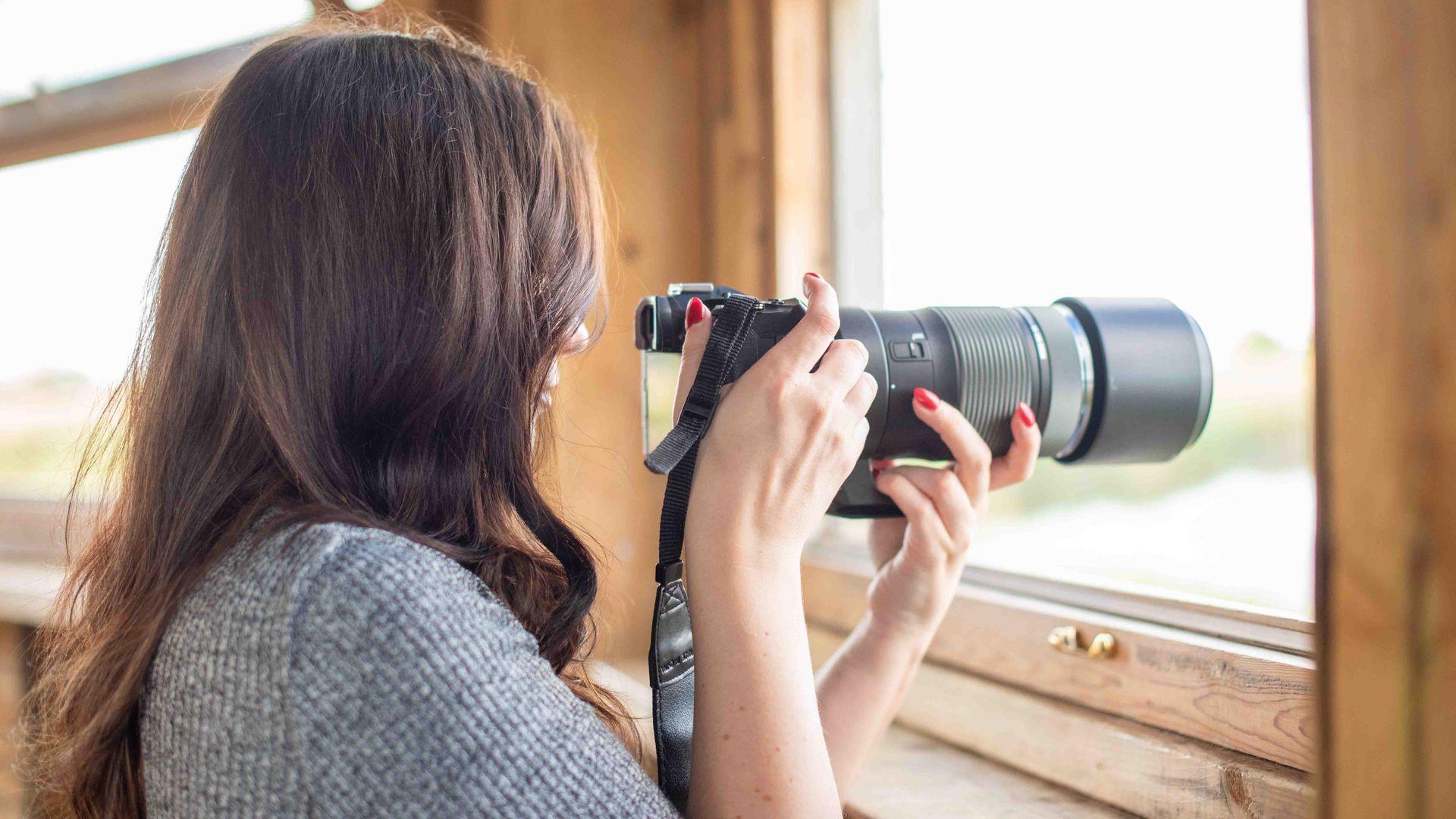 OM System OM-1 Mark IIJase Parnell-Brookes
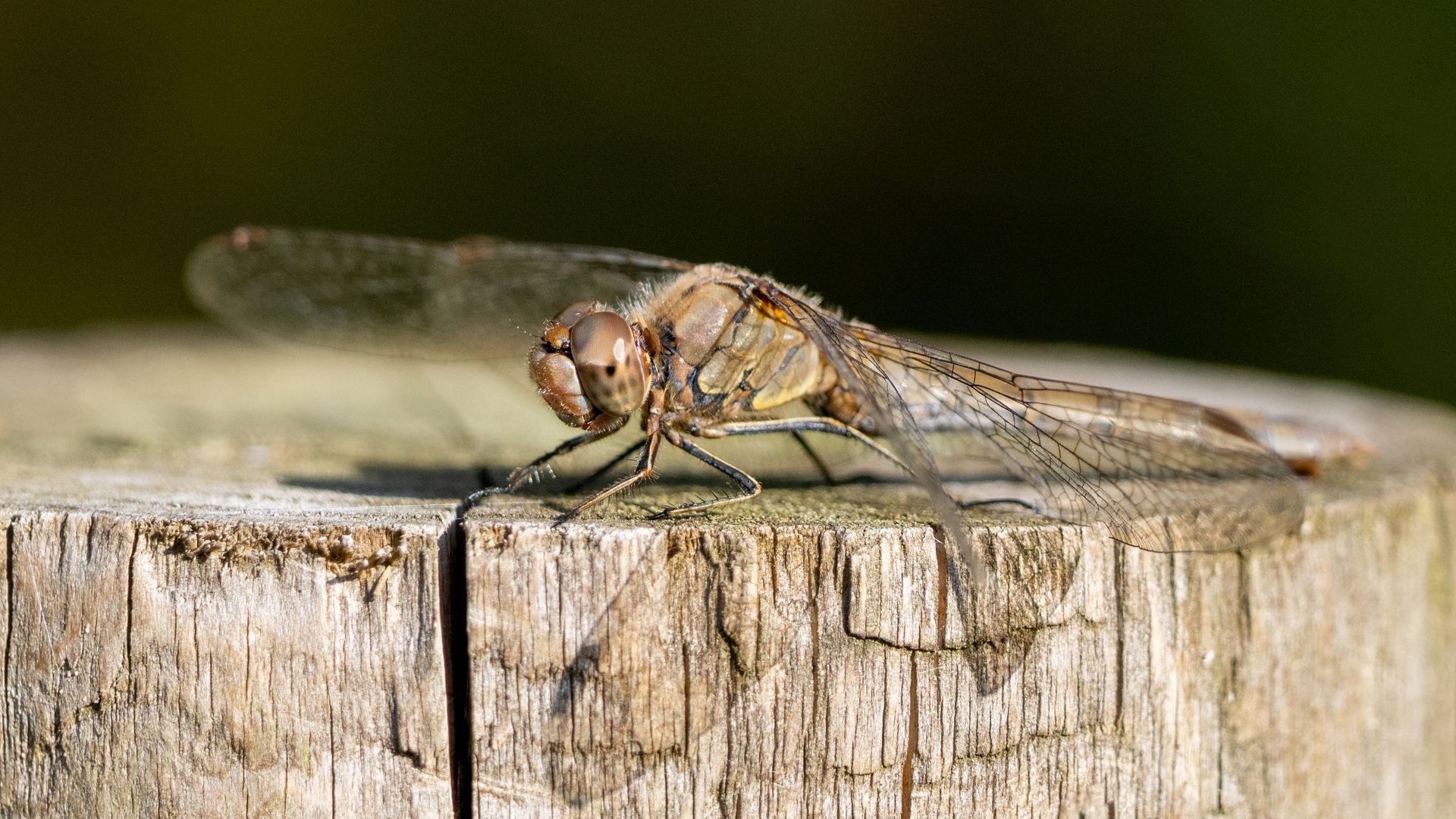 Taken with the OM System OM-1 Mark IIKimberley Lane
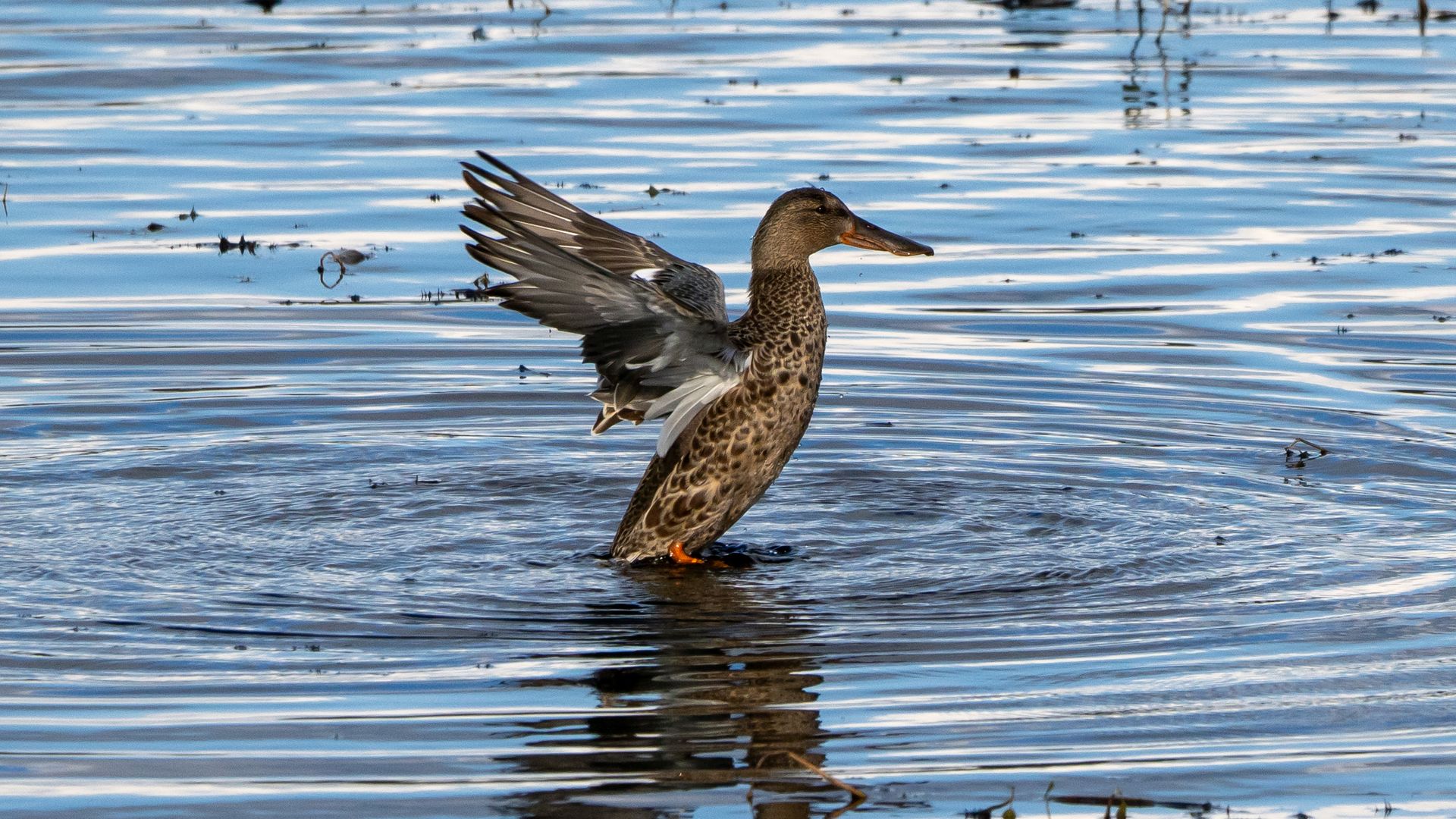 Taken with the OM System OM-1 Mark IIKimberley Lane
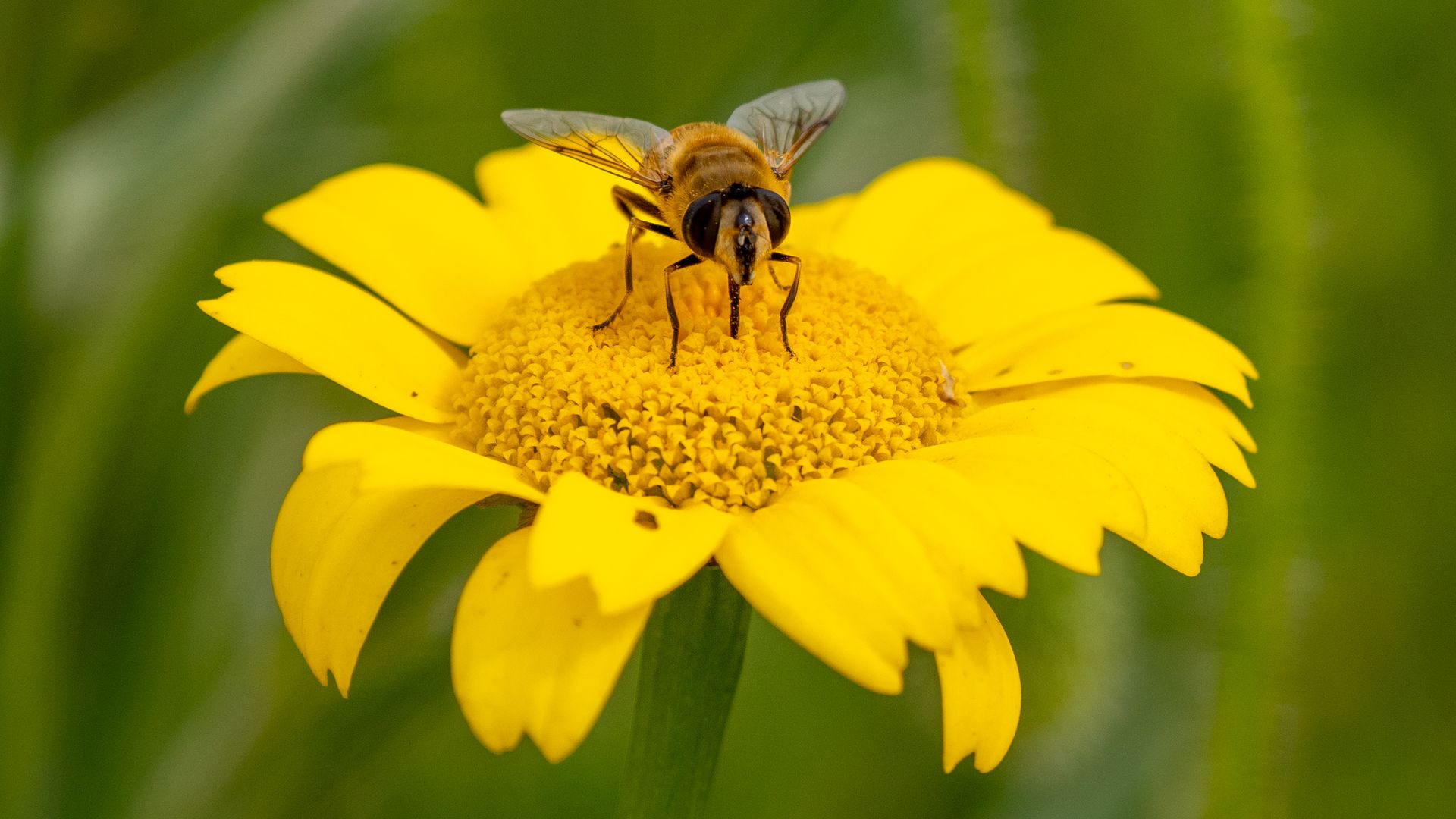 Taken with the OM System OM-1 Mark IIKimberley Lane
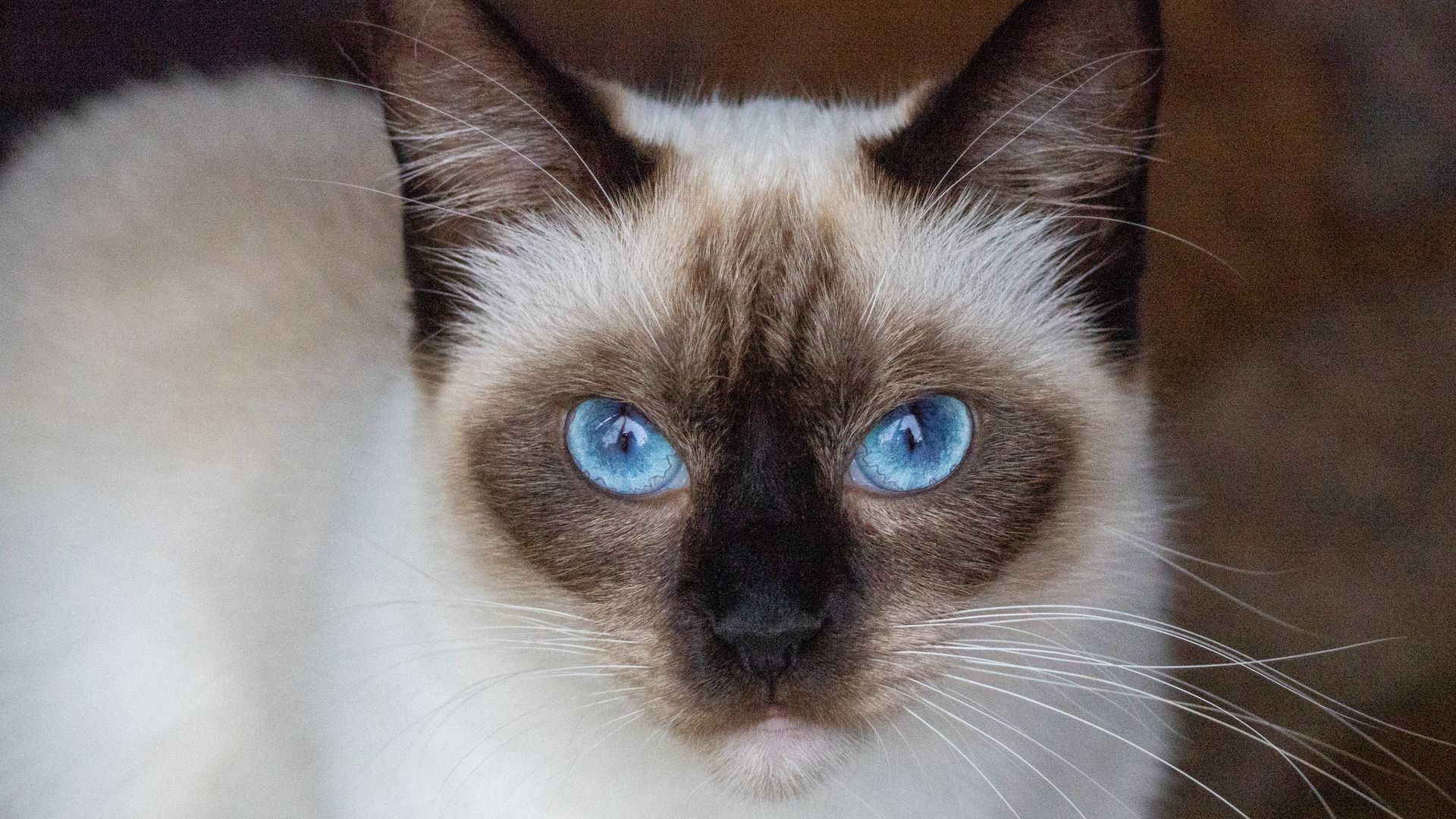 Taken with the OM System OM-1 Mark IIKimberley Lane
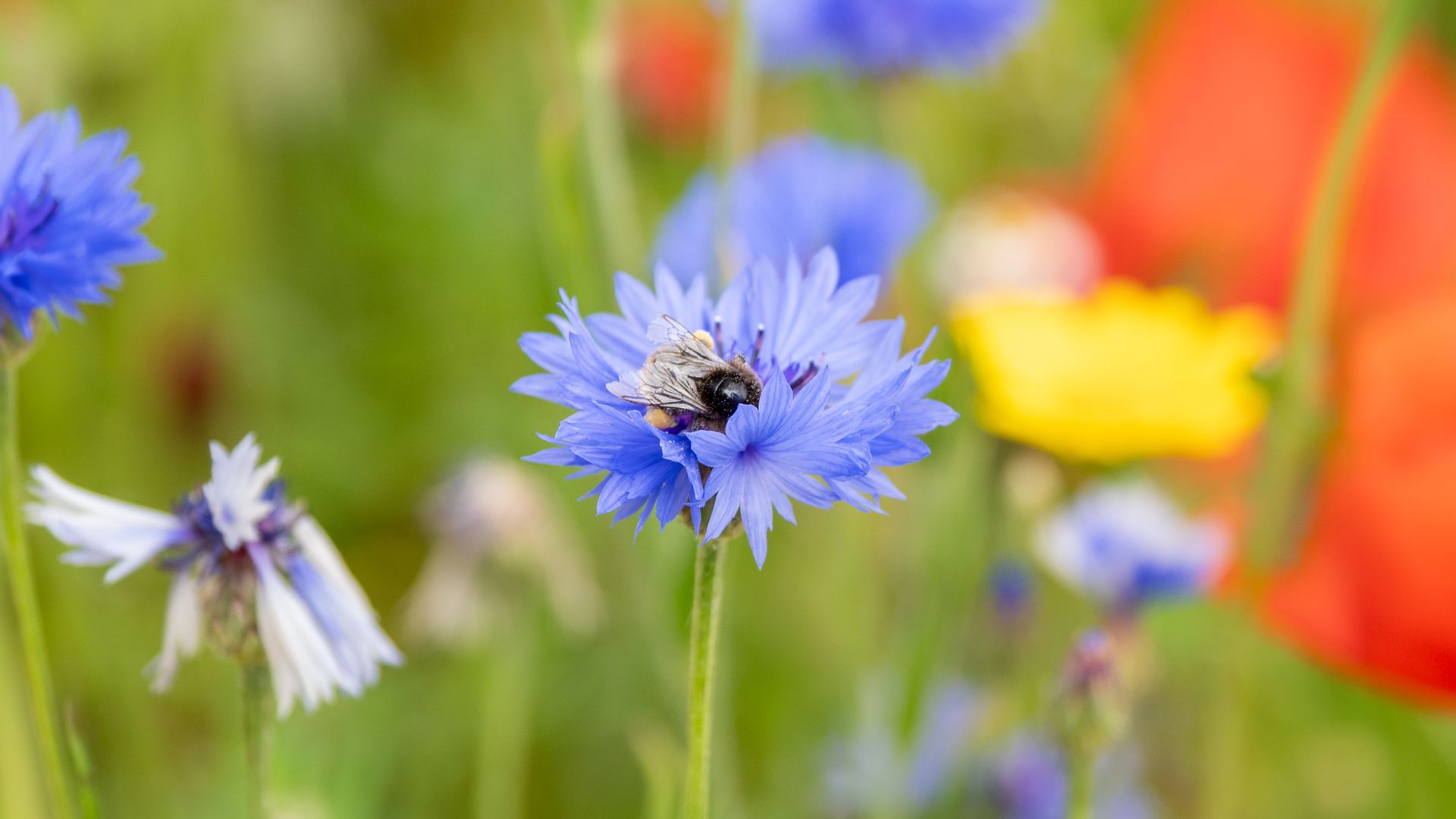 Taken with the OM System OM-1 Mark IIKimberley Lane
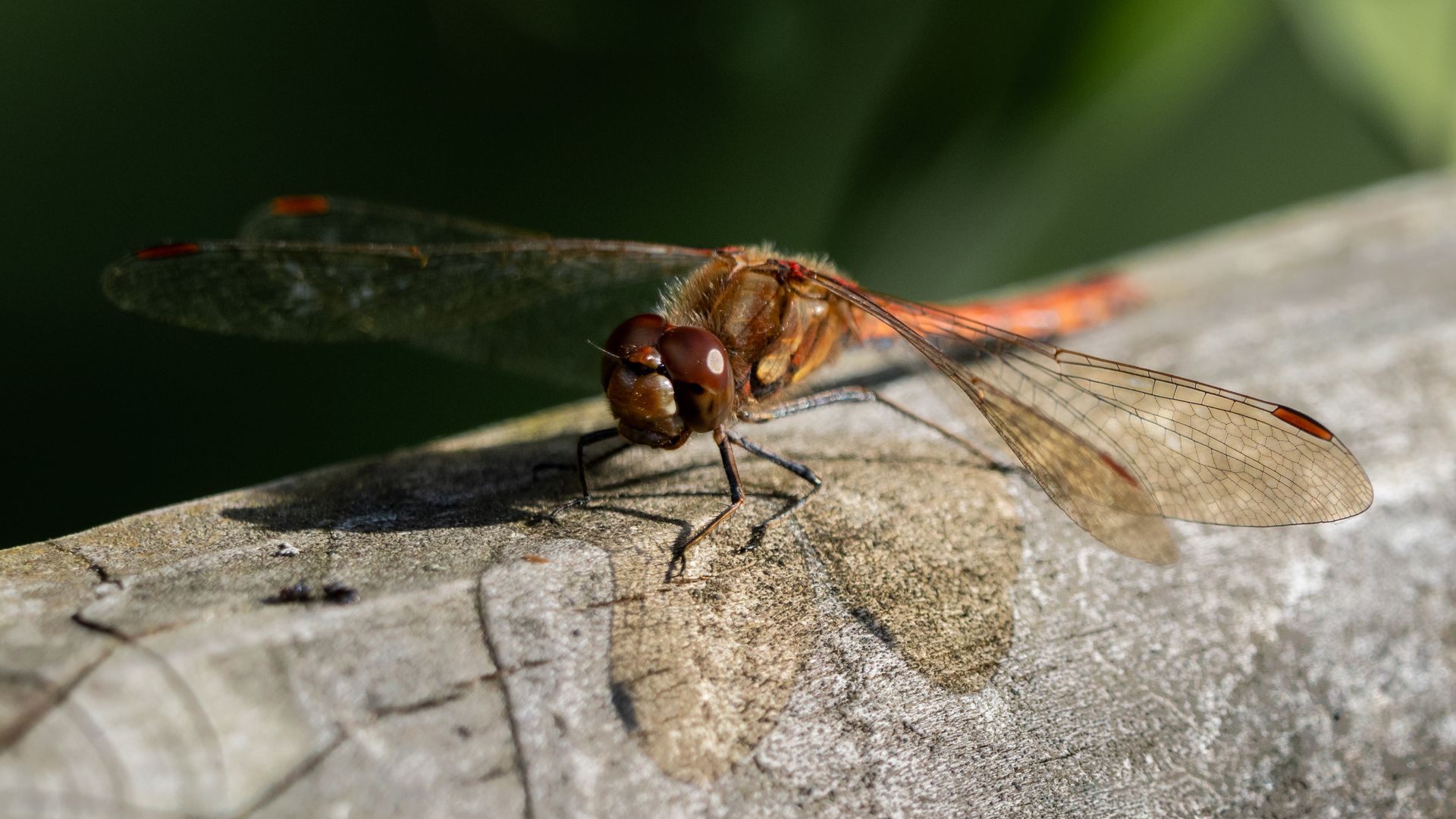 Taken with the OM System OM-1 Mark IIKimberley Lane
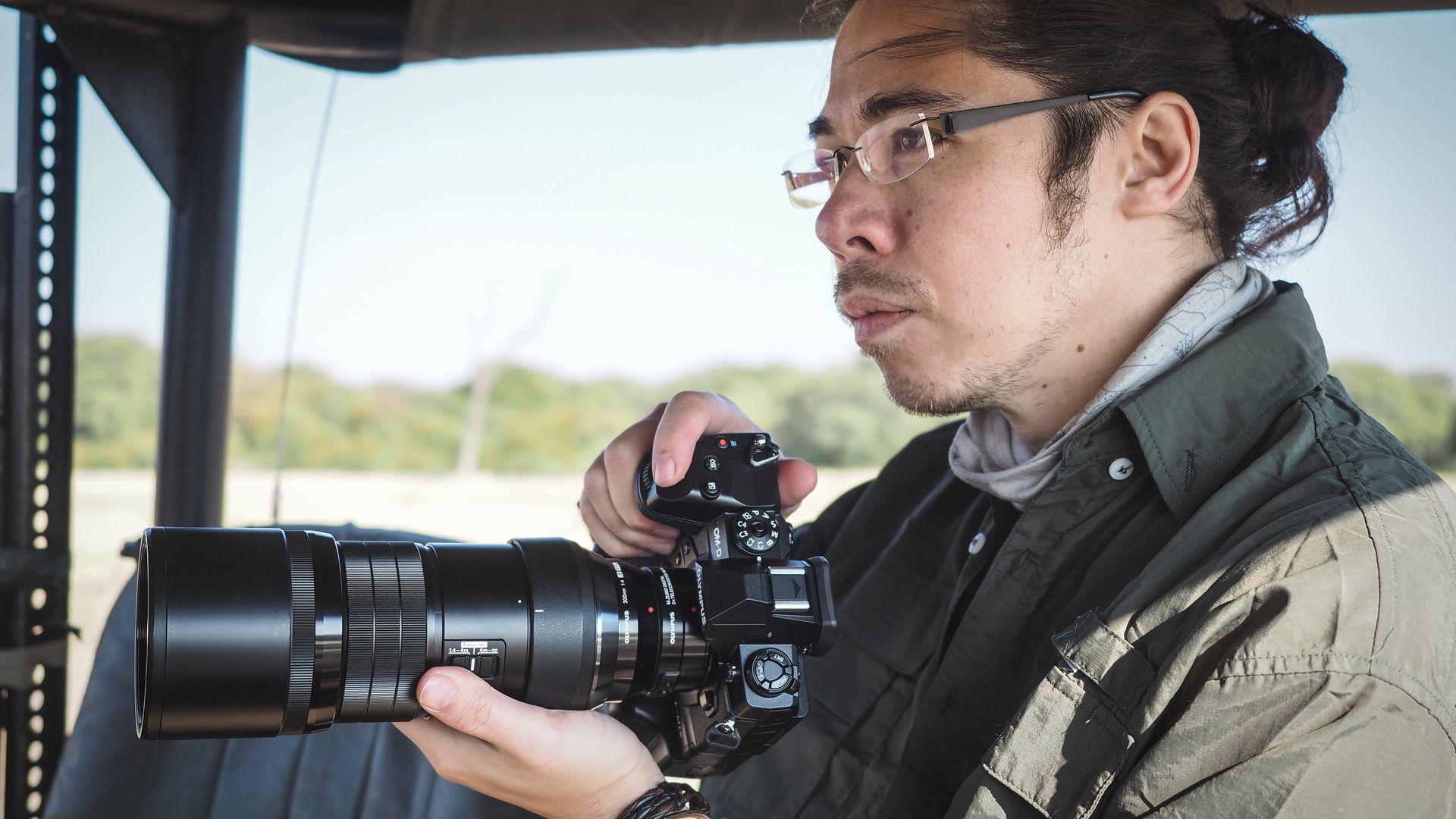 Shooting with the Olympus OM-D E-M1XJames Artaius
 Taken with the Olympus OM-D E-M1XJames Artaius
 Taken with the Olympus OM-D E-M1XJames Artaius
 Taken with the Olympus OM-D E-M1XJames Artaius
 Taken with the Olympus OM-D E-M1XJames Artaius
 Taken with the Olympus OM-D E-M1XJames Artaius
 Taken with the Olympus OM-D E-M1XJames Artaius
 Taken with the Olympus OM-D E-M1XJames Artaius
 Taken with the Olympus OM-D E-M1XJames Artaius
Honorable mentionsOM-5 | If you want to save a few hundred bucks, get the original OM-5 instead of the OM-5 Mark II. |
Olympus OM-D E-M10 Mark IV | It's not the fastest for wildlife photography with only 5FPS with tracking, but it's a great camera for casual shooters. |
Best Fujifilm cameras for wildlife photography
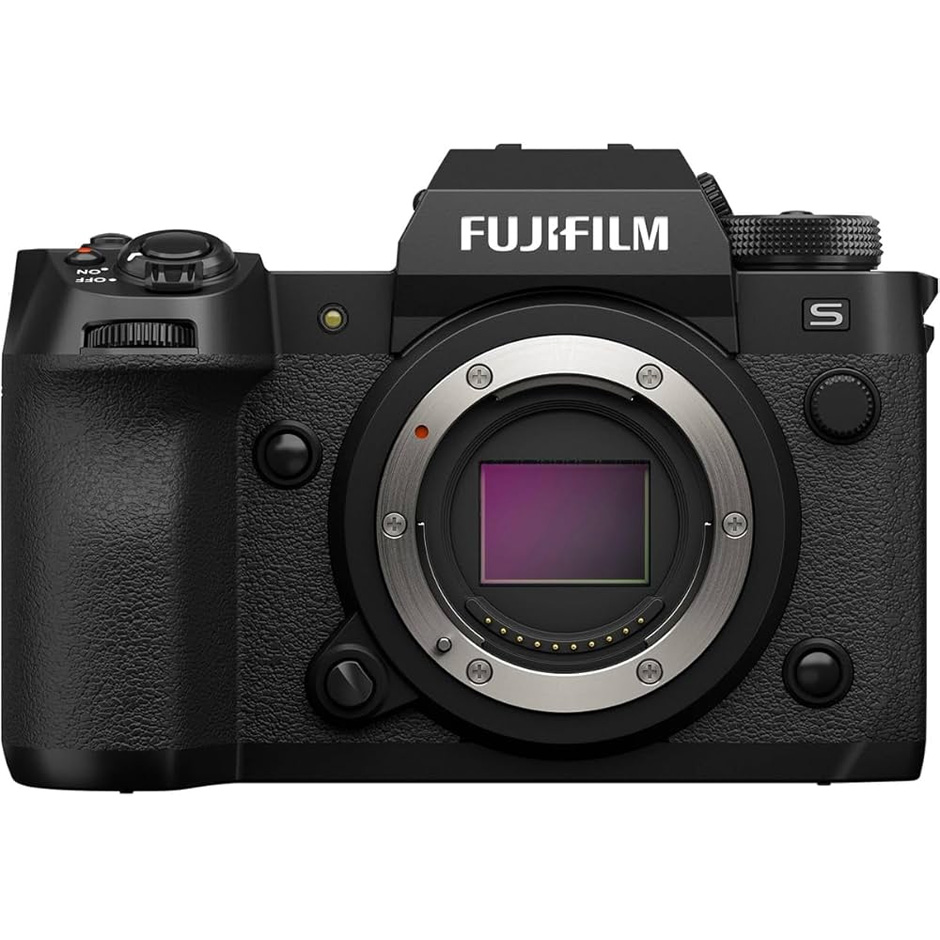 The action specialist
Pros
- Stacked 26.1MP sensor offers fast readout speeds and fewer rolling shutter issues
- Up to 40FPS blackout-free burst rate while maintaining full autofocus
- Animal and bird autofocus subject detection
- Compatible with both SD and CFexpress cards
- Sturdy build and large grip to balance long lenses
Cons
- Middle of the road 26.1MP resolution produces nice images, but doesn't leave room for heavy cropping
- Expensive compared to other APS-C models
- It's not a particularly small camera for an APS-C
- Users report the autofocus is not as good as Sony, Canon and Nikon.
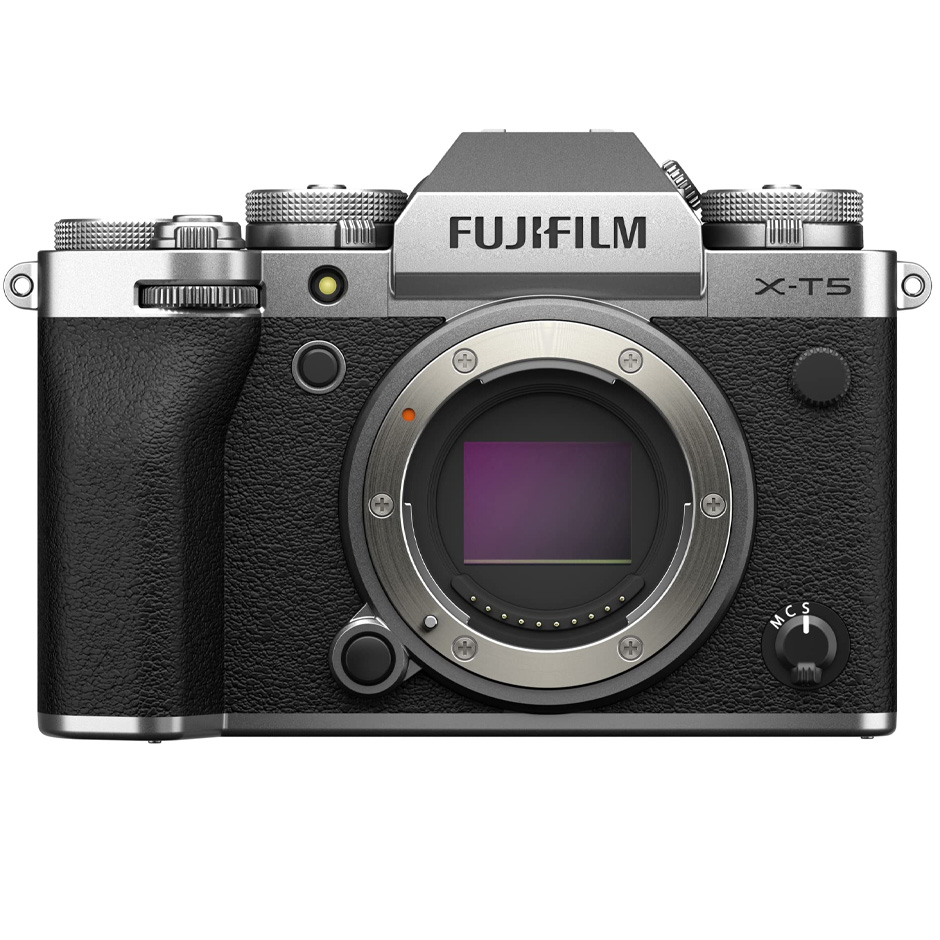 Versatile high-res
The Fuji X-T5 is a compact APS-C camera to suit traveling photographers perfectly, but the small buffer and hit-and-miss autofocus are better suited to photographing slow-moving, larger mammals as opposed to fast action and birds. Still, it's a versatile option that can shoot multiple styles and produces beautiful 40.2MP images.
Read the full Fuji X-T5 review at our sister site, Digital Camera World
Pros
- High resolution 40.2MP produces beautiful images and allows for cropping on distant subjects
- Features an in-built 1.4x and 2x teleconverter in the shooting settings, extending your reach
- Animal, bird and insect tracking modes
- Compact and lightweight system compared to full-frame models
- Electronic shutter shoots up to 20FPS with a 1.29x crop, which is advantageous if you need extra reach for wildlife
Cons
- Autofocus occasionally misses — generally not as reliable as Sony, Canon or Nikon.
- Doesn't have the biggest grip for larger lenses
- Buffer fills up quite quickly, and users report that it takes a while to clear
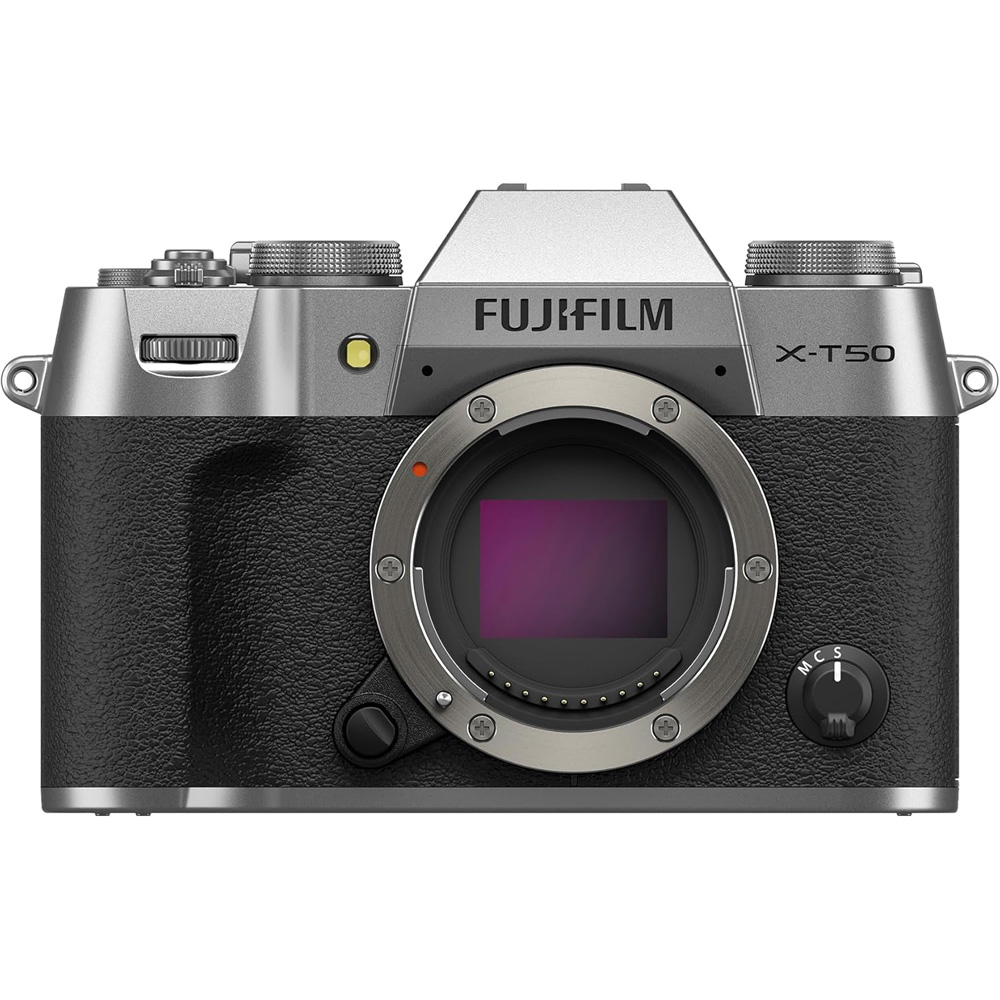 Compact wildlife shooter
The Fuji X-T50 is an attractive, compact option for beginner wildlife photographers who don't yet need an expensive model with all the bells and whistles. Still, the 40.2MP resolution is beautiful, and it can shoot 20FPS bursts, which is great for wildlife action.
Read the full Fuji X-T50 review at our sister site, Digital Camera World
Pros
- Beautiful 40.2MP resolution that allows for cropping
- 20FPS burst rate comes with a 1.29x crop, which will give you extra reach on your wildlife lens
- Like the X-T5, it features a built-in teleconverter (1.4x and 2x) to extend your wildlife reach
- Very compact and portable — would suit travel photographers well
- Animal and bird autofocus modes
Cons
- No weather sealing
- Only has a single card slot
- Buffer fills up quickly and takes a while to clear, limiting your bursts
- Battery life isn't the best
- Autofocus isn't as good as Sony, Canon or Nikon
Honorable mentionsFujiFilm X-H2 | Where the X-H2S offers speed, the X-H2 offers a higher 40.2MP resolution, which offers more room for cropping. However, the autofocus isn't as good as on the X-H2S, and there's more rolling-shutter due to the non-stacked sensor. |
Avoid if: | If you're a serious wildlife shooter, we'd recommend upgrading to a full-frame system from Sony, Canon or Nikon in order to get the best autofocus systems for your money. |
Best Panasonic cameras for wildlife photography
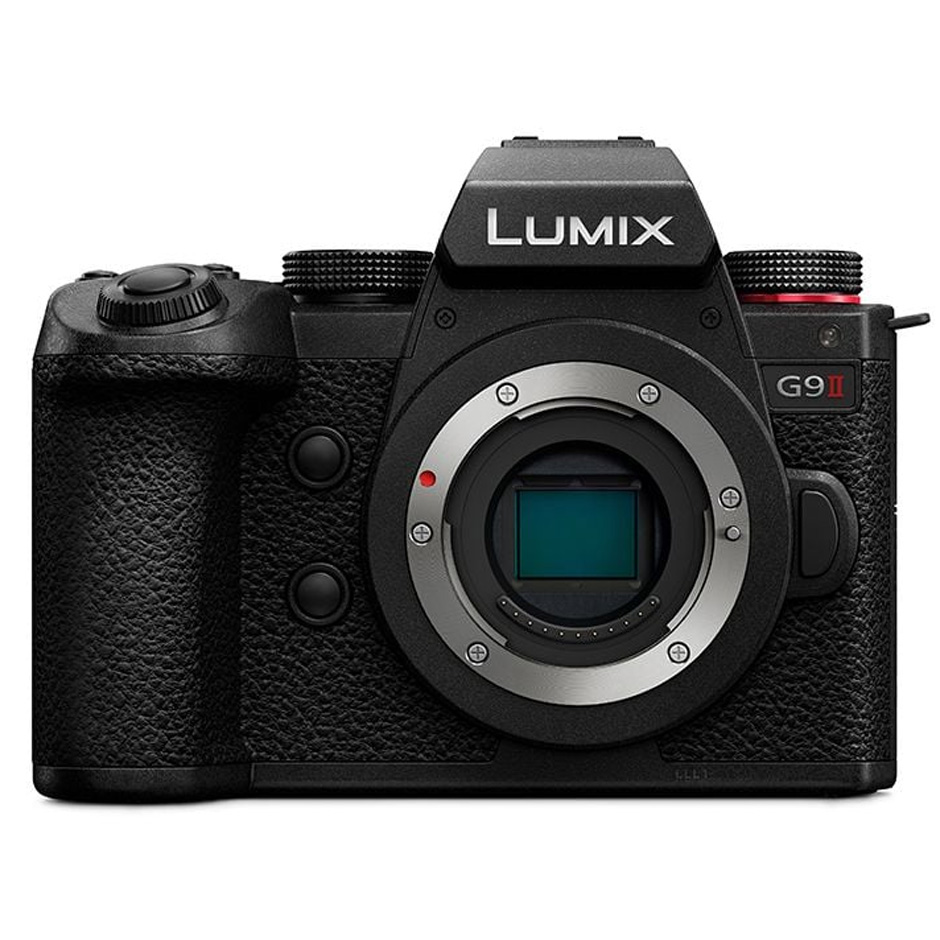 Best for fast-moving wildlife
The Lumix G9 II is particularly well suited to birds and fast-moving subjects thanks to its high-speed bursts, improved animal tracking and the extra reach advantage of Micro Four Thirds lenses. It sacrifices some low-light performance compared to full-frame models, but for wildlife, where reach and speed matter, it's the standout choice from Panasonic.
Read the full Panasonic Lumix G9 II review at our sister site, Digital Camera World
Pros
- Up to 60FPS bursts with continuous autofocus
- Micro Four Thirds sensor gives extra reach with 2x crop factor — and allows for more compact lenses
- Pre-capture records up to 1.5 seconds before the shutter is fully released
- Animal and bird eye detection locks onto subjects accurately and quickly
Cons
- Smaller sensor produces more visible noise than a full-frame sensor
- 25MP resolution doesn't provide much room for cropping
- Electronic shutter can show rolling shutter
- While the autofocus is good compared to previous Panasonic bodies, it's still not as good as Sony/Canon/Nikon
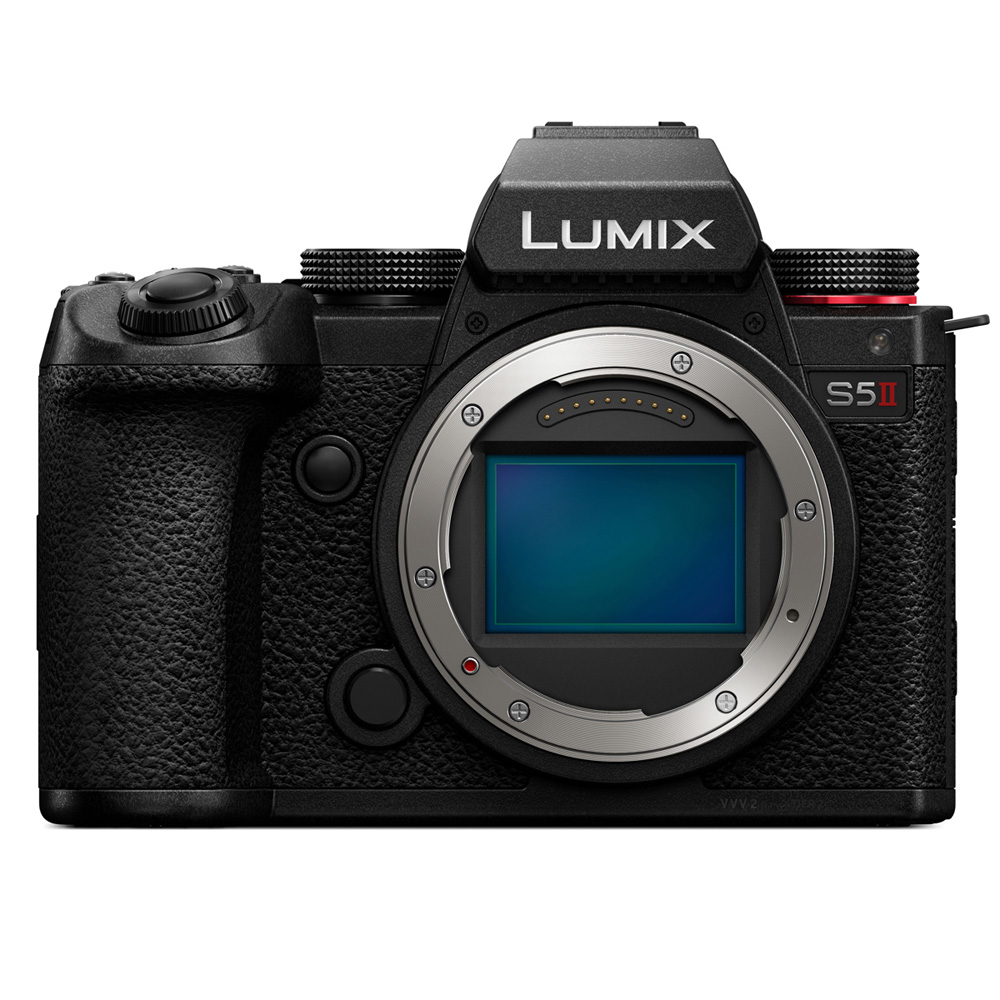 Best for low-light wildlife
Pros
- Full-frame sensor delivers better high ISO performance for low-light wildlife at dawn or dusk
- 30FPS electronic burst is great for fast action with continuous autofocus
- Works well with Sigma L-mount lenses for cost-effective setups
- Animal eye tracking to lock focus on stationary and moving animals.
Cons
- 24.2MP gives less room to crop when shooting distant subjects
- Less effective reach compared to Micro Four Thirds
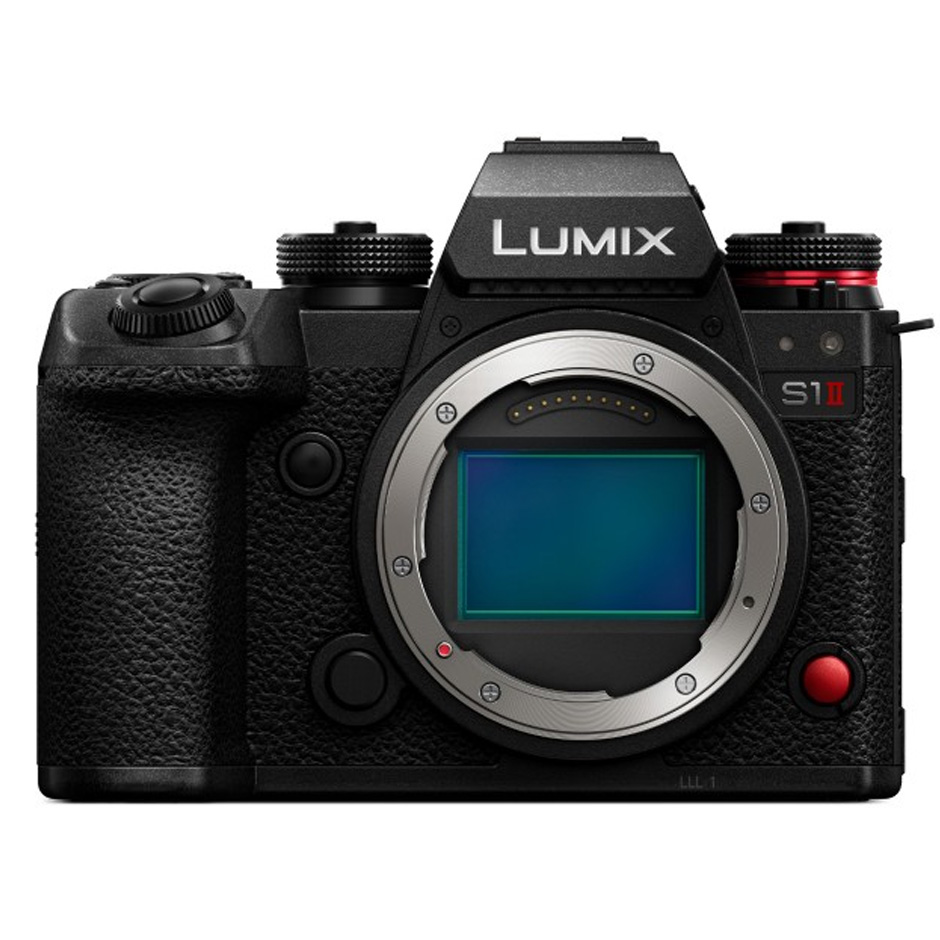 Best premium setup
This premium wildlife workhorse has a partially-stacked 24.1MP sensor and 70FPS blackout-free burst rate. It features animal and bird detection, but although the autofocus is generally very good, it still trails behind the best-in-class autofocus from the likes of Sony, Canon and Nikon.
Read the full Panasonic Lumix S1 II review at our sister site, Digital Camera World
Pros
- Partially stacked sensor eliminates rolling shutter and allows for faster readout speeds
- Blazing fast 70FPS blackout-free bursts with continuous autofocus
- Pre-burst captures images up to 1.5 seconds before you fully release the shutter
- Full frame sensor is better in low light than Micro Four Thirds
Cons
- 24.1MP resolution limits heavy cropping
- Users report occasional autofocus accuracy issues
Honorable mentionsLumix S5 IIX | The video-centric sibling of the S5 II. They're very similar in terms of stills performance, so this might be the better option if you also focus on wildlife videography. |
Lumix GH7 | Primarily optimized for video workflows and other benefits that don't necessarily benefit stills shooters. It's a hybrid powerhouse, but stills-focused shooters should opt for the G9 II. |
Lumix G9 | The original G9 still performs well for general wildlife, with decent burst shooting and solid handling, but the contrast-based autofocus struggles to keep up with birds in flight and fast, unpredictable movement. |
Best wildlife cameras: FAQs
What camera do most wildlife photographers use?
Dedicated wildlife photographers typically choose full-frame mirrorless cameras due to their larger sensor, better noise handling, accurate autofocus and rugged build. Many of these cameras also have fast burst rates, which is essential for capturing fast-moving wildlife or birds in flight.
Beginners and hobbyists can certainly get great shots with more portable models, but some compromises will have to be made in terms of speed and power.
What burst rate do I need for wildlife photography?
This depends on what kind of wildlife you're photographing, and how fast they move. Generally speaking, the best wildlife cameras have a burst rate of at least 20FPS (frames per second) — but the faster the better. If you photograph large, slow-moving mammals or stationary subjects, your burst rate doesn't need to be rattling off 40FPS at a time. If, however, you photograph birds in flight or fast moving animals, you will need a faster burst rate in order to capture that killer shot.
How many megapixels does a wildlife camera need?
There's no right or wrong answer here, but generally speaking, a higher resolution is preferred because it produces more detailed images, and you have more room to crop without losing image quality. However, more megapixels equals bigger file sizes, and you therefore need faster cards in order to keep up, especially when you're taking bursts.
That said, you can absolutely get some great shots with lower resolution cameras. We've been impressed by the quality of OM System cameras, and they typically only have around 20MP.
What is the best wildlife camera for beginners?
The most important aspect of a wildlife camera for beginners to prioritize is good autofocus. Provided your subject is in focus, you don't necessarily need the fastest burst rate, top of the line weather sealing or highest resolution.
For our money, Sony, Canon and Nikon offer the best autofocus on the market. We'd recommend the Sony A7C II, Canon EOS R7 or Nikon Zf for beginners.
How much should I spend on a wildlife camera?
You don't need to go overboard unless you're a professional wildlife photographer looking for the top of the range flagship models. You can get a really impressive wildlife camera for "most people" for anywhere between $2,000 and $3,000, but as many photographers will tell you, it's more beneficial to invest money in a better lens as opposed to splashing out on the very best camera.
Latest updates
'> Best wildlife cameras 2026: The ultimate buying guide to every major camera brand